The strategic plan outlines intentions to responsibly leverage artificial intelligence (AI) to enhance health, human services, and public health by promoting innovation, ethical use, and equitable access across various sectors, while managing associated risks.
U.S. Department of Health and Human Services (HHS)
The U.S. Department of Health and Human Services (HHS) announced it is rescinding prior blanket waivers that allowed discrimination based on religion, sexual orientation, and gender identity in taxpayer-funded programs.
U.S. Department of Health and Human Services (HHS)
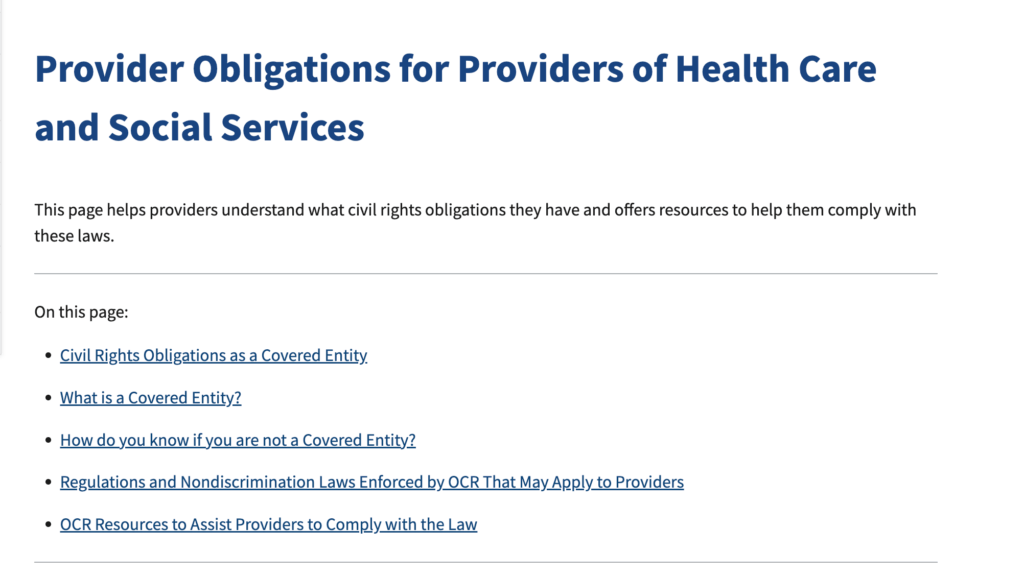
This web-page outlines the nondiscrimination and civil-rights obligations that health-care and social-services providers must meet if they receive HHS funding or act as covered entities.
U.S. Department of Health and Human Services (HHS)
This report highlights the agency's role in transforming federal digital services through human-centered design, agile technology, and cross-agency collaboration.
This report shares the progress of the Biden-Harris Administration on health care access, prescription drug affordability, mental health, maternal health, and public health investments.
A case study documenting how a modular API layer was built to support a state-level paid family and medical leave program, improving interoperability, scalability, and user experience.
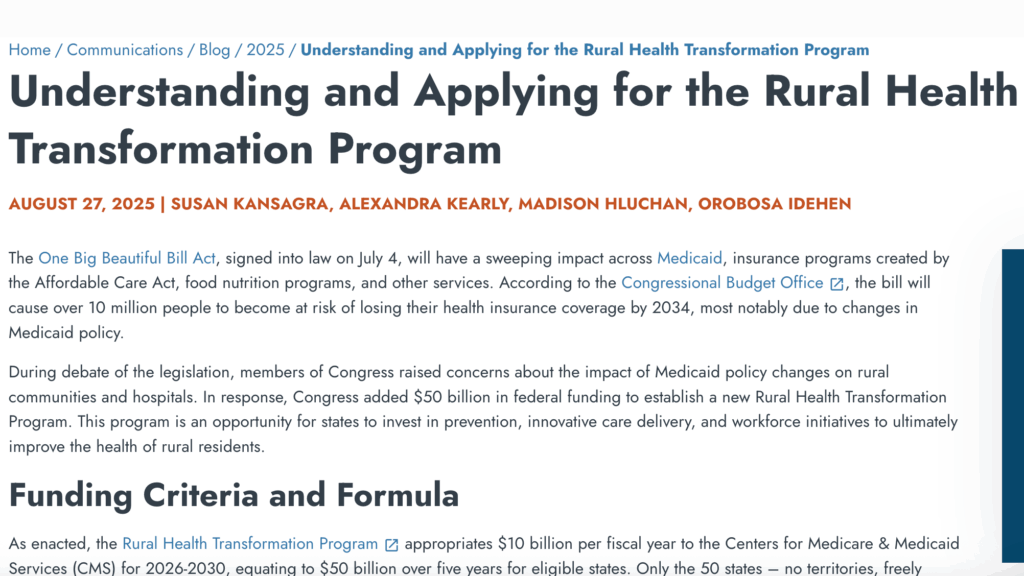
This blog explains how the Rural Health Transformation Program—established under H.R. 1—will channel $50 billion over five years to states to support rural health care, and outlines how states can apply, qualify, and deploy funds strategically.
Association of State and Territorial Health Offices (ASTHO)
A comprehensive report outlining a student-led strategy to improve access to mental health supports through prevention, early intervention, and treatment across schools and community partners.
The report examines how states are using Medicaid Section 1115 demonstration projects to address health-related social needs, such as housing and nutrition, for pregnant and postpartum individuals and young children to improve health outcomes and reduce disparities.