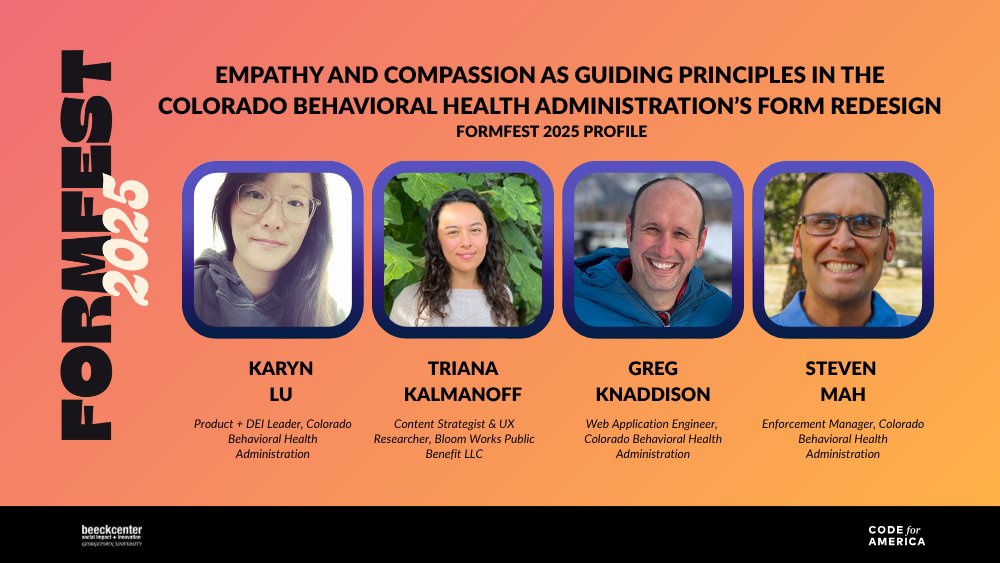
This FormFest profile highlights how the Colorado Behavioral Health Administration redesigned its complaint submission form using empathy, human-centered design, and trauma-informed research methods to make the process more accessible, compassionate, and secure for all users.
This brief examines the treatment of PFML for purposes of state and federal taxation, as well as determining income and eligibility in five means-tested programs.
This blog explains how to provide culturally and linguistically appropriate services to individuals who have experienced trafficking, emphasizing the importance of cultural competence and the CLAS Standards.
U.S. Department of Health and Human Services (HHS)
This blog describes how the CDC relaunched its website through a “Clean Slate” redesign—streamlining content, improving navigation, refreshing visual design, and adopting a new CMS—to better meet user needs and rebuild trust in public health communication.
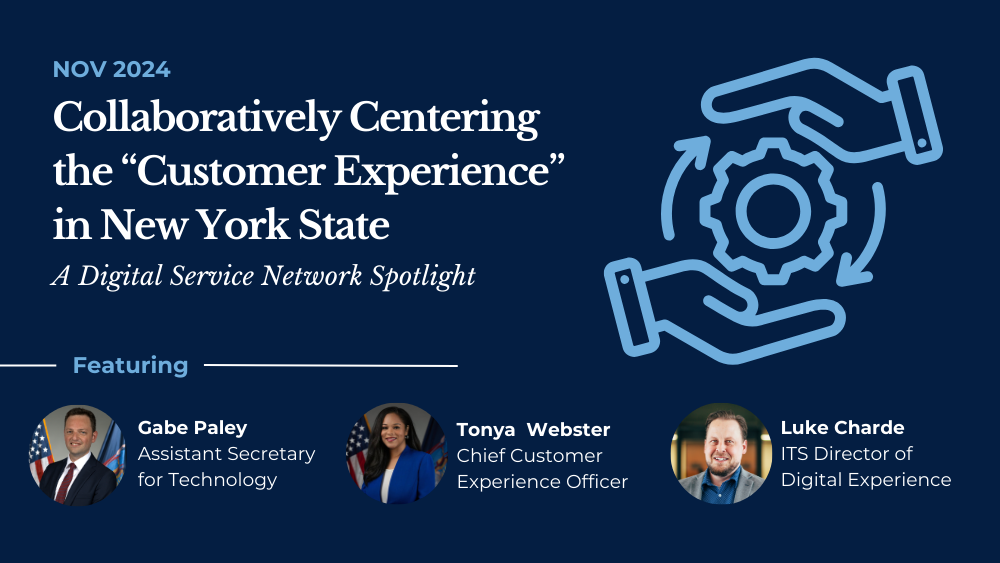
The Digital Service Network (DSN) spoke with three staff members from the New York State Executive Chamber—Gabe Paley, Tonya Webster, and, Luke Charde to learn more about the state's efforts to improve residents’ experiences accessing government programs.
This brief provides research recommendations to improve programs serving LGBT youth, focusing on homelessness and sexual health education services funded by the U.S. Department of Health and Human Services.
U.S. Department of Health and Human Services (HHS)
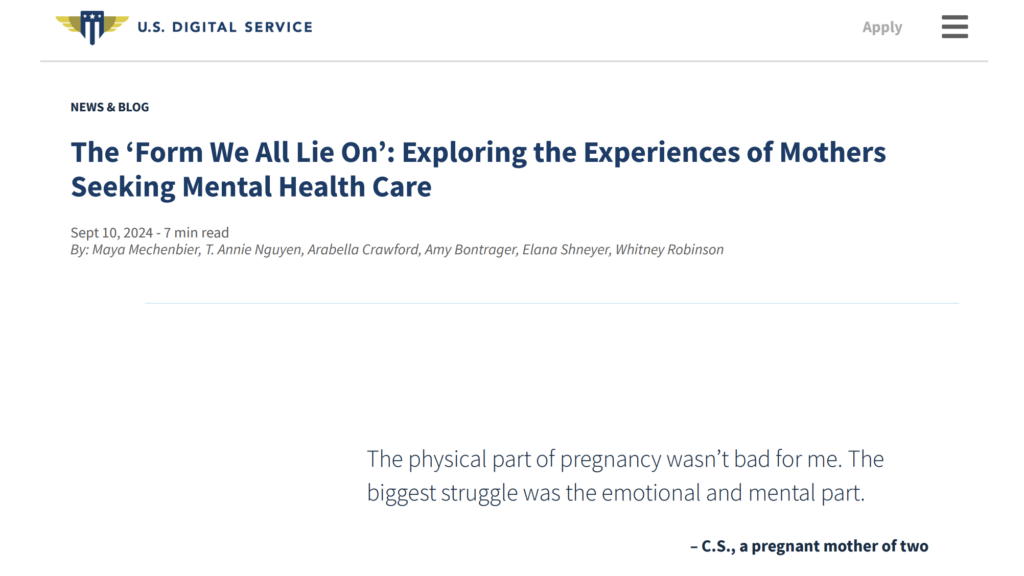
A U.S. Digital Service blog report exploring the lived experiences of mothers seeking mental health care during pregnancy and postpartum, highlighting barriers in screening, diagnosis, and access to treatment.
This report explores innovative solutions and insights from CMS Innovation Center's Hackathon series to address the unique healthcare challenges faced by rural, Tribal, and geographically isolated communities.
This article examines how Chile’s SUSESO is balancing cost-focused procurement criteria with ethical AI concerns in its medical claims automation process.
The report evaluates the 2023 Newborn Supply Kit pilot program, highlighting its effectiveness in reducing maternal stress, alleviating financial burdens, and increasing trust in government services among new parents, especially in low-income communities.
U.S. Department of Health and Human Services (HHS)