The article examines the participation of adults aged 50 and older in the Supplemental Nutrition Assistance Program (SNAP) in 2022, highlighting the program's role in reducing food insecurity and poverty among older adults, especially those with disabilities.
This report poses the question of whether states are prepared to meet the new Medicaid work reporting and renewal mandates introduced by HR 1, given ongoing strain from the post-pandemic “unwinding.”
An overview of direct cash programs and innovations in the U.S., exploring how unconditional cash transfers promote economic stability, mobility, and well-being.
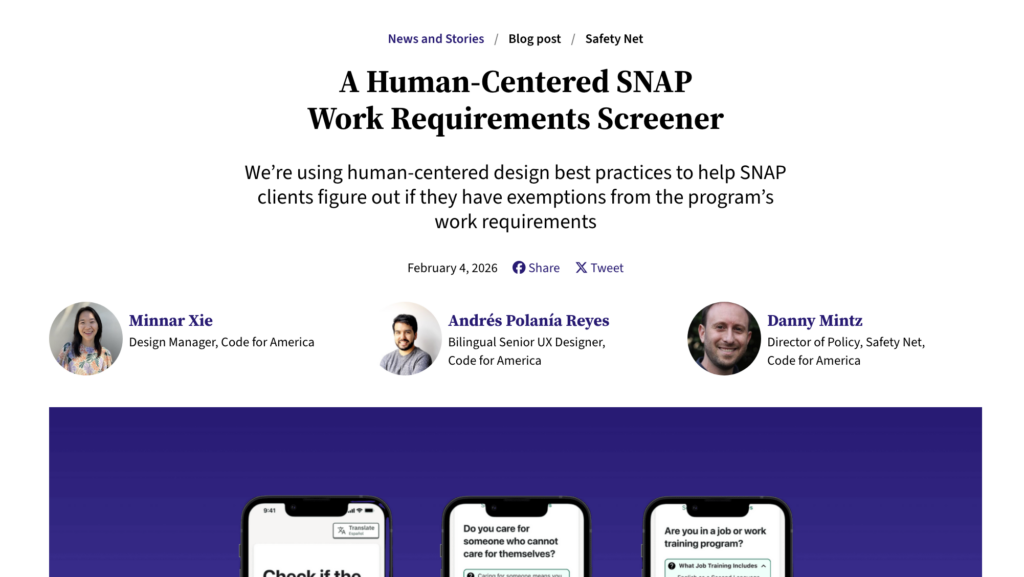
This blog post details the development of a human-centered screening tool designed to help SNAP clients identify and report exemptions from work requirements.
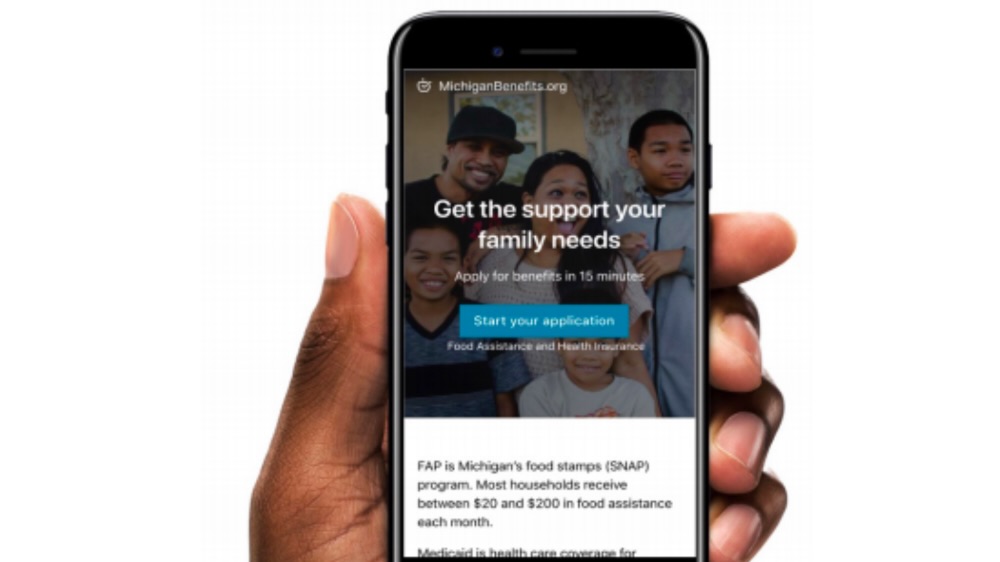
Code for America helped expand GetCalFresh (a service that guides Californians through the SNAP application process and helps government deliver food assistance to people in need) from a small pilot into a statewide service. They also recently concluded a similar pilot in Michigan along with Civilla and the Michigan Department of Health and Human Services.
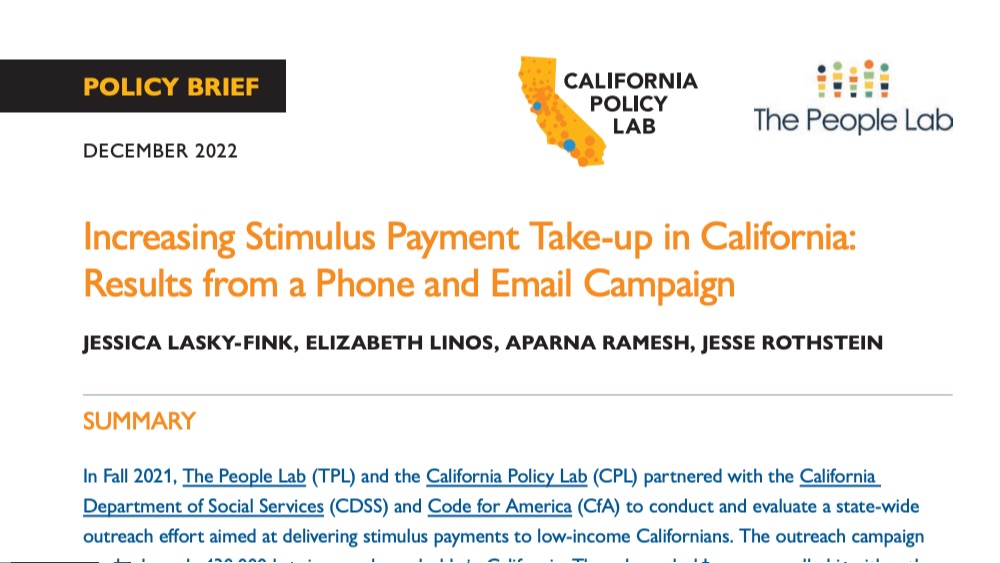
The Increasing Stimulus Payment Take-up in California report by the California Policy Lab examines barriers to accessing federal stimulus payments and provides strategies to increase take-up among eligible Californians, particularly low-income and non-filers.
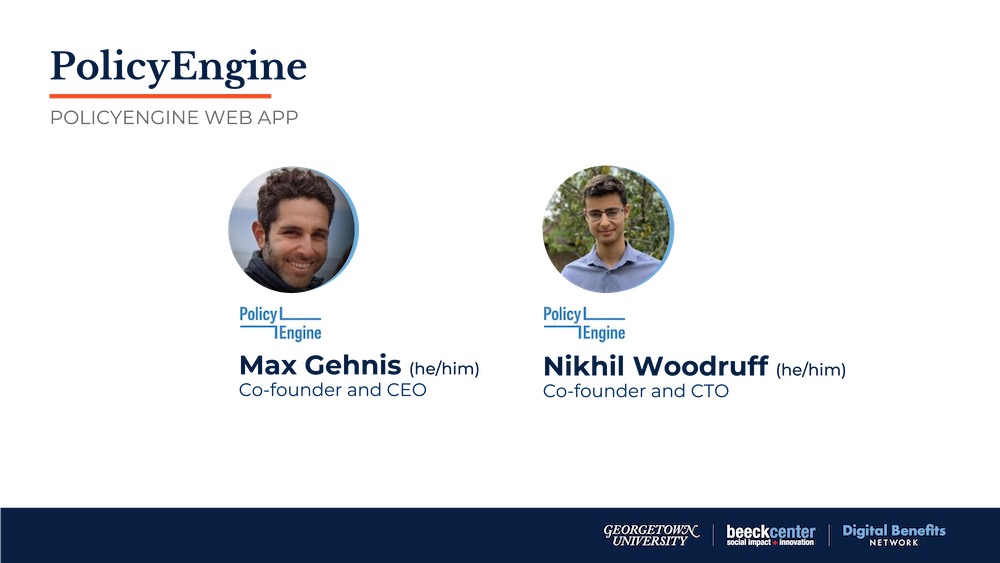
We wrapped up Rules as Code Demo Day with Max Ghenis and Nikhil Woodruff, the founders of PolicyEngine. The PolicyEngine web app computes the impact of tax and benefit policy in the US and the UK. With PolicyEngine, anyone can freely calculate their taxes and benefits under current law and customizable policy reforms, and also estimate the society-wide impacts of those reforms. Policymakers and think tanks from across the political spectrum can analyze actual policy. PolicyEngine is built atop the open source OpenFisca US and UK microsimulation models and they are building an open unified data set utilizing data from the Policy Rules Database, Current Population Survey, Survey of Consumer Finances, Consumer Expenditures, tax records, and IRS Public Use File.
This brief analyzes the current state of federal and state government communication around benefits eligibility rules and policy and how these documents are being tracked and adapted into code by external organizations. This work includes comparisons between coded examples of policy and potential options for standardizing code based on established and emerging data standards, tools, and frameworks.