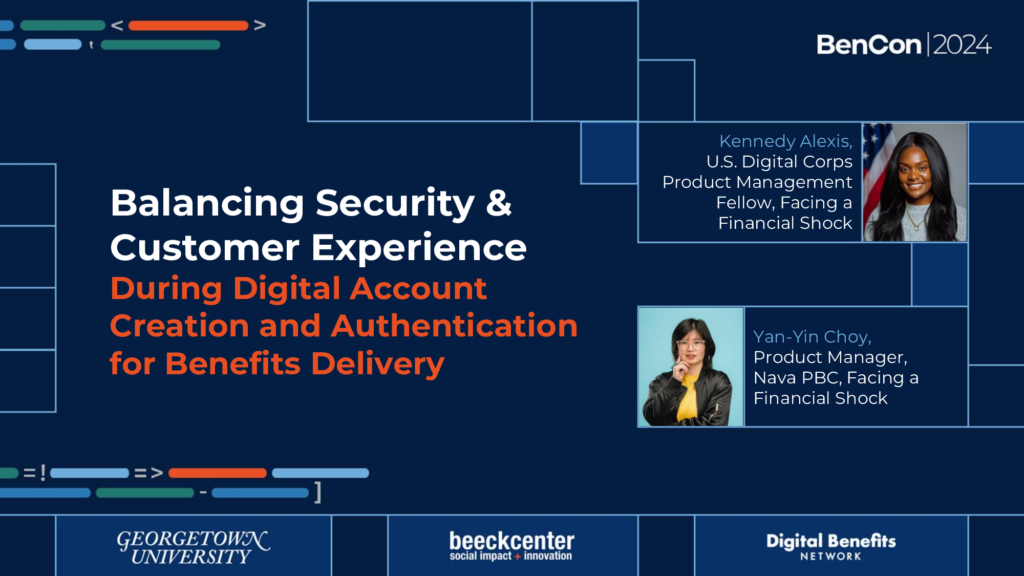
This presentation explores the balance between security and user experience in digital benefit account creation and authentication, highlighting insights from a forthcoming playbook focused on SNAP and Medicaid portals.
The Policy2Code Prototyping Challenge explored utilizing generative AI technology to translate U.S. government policies for public benefits into plain language and code, culminating in a Demo Day where twelve teams showcased their projects for feedback and evaluation.
Michigan's UIA director, Julia Dale, is leading the agency through transition by prioritizing lived experience, hope, grit, and values. Virginia's SNAP Program Manager, Michele Thomas, highlighted the success of Sun Bucks, a summer EBT child nutrition program that fed over 700,000 kids in its first year.
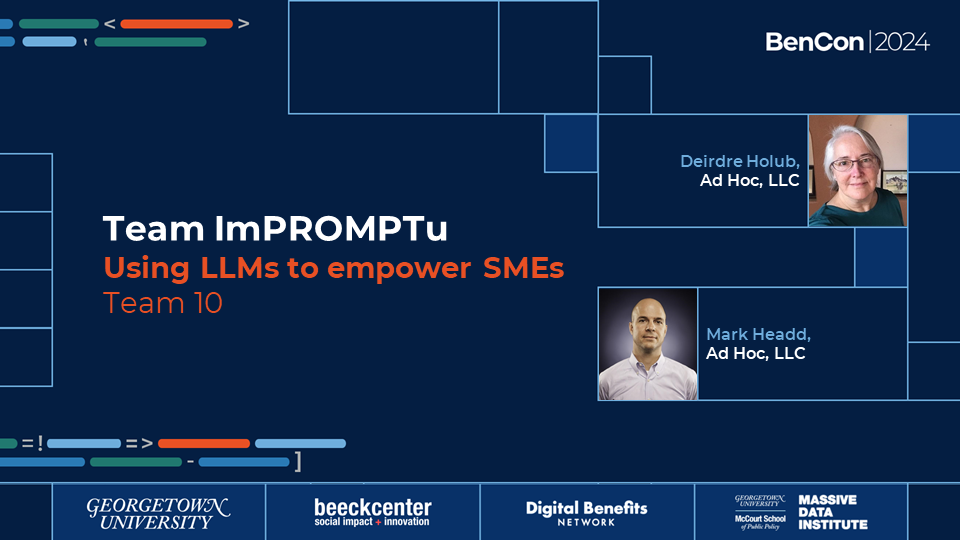
The team developed an application to simplify Medicaid and CHIP applications through LLM APIs while addressing limitations such as hallucinations and outdated information by implementing a selective input process for clean and current data.
This study describes the potential of human-centered design principles to identify burdens, reducing the effects of what we label as administrative checkpoints.
The article analyzes the impacts of Arkansas's Medicaid work requirements, finding that while coverage losses were reversed after the policy was halted, it did not improve employment and led to negative consequences such as increased medical debt and delayed care.
This article emphasizes the need for local leaders to prioritize disability equity in advancing upward mobility, addressing systemic barriers that hinder disabled individuals' escape from poverty.