This article examines how applying a Racial Equity Framework reveals systemic inequities in the Earned Income Tax Credit (EITC) program, offering insights into barriers faced by marginalized communities and potential solutions.
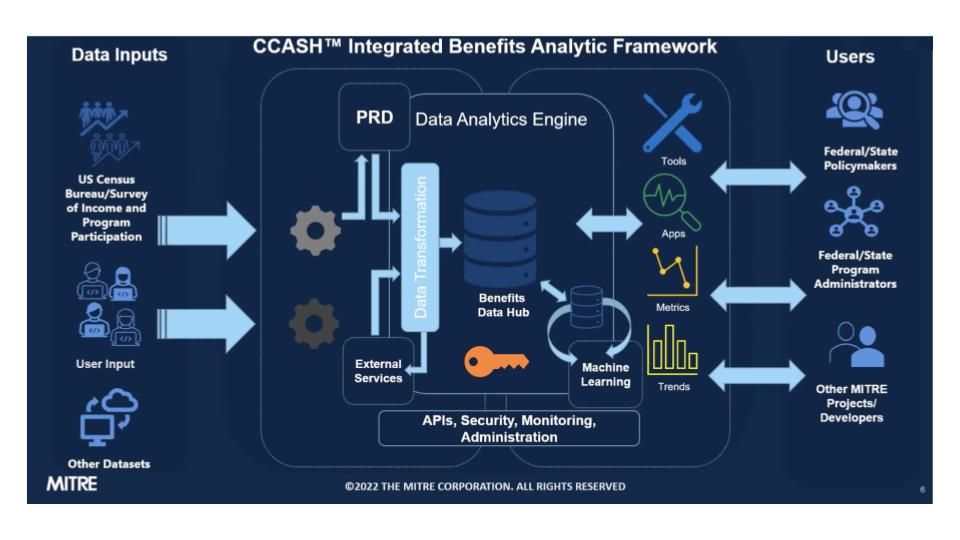
MITRE developed the Comprehensive Careers and Supports for Households (CCASH™) tool to help individuals understand and manage federal benefits and employment services, transitioning from a consumer-focused tool to a policy analytics system. By integrating data from sources like the U.S. Census and the Policy Rules Database, MITRE created a model that allows users to analyze and compare benefits eligibility across states, supporting evidence-based policymaking.
This guide outlines how states can use TANF funds to provide direct cash assistance to families, particularly through flexible mechanisms like nonrecurrent short-term benefits (NRSTs).
This article examines the concept of "viral cash" and suggests that the future growth of basic income programs will depend on advocacy networks rather than traditional policy diffusion across jurisdictions.
In this brief, they present a definition of HCD that is applicable to the context of human services delivery, differentiate HCD from similar design and problem-solving approaches, and describe how HCD is being used in human services.
U.S. Department of Health and Human Services (HHS)
This Urban Institute report highlights how immigrant and mixed-status families continued to avoid safety net programs in 2023 due to lingering fears around the public charge rule.
The Policy2Code Prototyping Challenge explored utilizing generative AI technology to translate U.S. government policies for public benefits into plain language and code, culminating in a Demo Day where twelve teams showcased their projects for feedback and evaluation.
Learn how to use generative AI to quickly create unemployment insurance translations that are accurate, easy to understand, and tailored to your state.