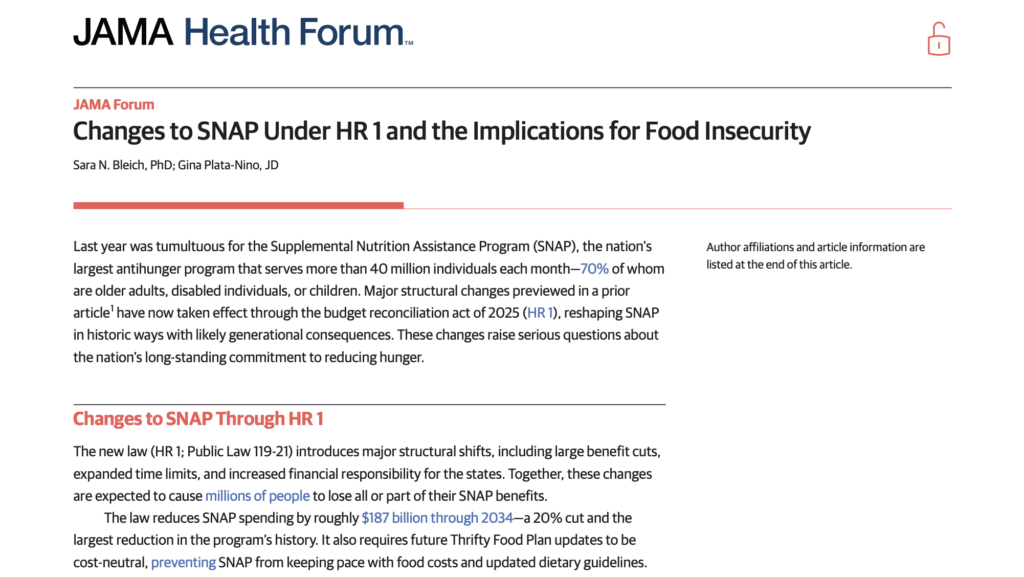
This article examines the historic structural changes to the Supplemental Nutrition Assistance Program (SNAP) enacted through H.R. 1 and their potential consequences for public health and food security.
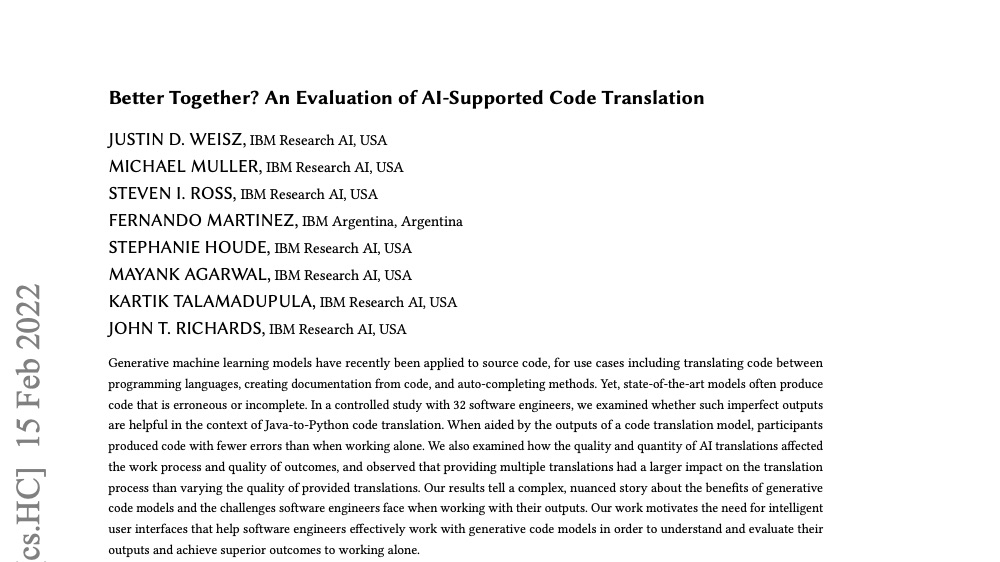
This research explores how software engineers are able to work with generative machine learning models. The results explore the benefits of generative code models and the challenges software engineers face when working with their outputs. The authors also argue for the need for intelligent user interfaces that help software engineers effectively work with generative code models.
This resource describes how different agencies have updated their systems to increase online and mobile access to benefits information and applications, including using text messages to share benefits information with residents.
This essay explains why the Center on Privacy & Technology has chosen to stop using terms like "artificial intelligence," "AI," and "machine learning," arguing that such language obscures human accountability and overstates the capabilities of these technologies.
This policy report offers recommendations for improving digital identity practices in the United States, emphasizing the role of government in creating secure, accessible digital identity resources.
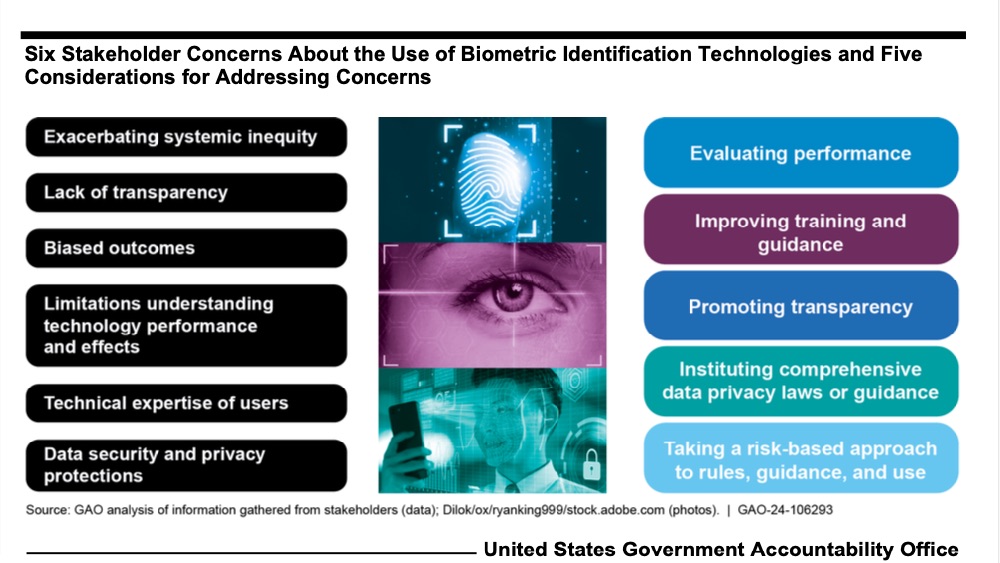
Biometric identification technologies—such as facial recognition and fingerprinting—can affect underserved communities, including low-income and minority communities. GAO interviewed academics, advocacy groups, and technology experts to find out how.
This article discusses the challenges of today’s centralized identity management and investigates current developments regarding verifiable credentials and digital wallets.
This blog post discusses strategies that states can implement to make public assistance applications more accessible during the COVID-19 crisis, emphasizing the importance of flexibility in application processes to accommodate increased demand and social distancing measures.
Code for America’s Integrated Benefits Initiative has been working in partnership with the State of Colorado to demonstrate how user-centered approaches lead to measurably better delivery of safety net programs. This article describes their work with the state of Colorado in simplifying how clients report common life changes that can affect their eligibility.
Disparities in Economic Impact Payment (EIP) receipt during the COVID-19 pandemic disproportionately affected low-income households, communities of color, and individuals without tax filing histories.