A virtual event showcasing how one city applied technology, including artificial intelligence, to streamline municipal code administration and reduce bureaucratic friction.
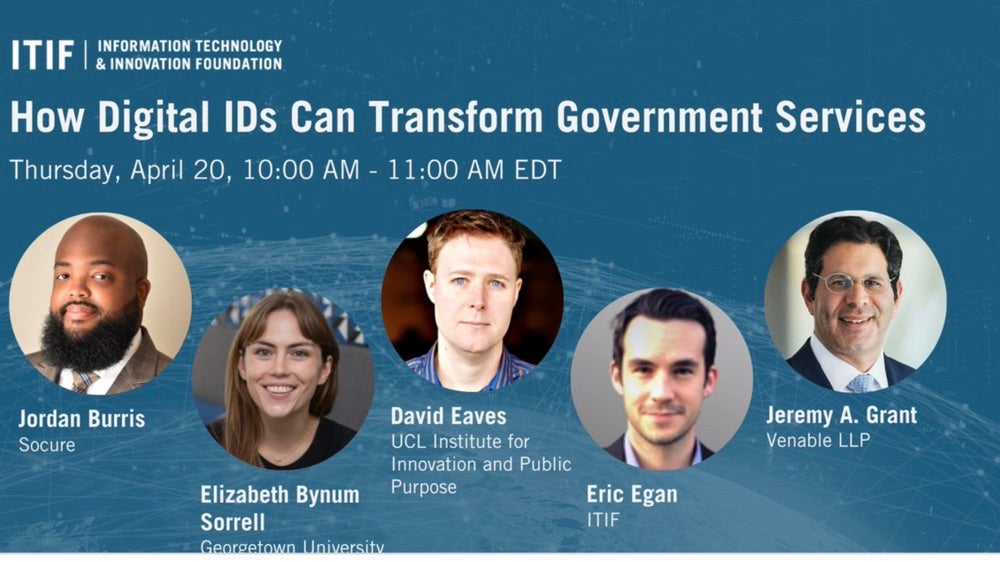
Governments around the world are digitizing how they deliver services to citizens. And yet, without a secure and reliable way for people to prove their identity online, digital transformation efforts face a considerable barrier. This panel discussion, hosted by the Information Technology & Innovation Foundation (ITIF), focuses on the potential benefits and concerns surrounding digital ID and identity proofing technology as well as the legal and technical barriers for use.
Information Technology & Innovation Foundation (ITIF)
Recording of GOVChats hosted by GTA's Digital Services Georgia, where speakers dive into the artificial intelligence (AI) programs and initiatives unfolding across the states of Georgia, Maryland, and Vermont.
The UI Technology Coordinating Coalition hosted a virtual conversation on April 13, 2023 focused on recent developments in unemployment insurance (UI) modernization efforts with guests from the U.S. Department of Labor's Office of UI Modernization and the Illinois Department of Employment Security.
In this keynote presentation, Carole House, the Director for Cybersecurity and Secure Digital Innovation at the National Security Council discusses cybersecurity and identity management priorities at the federal level.
In this presentation, team members from the North Carolina Department of Health and Human Services provide an overview of the implementation process for cross enrollment with SNAP, WIC, and Medicaid in North Carolina.
North Carolina Department of Health and Human Services
Initially created for and shared with staff at the Administration for Children and Families, this webinar provides an introduction to Universal Design, covering plain language, accessibility, user research, and Agile development.
Clearing applicant backlogs is an important solution to the UI crisis. State governments and federal agencies could facilitate access to public benefits by collaborating to develop interoperable technology platforms that use open source software and modular design. Panelists discuss opportunities to prevent future UI crises by reimagining how governments deliver benefits to their citizens.
Federal Communications Commission present on how state and local agencies can legally use SMS messaging to engage with public benefits applicants and recipients, including compliance with the Telephone Consumer Protection Act (TCPA).
The Performance.gov team hosted a webinar featuring federal customer experience (CX) changemakers from across government and focused on the nine CX projects that aim to address pain points learned about through human-centered design research.
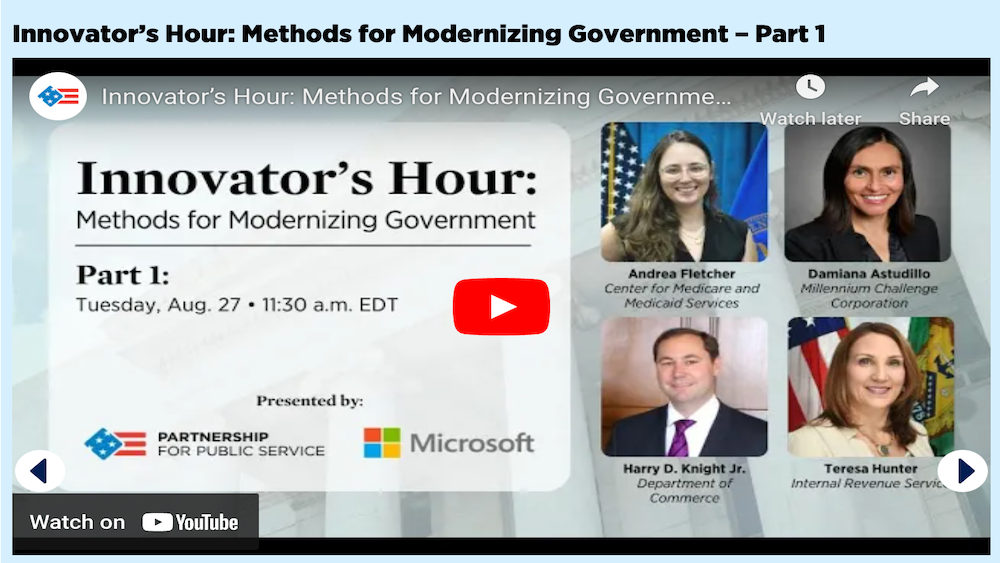
The Modern Government Leaders program brought together federal executive innovators to share best practices and drive service delivery and process modernization.