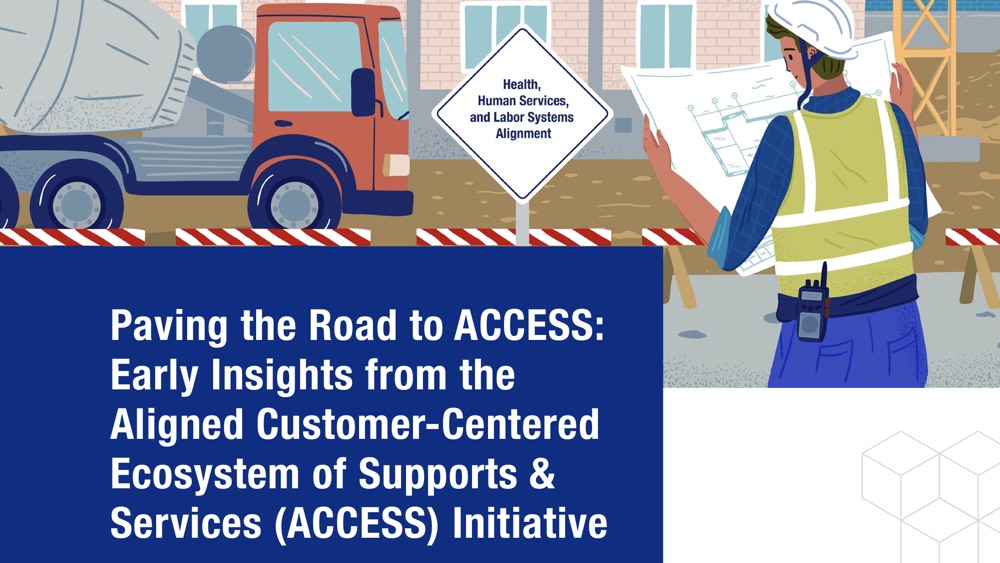
Through the ACCESS project, key collaborators have shared insights into current and future opportunities for alignment within their agencies, including potential enablers for and barriers to alignment activities.
American Public Human Services Association (APHSA)
To assist states in closing digital skill gaps and preparing for digital equity planning, this brief offers key questions and resources for state leaders to consider.
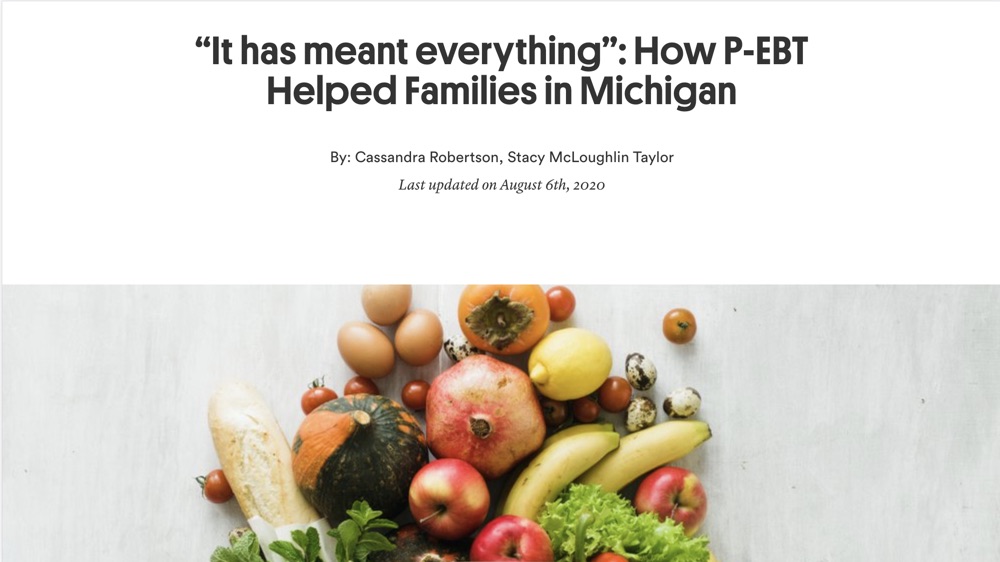
This report explores Michigan’s implementation of the Pandemic Electronic Benefit Transfer (P-EBT) program. Drawing on interviews from individuals within the Michigan Department of Health and Human Services and input from SNAP participants via surveys distributed using the Fresh EBT app, this report provides insights into the strategies that enabled Michigan to roll out an entirely new program quickly and effectively.
This report discusses the financial resilience strategies families used to manage gaps before benefits arrived, in addition to providing recommendations for how benefits can be better designed in the future to fit the financial lives of lower-income households.
This research study analyzes the structural and budgetary layout of eleven US-based Digital Service Teams (DSTs) at the municipal, county, and state levels. In doing so, it sets out to answer the research question: “How are digital service teams structured and funded?”
The paper hopes to stimulate discussions towards an ethical protocol for better practice in BI experiments and provide a useful resource to those working on, or interested in, BI research.
These recommendations outline privacy-focused guidelines for states adopting digital IDs, emphasizing protections against surveillance, ensuring equitable access, and maintaining control over personal data.
This brief examines the treatment of PFML for purposes of state and federal taxation, as well as determining income and eligibility in five means-tested programs.
This review evaluates the UK public sector's use of digital technology, identifying successes and systemic challenges, and proposes reforms to enhance service delivery.
This report documents four experiments exploring if AI can be used to expedite the translation of SNAP and Medicaid policies into software code for implementation in public benefits eligibility and enrollment systems under a Rules as Code approach.