The examples in this guide describe how peer-to-peer training and updated interview scripts can help connect residents to the benefits they are eligible for.
This policy blueprint outlines six actionable steps for state governments to improve digital identity infrastructure, focusing on security, equity, innovation, and privacy.
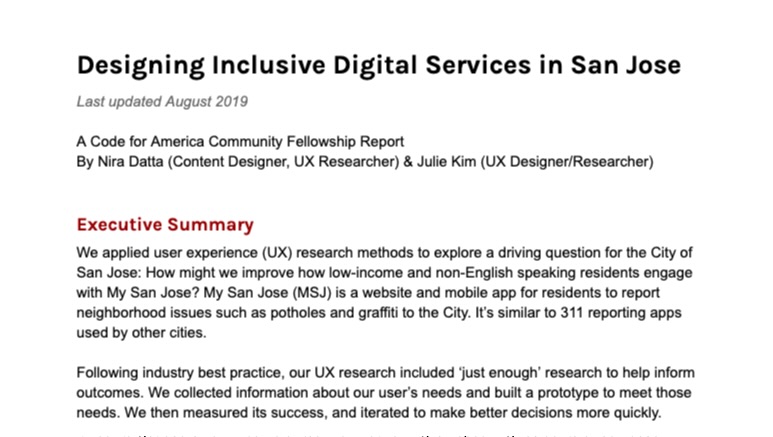
Applying UX research methods, the City of San Jose worked to improve how low-income and non-English speaking residents engaged with My San Jose, a website and mobile app for residents to report neighborhood issues to cities. They used a Spanish and Vietnamese translator to conduct interviews with target users, then detailed major findings and corresponding recommendations in this report.
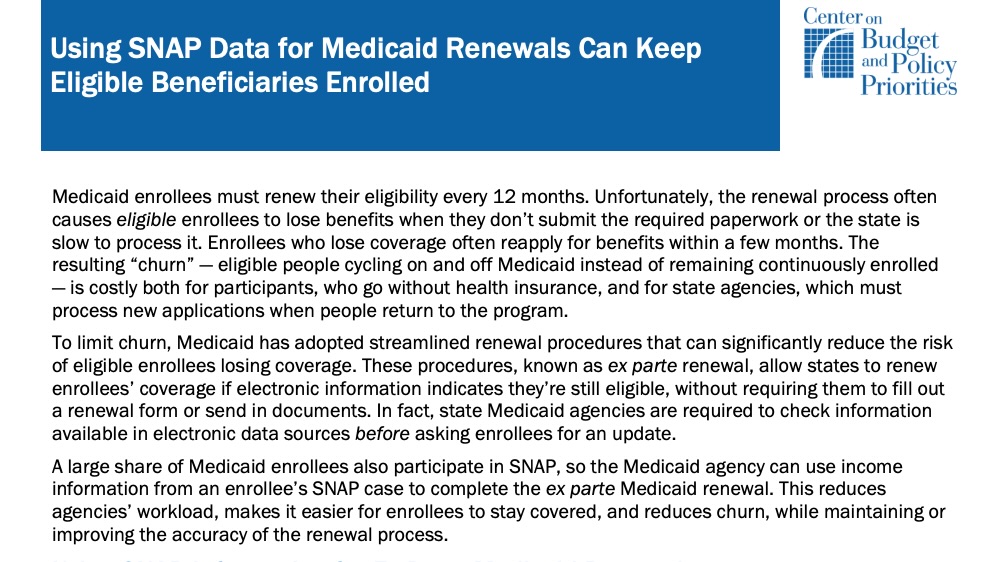
The report discusses how state Medicaid agencies can utilize Supplemental Nutrition Assistance Program (SNAP) data to streamline the Medicaid renewal process, thereby maintaining coverage for eligible beneficiaries.
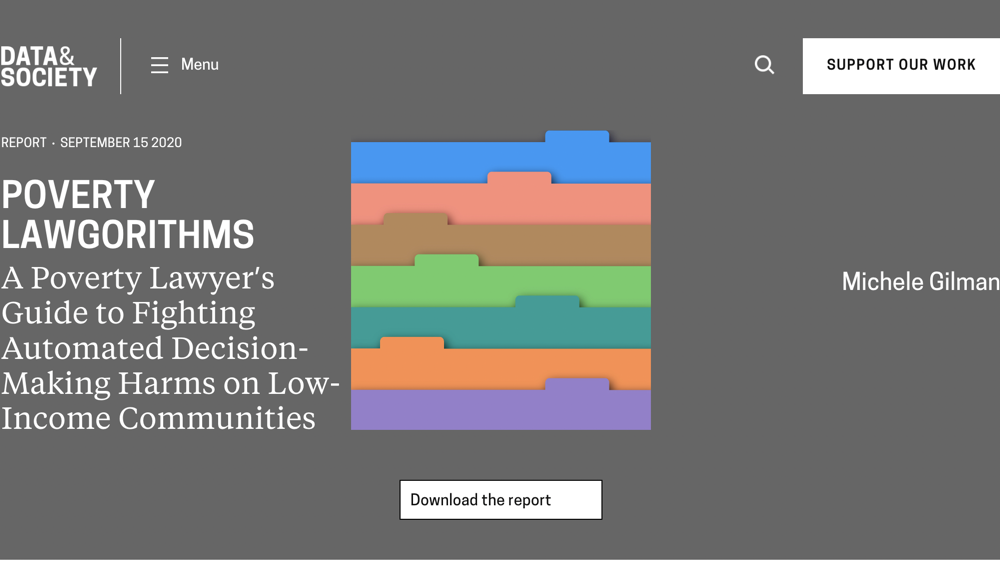
This guide, directed at poverty lawyers, explains automated decision-making systems so lawyers and advocates can better identify the source of their clients' problems and advocate on their behalf. Relevant for practitioners, this report covers key questions around automated decision-making systems.
Approximately 12 million low-income individuals risk missing out on federal stimulus payments due to non-filing status, prompting the Center on Budget and Policy Priorities (CBPP) to recommend targeted state outreach to connect eligible non-filers with their Economic Impact Payments (EIPs).
This resource provides guidance on streamlining enrollment across public benefit programs to improve efficiency, reduce administrative burdens, and enhance access for eligible individuals and families.
In February 2023, the Digital Benefits Network at the Beeck Center for Social Impact + Innovation released a dataset documenting authentication and identity verification requirements that unemployment insurance (UI) applicants encounter across the United States. This resource outlines high-level observations from the data and more information about the research process.
Remote identify proofing is the process federal agencies and other entities use to verify that the individuals who apply online for benefits and services are who they claim to be. If the applicant responds correctly to personal questions, their identity is considered to be verified. However, data stolen in recent breaches could be used fraudulently to respond to knowledge-based verification questions. Alternative methods are available that provide stronger security, but these methods may have limitations in cost, convenience, technological maturity, and they may not be viable for all segments of the public.
The Urban Institute's report outlines actionable approaches for state governments and organizations to enhance the accessibility and retention of public benefit programs, focusing on service delivery, policy reforms, and technological advancements.
This report analyzes the critical role of SNAP’s "broad-based categorical eligibility" (BBCE) policy and the widespread consequences of its potential elimination by the Trump Administration.