In this webinar, the Center on Budget and Policy Priorities and the Digital Benefits Network explored key terms related to digital identity, and provided ecosystem-level context on how authentication and identity proofing may show up in the online benefits experience and impact clients.
Modular contracting doesn’t just mean that you break one procurement into several pieces. This article shows you how to take a modular approach with a single contract divided up into natural break points.
This blog post discusses strategies that states can implement to make public assistance applications more accessible during the COVID-19 crisis, emphasizing the importance of flexibility in application processes to accommodate increased demand and social distancing measures.
Companies have been developing and using artificial intelligence (AI) for decades. But we've seen exponential growth since OpenAI released their version of a large language model (LLM), ChatGPT, in 2022. Open-source versions of these tools can help agencies optimize their processes and surpass current levels of data analysis, all in a secure environment that won’t risk exposing sensitive information.
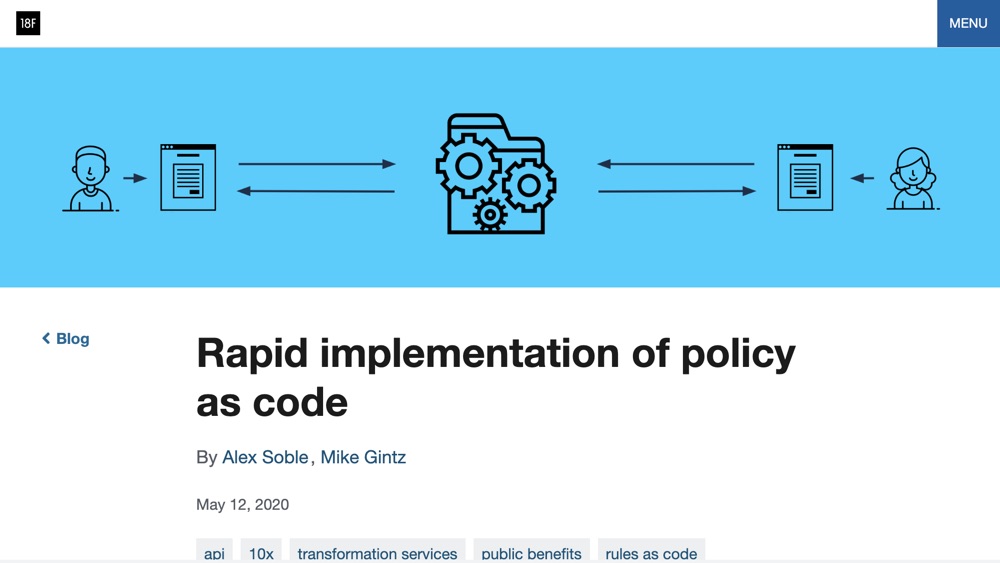
Policy changes are often dynamic and occur quickly, but they can only create impact once implemented. The Eligibility APIs Initiative at 18F shares an example from their work that shows the potential for rapid, accurate policy implementation as code.
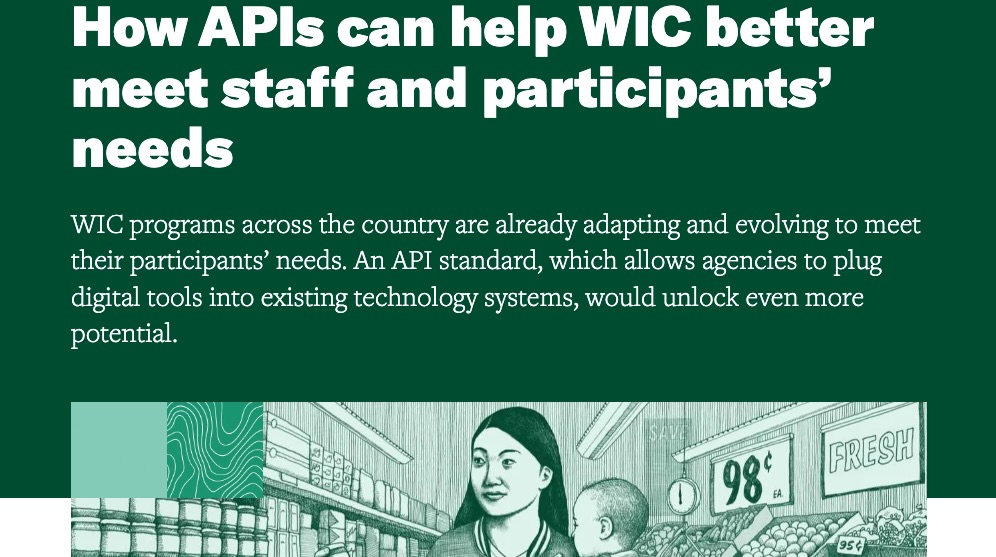
Implementing an API standard for WIC Management Information Systems (MIS) would enable seamless integration of digital tools, enhancing service delivery and accessibility for participants and staff.
An interview with Wendy De La Rosa, assistant professor at the Wharton School at the University of Pennsylvania. De La Rosa discusses how the concept of “psychological ownership” can encourage people to take up benefits they are eligible for.
It is frequently assumed that when rules are implemented as code, a rules engine is necessary. However, it is possible for policy people and engineers to effectively work together to code logic that drives technological system without needing a mediating rules engine at all.
18F describes modular contracting, the process of breaking up large, custom software procurements into a small constellation of smaller contracts. Modular procurement requires agile, product thinking, user-centered design, DevSecOps, and loosely-coupled architecture.
The article discusses how state agencies can effectively use text messaging to communicate with Medicaid and SNAP enrollees, especially following a 2021 FCC ruling that permits automated texts for informational purposes.
The US Digital response partnered with dozens of states, counties, and cities to support them in using and tracking CARES Act grants. This article presents six lessons learned from their work to help governments better assist residents, particularly small businesses and low-income communities.