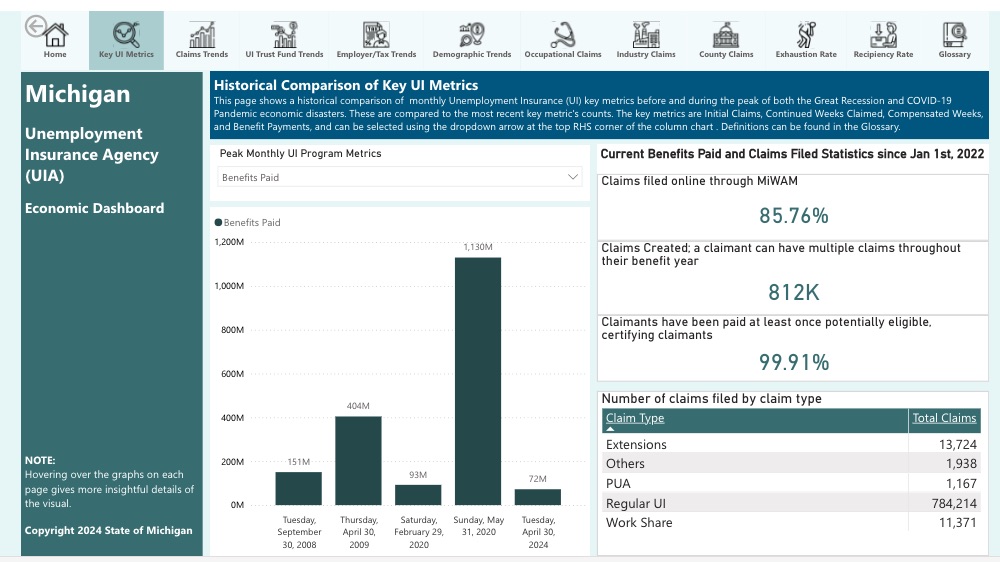
This dashboard provides a comprehensive view of underlying trends in unemployment across Michigan. It serves as an invaluable resource for understanding the impacts of unemployment on various industries, occupations, and communities. By providing detailed insights into sectors experiencing layoffs, claimant demographics, and the regions most affected, the dashboard equips us with the data needed to develop targeted solutions tailored to the needs of Michiganders.
This Playbook is produced by the New Jersey State Office of Innovation’s to help government resources better connect their audiences and constituents to their programs.
The California Integrated Travel Project (Cal-ITP) simplifies transit benefits eligibility by developing the Benefits App, which uses Login.gov to securely verify age-based discounts for public transit riders. The project aims to create a standardized, interoperable system for verifying transit benefits, improving accessibility for low-income and special groups while reducing administrative burdens for transit agencies.
Through its work with USDS, California identified key strategies and quick implementation steps to automate federal unwinding waivers that would net the largest impact for Medi-Cal redeterminations.
California Health and Human Services Agency (Cal HHS)
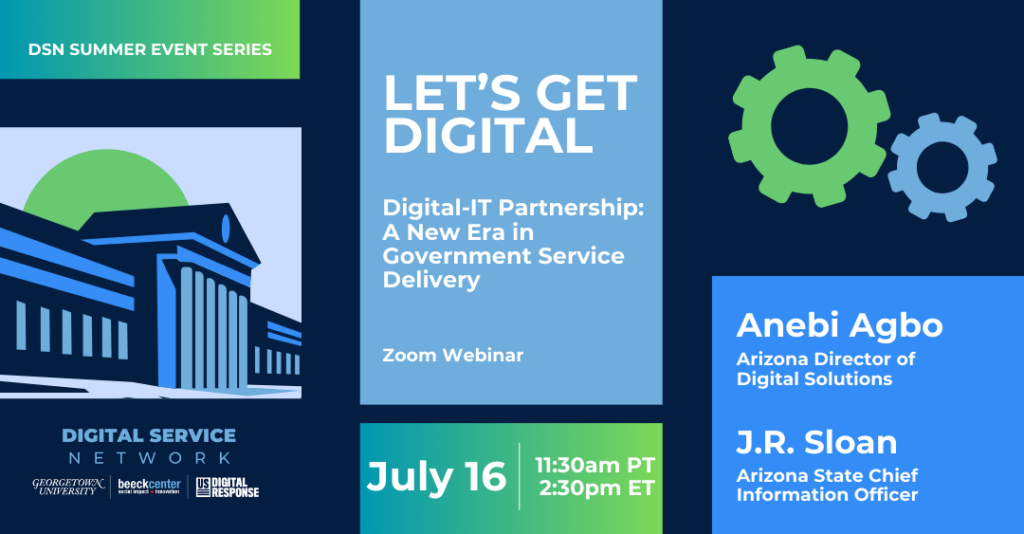
To kick off the Digital Service Network’s (DSN) summer event series, Let’s Get Digital, the DSN heard from the State of Arizona on their efforts to transform government services through a strong collaboration between information technology (IT) and digital service functions.
This presentation was recorded at the Texting and Notification Working Group meeting coordinated in part by the Aspen Institute Financial Security Program on February 28, 2024.
This strategic plan outlines Colorado's vision to enhance digital government by improving broadband access, simplifying government services, and leveraging data to create a more accessible, efficient, and responsive government for all residents.
Colorado Governor's Office of Information Technology (OIT)