A blog post offering four distinct types of visualization maps that help digital project teams quickly build shared understanding and alignment when starting new work.
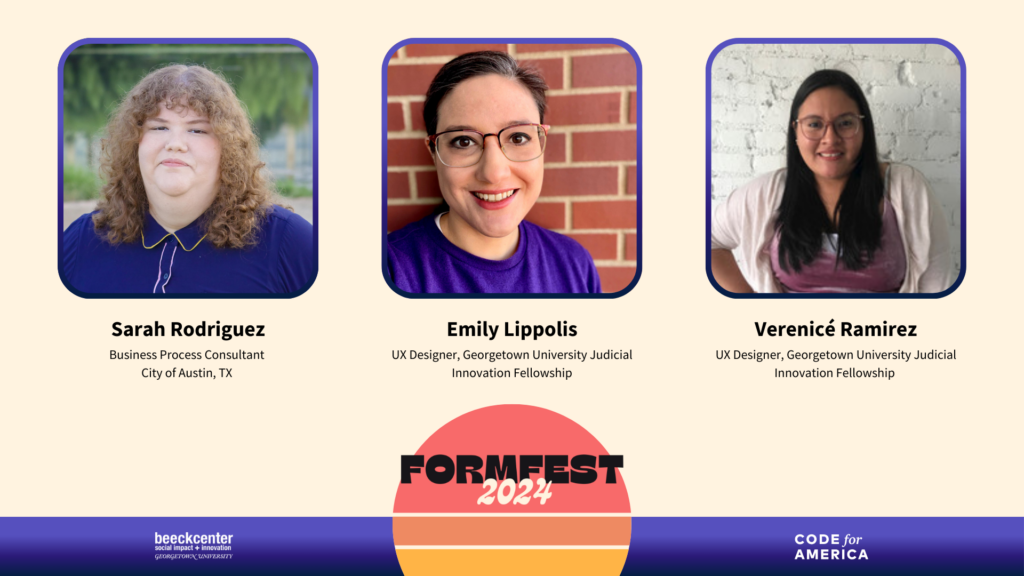
A profile on FormFest speakers Sarah Rodriguez, Emily Lippolis, and Verenice Ramirez, featuring stories about their motivations for working on public sector form innovation.
This publication seeks to answer one of the most common questions that CIOs ask: “What are other states doing with generative AI and what is the role of the state CIO?”
National Association of State Chief Information Officers (NASCIO)
An event recap from one of FormFest 2024's opening main stage featuring speakers from the Commonwealth of Pennsylvania, State of Maryland, Beeck Center for Social Impact + Innovation, and Code for America.
An event recap from one of FormFest 2024's breakout sessions featuring speakers from the state of Maryland's Department of Social Services and the U.S. Department of Health and Human Services (HHS).
This workshop summary provides practical guidance for web developers and designers on implementing accessible web design practices, emphasizing the importance of inclusivity and usability for all users.
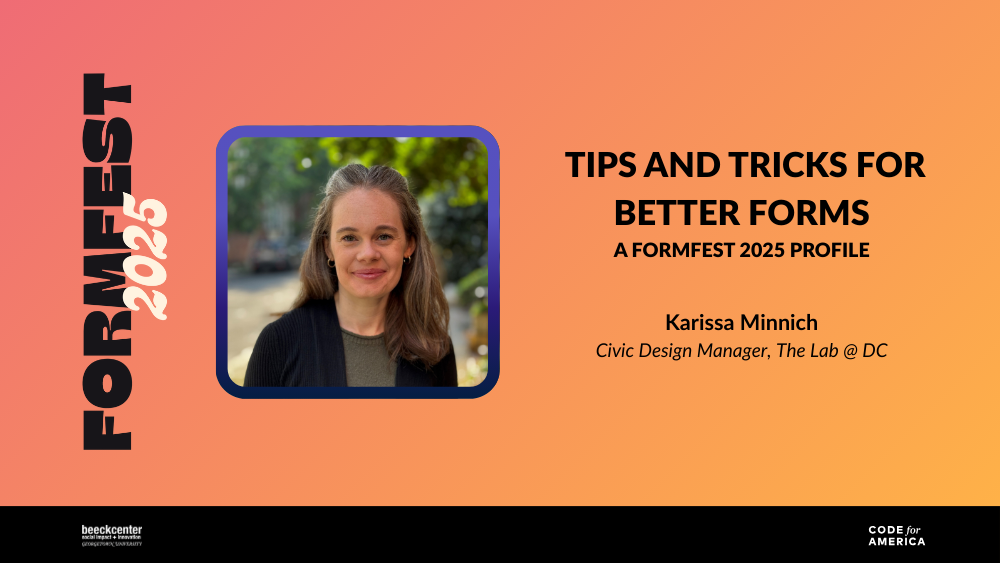
A profile on FormFest speaker Karissa Minnich, a civic design manager with The Lab @ DC, whose innovative approach to redesigning government forms has transformed paperwork into a model of human-centered design.