This collection of research references is designed to support government agencies designing public-facing identity management processes that meet people’s needs.
This webinar addressed the near completion of the Medicaid continuous coverage unwinding, highlighting a net decrease of almost 10.6 million enrollees, including over 4 million children, and discussed next steps for state compliance, best practices, and outreach strategies to reconnect eligible individuals who lost coverage.
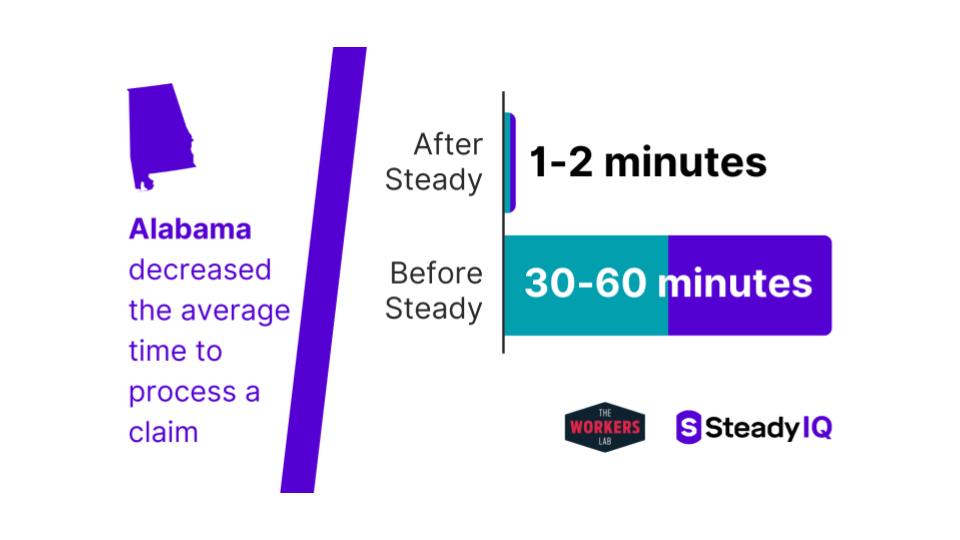
In response to COVID-19, the Workers Lab and Steady developed the "Income Passport" to streamline gig workers' unemployment benefit applications by pulling income data directly from gig platforms and financial accounts. This tool reduced manual verification time, helped prevent fraud, and improved workers' access to full benefits, with successful tests in Alabama and Louisiana demonstrating significant time savings and improved service delivery.
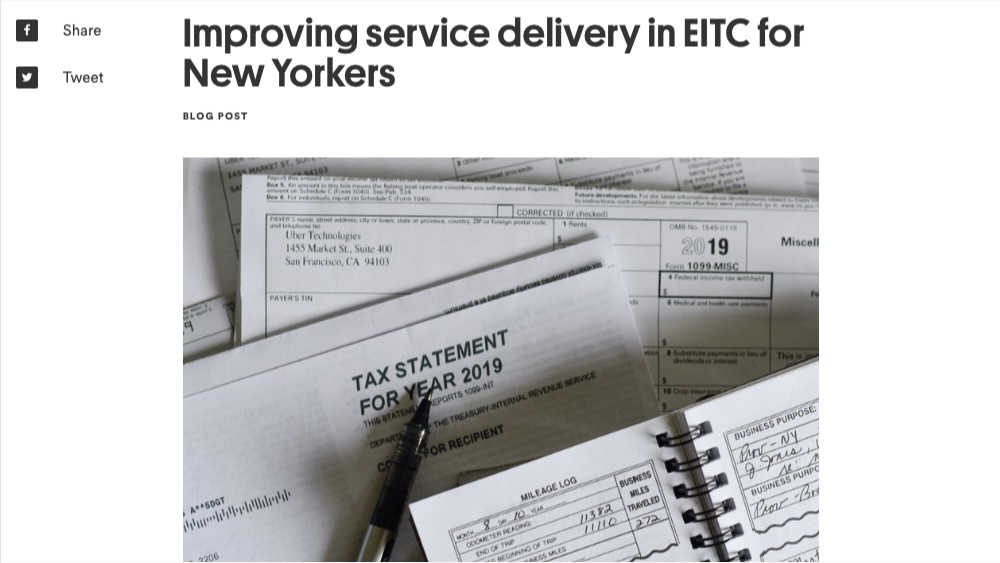
The Improving Service Delivery in EITC for New Yorkers initiative explores ways to enhance access to the Earned Income Tax Credit (EITC) through improved outreach, application processes, and service delivery.
The experience of the COVID-19 pandemic and its induced recession underscored the crucial importance of unemployment insurance (UI) to workers, and to the stability of the American economy. Temporary federal expansions of unemployment systems during the pandemic showed how they can quickly be scaled to increase benefit levels and to include categories of workers who were not previously eligible, such as the self-employed, caregivers, and low-wage workers. And, states showed that separate programs can be set up to provide similar benefits to workers who are explicitly excluded from unemployment insurance—in particular immigrants who do not have a documented immigration status.
Code for America explores the systems at play and the individuals experience of participants in WIC. By investigating overall quantitative trends in coverage, redemption, and retention rates, they use the data as a guide to build out a qualitative research plan that explains why such trends are occurring.
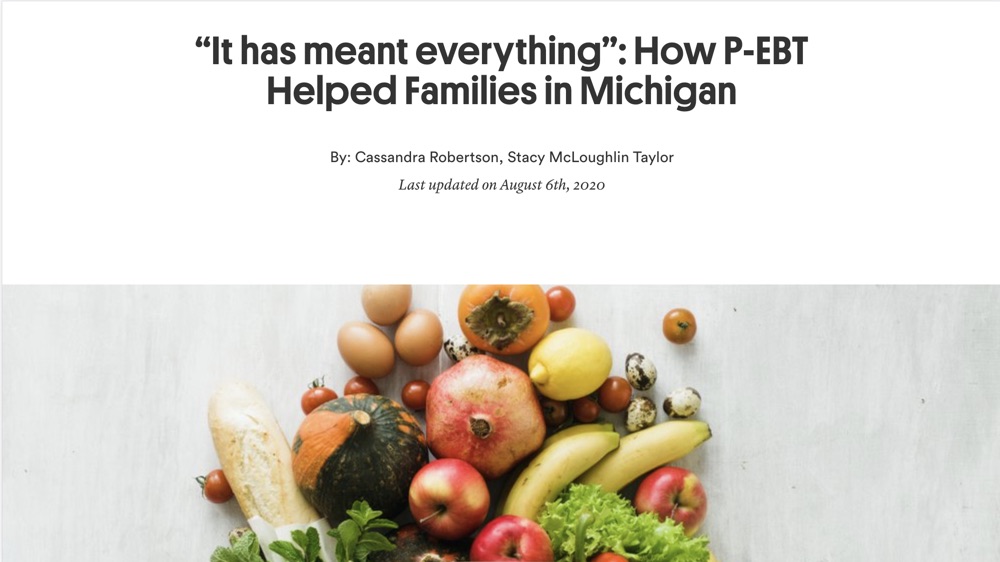
This report explores Michigan’s implementation of the Pandemic Electronic Benefit Transfer (P-EBT) program. Drawing on interviews from individuals within the Michigan Department of Health and Human Services and input from SNAP participants via surveys distributed using the Fresh EBT app, this report provides insights into the strategies that enabled Michigan to roll out an entirely new program quickly and effectively.
This report documents best practices and lessons learned from project streamlined data sharing between SNAP and WIC, enhancing cross-enrollment processes
American Public Human Services Association (APHSA)
This playbook outlines the ways Community Action and human services agencies worked together to meet the pandemic challenge—what worked well, obstacles and difficulties, and lessons learned to inform the path forward, partnering to achieve a more equitable recovery. It also explains how communities have leveraged opportunities to partner on approaches that hold the promise of deeper, longer lasting changes for families—work shaped by families’ wishes and strengths and designed to advance both family-level and systems-level change.
American Public Human Services Association (APHSA)
The report highlights that many eligible low-income children are not receiving WIC benefits during the COVID-19 pandemic, with participation rates varying significantly by state and lagging behind programs like Medicaid and SNAP.