The Digital Services Network (DSN) spoke with Connecticut’s digital program manager, Max Gigle, and Director of Digital Government and Operational Excellence David Labbadia, to learn more about the team’s human-centered approach to developing Business.CT.gov as the first step on the path toward an “all-digital government.”
The article outlines NYC Opportunity's "Designed by Community" program, which funds and empowers local leaders to create solutions for challenges in marginalized communities. Initially focused on government projects, the program pivoted during the pandemic to support community-led initiatives, with projects ranging from mentorship programs to tech tools for public housing residents.
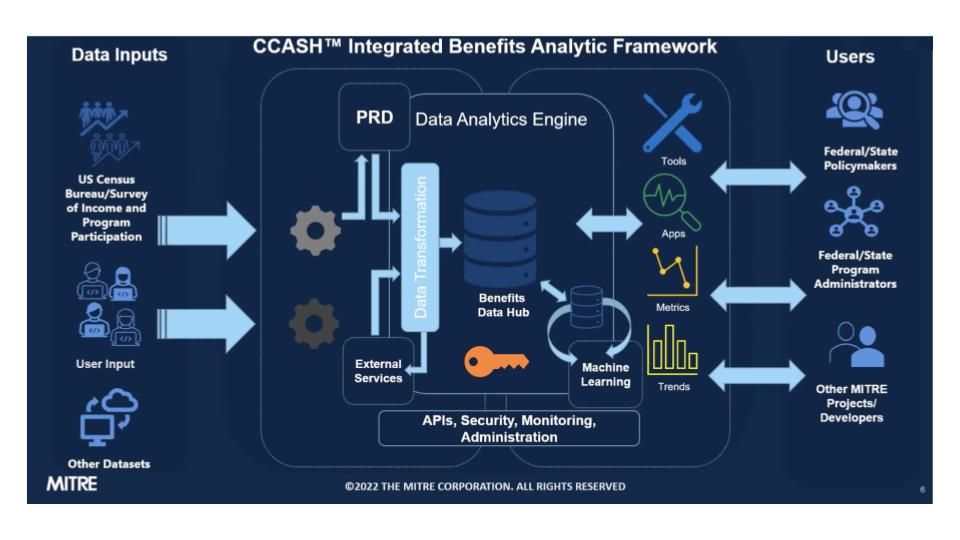
MITRE developed the Comprehensive Careers and Supports for Households (CCASH™) tool to help individuals understand and manage federal benefits and employment services, transitioning from a consumer-focused tool to a policy analytics system. By integrating data from sources like the U.S. Census and the Policy Rules Database, MITRE created a model that allows users to analyze and compare benefits eligibility across states, supporting evidence-based policymaking.
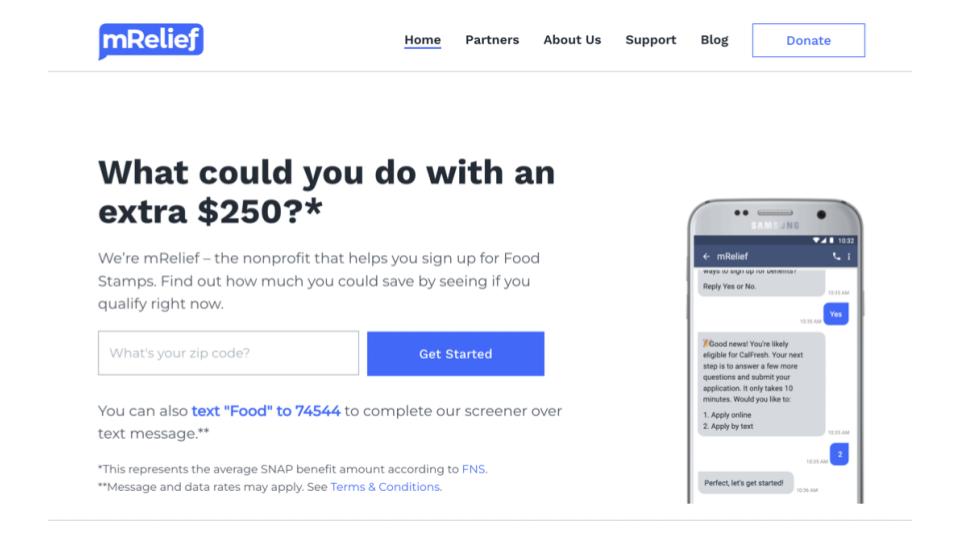
mRelief is a nonprofit that helps individuals in all 53 U.S. states and territories determine SNAP eligibility and apply using easy-to-use web and text tools. Their simplified, inclusive approach has supported over 2.7 million people and unlocked over $1 billion in benefits, focusing on minimizing barriers and adapting eligibility rules across states.
In our research announcement on theories of change (ToC) for digital government, the Digital Service Network shared our belief that all Digital Service (DS) teams should work to develop a ToC.
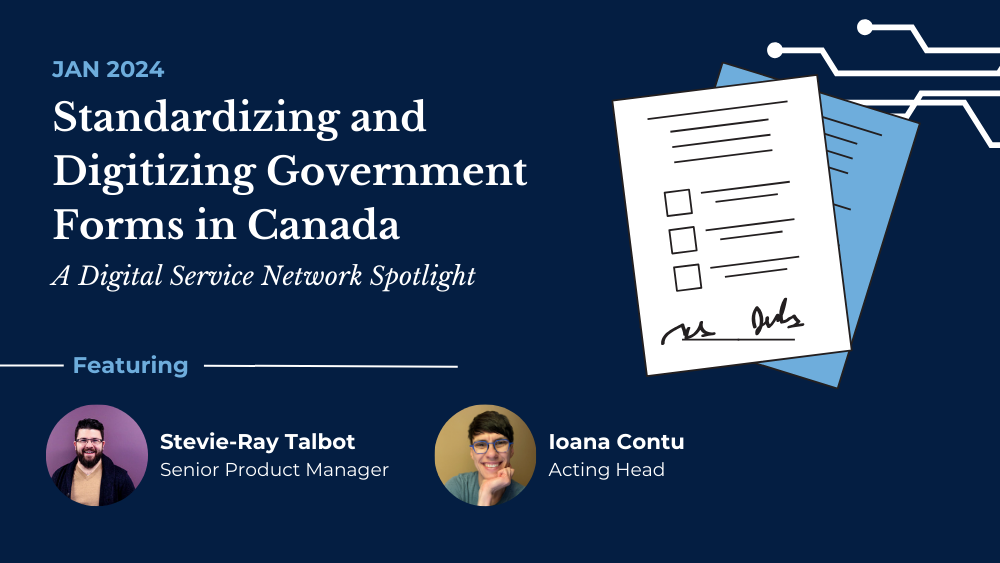
The Digital Service Network (DSN) spoke with GC Forms’ Senior Product Manager Stevie-Ray Talbot and Acting Head Ioana Contu to learn more about the team's approach to building GC Forms.
This webinar session discusses the importance of using CX metrics to guide agency-level decisions and how to gather, analyze, and apply customer feedback to optimize products and services.
An April 2024 Chief Digital Service Officers (CDSO) gathering included discussions about the realities of digital service leadership in government. These discussions are summarized in infographics offering valuable perspective to emerging digital service teams.
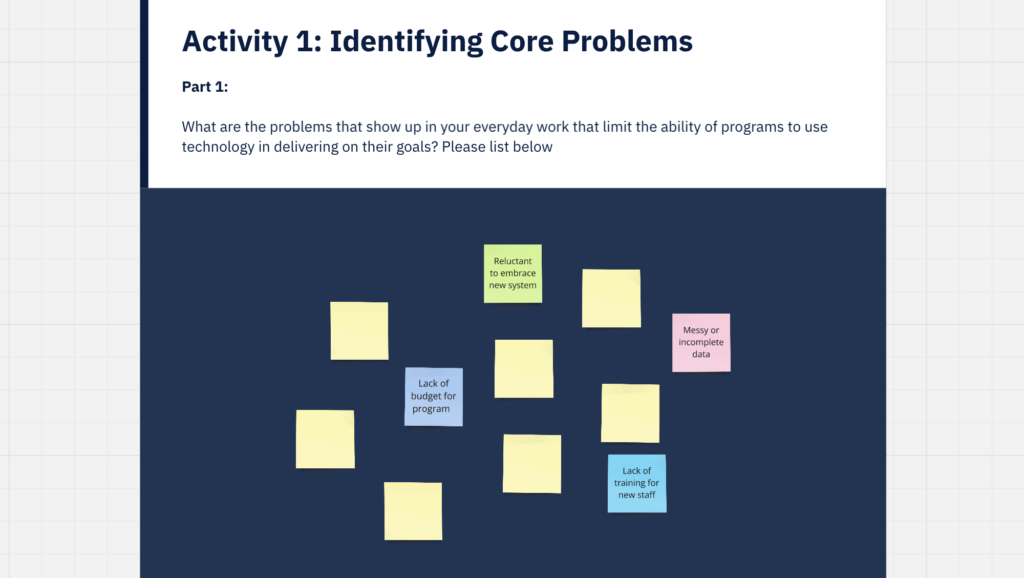
This workshop guide offers teams an opportunity to jointly work toward understanding core problems impacting digital delivery in their organization. The guide is structured in two parts: (1) a Miro template and (2) a Facilitation Guide.
The team conducted experiments to determine whether clients would be responsive to proactive support offered by a chatbot, and identify the ideal timing of the intervention.
The team developed an AI-powered explanation feature that effectively translates complex, multi-program policy calculations into clear and accessible explanations, enabling users to explore "what-if" scenarios and understand key factors influencing benefit amounts and eligibility thresholds.