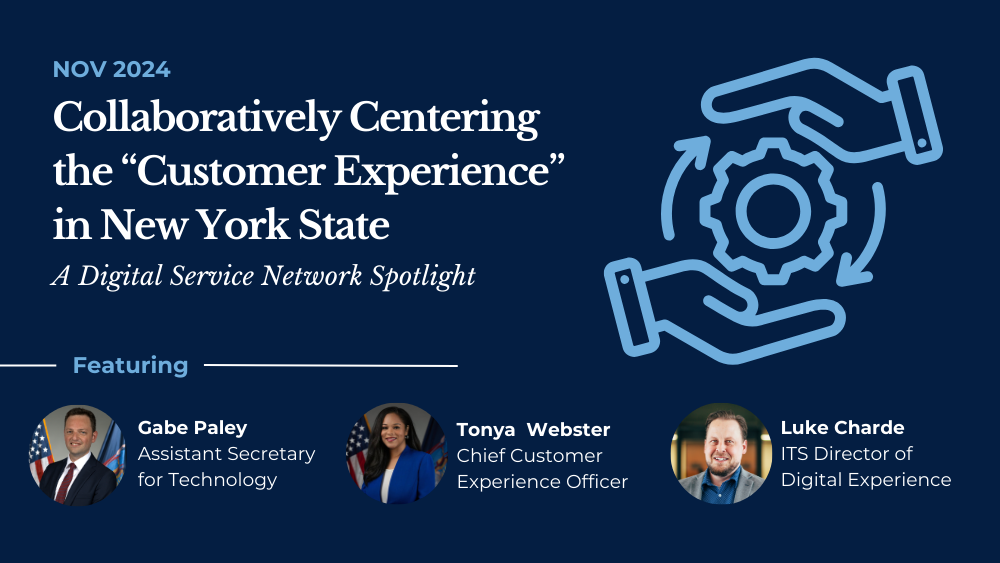
The Digital Service Network (DSN) spoke with three staff members from the New York State Executive Chamber—Gabe Paley, Tonya Webster, and, Luke Charde to learn more about the state's efforts to improve residents’ experiences accessing government programs.
This interview template includes questions designed to help teams conduct exploratory, semi-structured interviews with government stakeholders involved in program delivery to gather information that can help them evaluate the status quo of digital delivery in their organization.
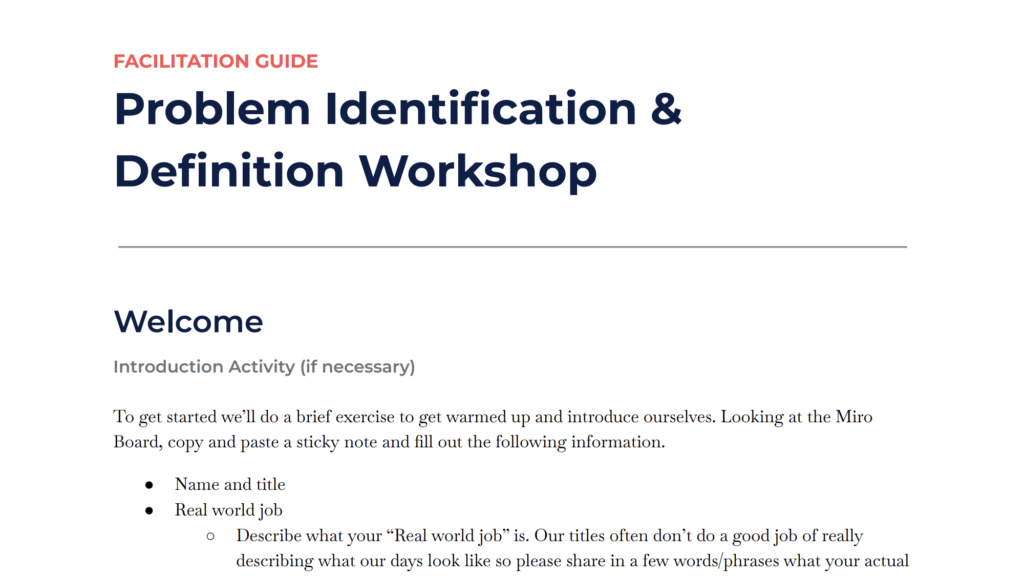
This workshop guide offers teams an opportunity to jointly work toward understanding core problems impacting digital delivery in their organization. The guide is structured in two parts: (1) a Miro template and (2) a Facilitation Guide.
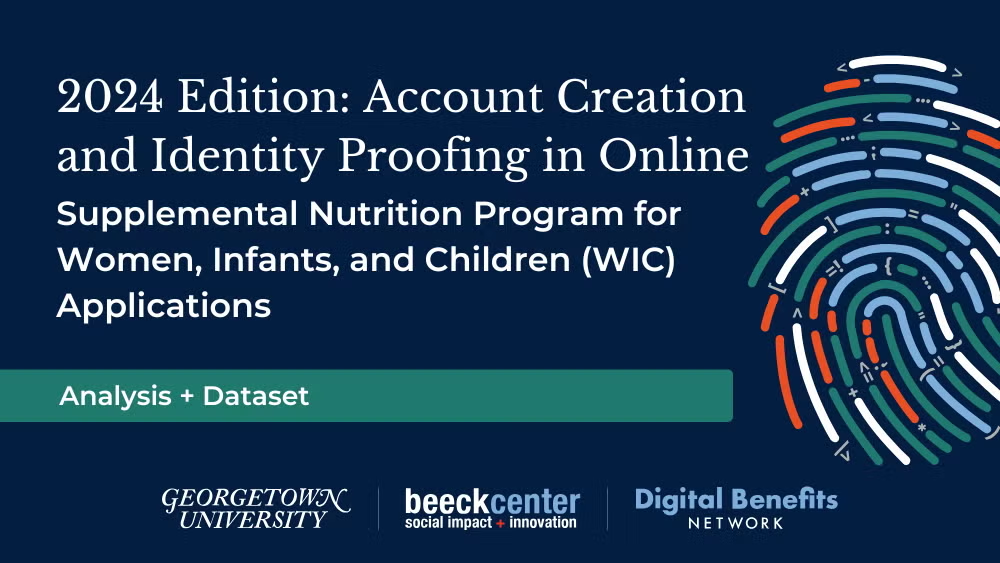
In December 2024, the Digital Benefits Network released an updated open dataset on authentication and identity proofing requirements across various public benefits applications to highlight best practices and areas for improvement in identity management.
This mainstage session from FormFest 2024 featured behind-the-scenes stories about the IRS’ work to turn tax forms from static PDFs into a user friendly digital experience.
This session from FormFest 2024 focused on how governments are scaling their SNAP benefits programs, with Maryland’s improved integrated benefits application and the Office of Evaluation Sciences’ changes to questions on the SNAP application.
This session from FormFest 2024 features Arizona’s form improvement capacity building initiative and Massachusetts’ form improvements that were a result of the Delivering a Digital-First Public Experience act.
This article highlights how the City of Saint Paul and Ramsey County are advancing equitable access to climate-resilient green careers through their participation in TOPCities.
This case study explores how the City of Akron developed a community tree map to engage residents in urban forestry efforts, enabling them to identify, grow, and care for trees in their neighborhoods.