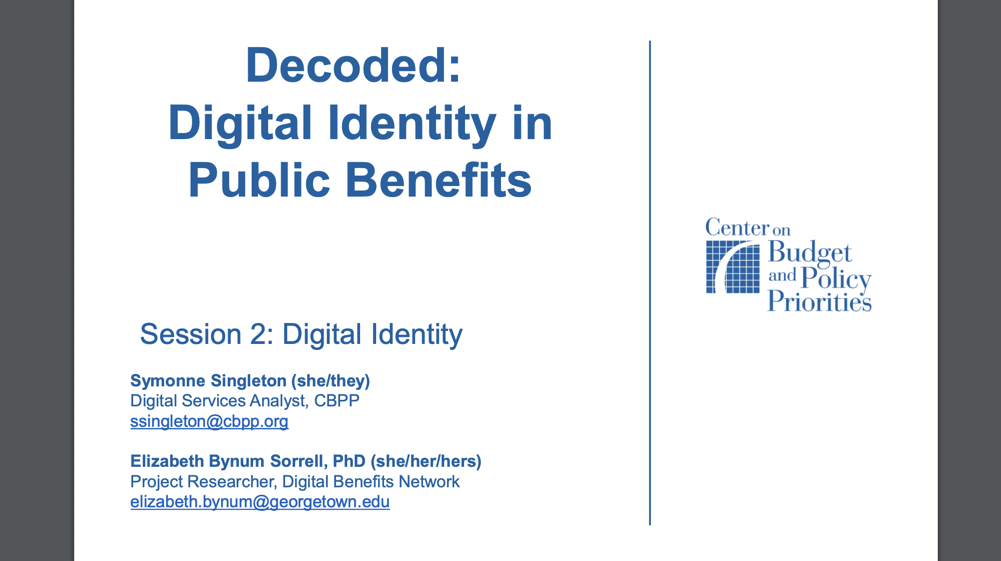
In 2024, the Center on Budget and Policy Priorities and Digital Benefits Network led a workshop to explore key terms related to digital identity, and provide ecosystem-level context on how authentication and identity proofing may show up in the online benefits experience and impact clients. This resource links to the presentation slides.
This report examines how states strategically approached managing and administering the historic influx of COVID-19 relief funds for child care and early childhood systems, focusing on governance structures, funding management systems, and data systems
This report documents best practices and lessons learned from project streamlined data sharing between SNAP and WIC, enhancing cross-enrollment processes
American Public Human Services Association (APHSA)
The New Jersey Department of Human Services and New Jersey Department of Health collaborated in their Coordinating SNAP & Nutrition Supports project to enhance the enrollment and coordination of SNAP and WIC programs.
American Public Human Services Association (APHSA)
Are you experienced in design, development, and configuration of systems? The Governor's Office of Administration is seeking Informational Technology Executive 3 to join our team in the Digital Experience PA team. This is your chance to work with a wide range of technologies supporting the commonwealth digital experience objectives. Apply today!
This is a job description for the role of Poverty Research Technical Fellow from the New York City Mayor's Office for Economic Opportunity (NYC Opportunity).