This annual report details the state’s strategic use of technology to enhance digital services, cybersecurity, equity, and efficiency across government, improving access and outcomes for all Minnesotans.
This guide introduces privacy-enhancing technologies (PETs) and provides practical guidance for government agencies on selecting and implementing them to securely use, share, and protect sensitive data.
This guide outlines free and low-cost digital inclusion resources available in Long Beach, CA, including internet access, device distribution, digital skills training, and job readiness programs.
This article shares insights from Minnesota-based focus groups, revealing that low-income women navigating unemployment insurance often face confusion and uncertainty around eligibility, complex administrative processes, and additional challenges related to childcare, housing stability, and mistrust of benefit systems.
This report catalogs the policy choices, demonstration projects, and waivers each state uses to administer SNAP, highlighting how states adapt federal rules to local needs.
Led by the Digital Benefits Network in partnership with Public Policy Lab, the Digital Doorways research project amplifies the lived experiences of beneficiaries to provide new insights into people’s experiences with digital identity processes and technology in public benefits. This report details the project’s findings, directly highlighting the voices of beneficiaries through videos and photos.
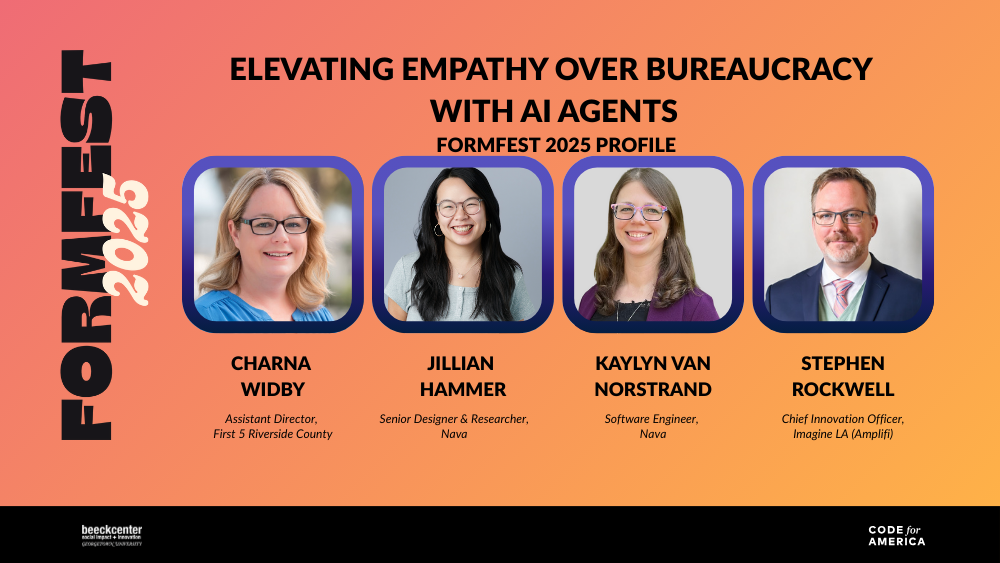
This FormFest profile highlights Riverside County’s pilot of AI-powered interviews that streamline benefit applications, reducing bureaucratic burden on families in crisis while freeing caseworkers to focus on human connection.
This memorandum summarizes the fiscal and programmatic impacts of Public Law 119-21 (H.R. 1 – “One Big Beautiful Bill”) on the state, detailing major provisions related to SNAP, Medicaid, higher education, taxation, and other federally funded programs.
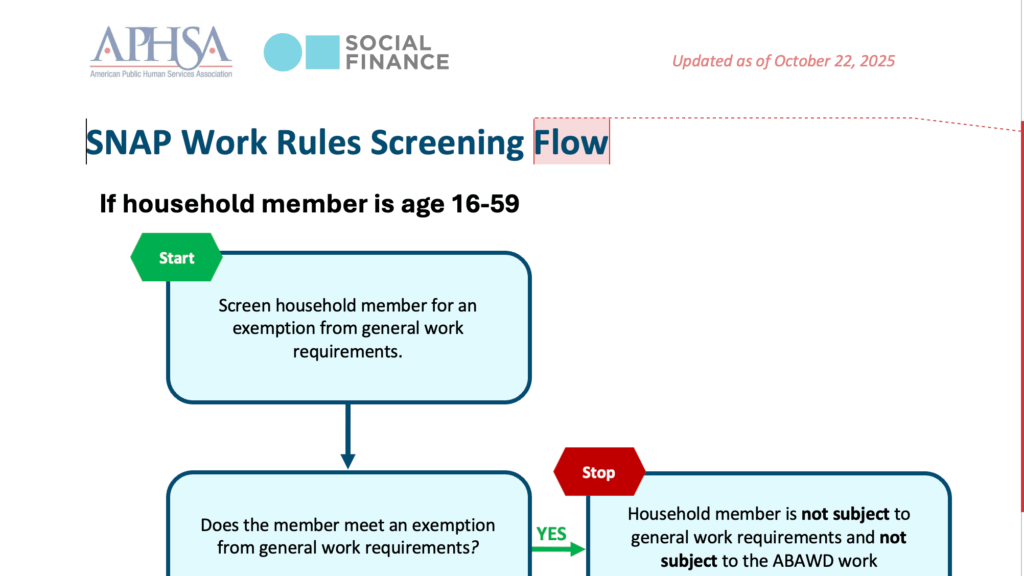
This document is a caseworker-facing flowchart for use in screening SNAP applicants and participants to determine if they are subject to work requirements.
American Public Human Services Association (APHSA)
A case study describing how Massachusetts is building long-term public-sector capacity to deliver people-centered digital services by strengthening in-house expertise, shared tools, and agency-embedded support.
This report provides human-centered design templates and implementation guidance to help states integrate Medicaid work requirement questions into benefits applications while minimizing administrative burden and coverage loss.