Location: United States
-
Business.CT.gov 2023 Site Analytics
Website analytics for Business.CT.gov. Affiliated with DSN Spotlight "The Door to Digital Transformation in Connecticut."
-
Service Design Manager
This is a job description for the role of Service Design Manager from the State of Connecticut.
-

Service Designer
This is a job description for the role of Service Designer from the State of Connecticut.
-
Content Specialist/Creative Services Coordinator
This is a job description for the role of Content Specialist/Creative Services Coordinator from the City of Saint Paul.
-
Software Engineering Manager
This is a job description for the role of Software Engineering Manager from the City of Philadelphia.
-
Deputy Director of Strategy
This is a job description for the role of Deputy Director of Strategy from the Commonwealth of Massachusetts.
-
Data Privacy, Design and Compliance
This is a job description for the role of Data Privacy, Design, and Compliance from Salt Lake County, UT.
-
User Experience Researcher
This is a job description for the role of User Experience Researcher from the City of Saint Paul, MN.
-
Digital Services Manager
This is a job description for the role of Digital Services Manager from the City of Portland, OR.
-
Engineering and Cybersecurity Lead
This is a job description for the role of Engineering & Cybersecurity Lead from the Health Resources and Services Administration (HRSAgov), HHS.
-
Using Artificial Intelligence to De-Jargon Government Language
A training course on using artificial intelligence (AI) tools to de-jargonize government language, with a tutorial on turning a complex piece of government writing into simpler and easier-to-understand language for government employees and residents alike.
-
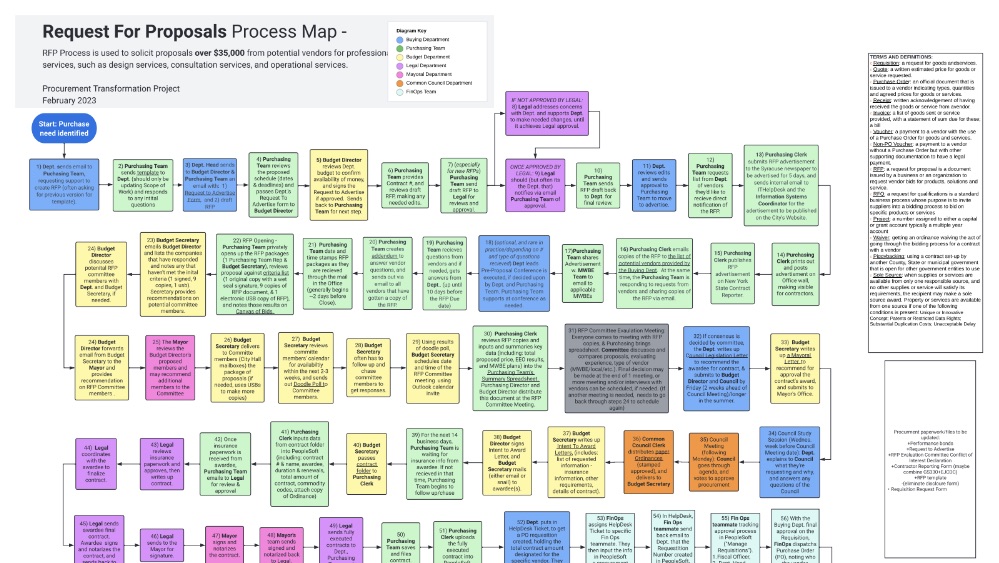
City of Syracuse Procurement Transformation Process Mapping
City of Syracuse's iterative procurement lifecycle process mapping