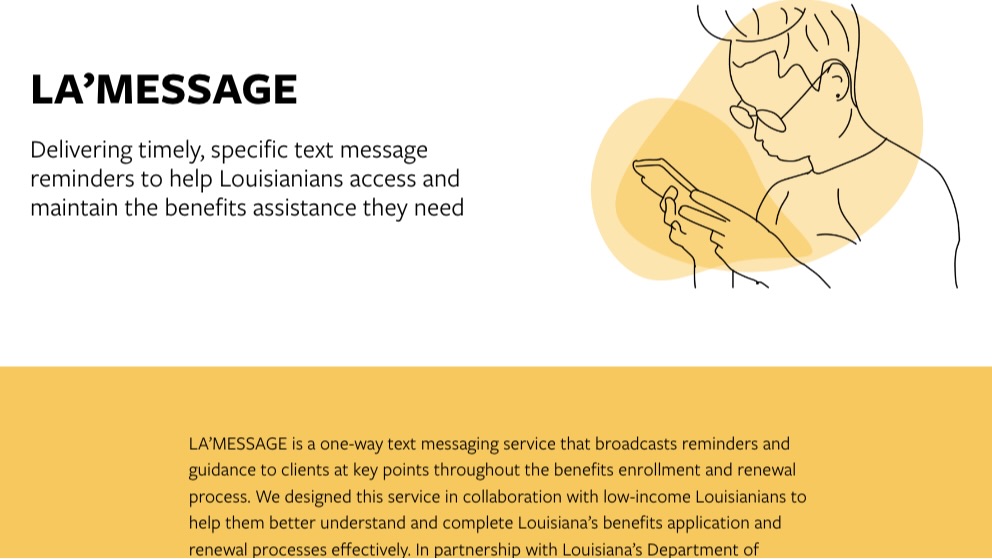
LA’MESSAGE is a one-way text messaging service developed by Code for America in partnership with Louisiana to broadcast reminders and guidance to residents enrolled in and eligible for SNAP, Medicaid, TANF, and WIC at key points throughout the benefits enrollment and renewal process.
This report calculates the cumulative impact of major benefit programs on two types of families and how their benefits change as they move into the labor market and climb the ladder of upward mobility.
This brief estimates of benefits, costs, interactions with other means tested programs, and impact on poverty for the paid family and medical leave program.
A practical guide for advocates that explains how automated benefit notices are generated, where common notice failures originate, and how to push for effective fixes.
This report explores how despite unresolved concerns, an audit-centered algorithmic accountability approach is being rapidly mainstreamed into voluntary frameworks and regulations.
Better designs should never come at the cost of another person’s wellbeing. Informed consent is a fundamental part of an ethical research program, which respects participants and protects them from harm.