This session from FormFest 2024 focused on how governments are scaling their SNAP benefits programs, with Maryland’s improved integrated benefits application and the Office of Evaluation Sciences’ changes to questions on the SNAP application.
Articles and resources from the Resident Engagement section of the City Tech's Civic User Testing group (CUTgroup) website. CUTgroup was a 1,600+ member civic engagement program that invited Chicago residents to contribute to emerging technology while providing public, private, and social sector partners with feedback to improve product design and deployment.
The Digital Service Network (DSN) spoke with Daniel Soto, principal management analyst at the City of Santa Ana, to learn more about how digital service innovation can occur in government organizations without formally codified or centralized digital service teams.
The Governor's Office of Administration is seeking a digital director 2 to join our growing and innovative Commonwealth Office of Digital Experience PA team! This is your chance to work with a wide range of technologies for an organization that works for the common good of Pennsylvanians. If you are detail-oriented, have excellent communication skills, and want a career serving the public, we want to talk to you!
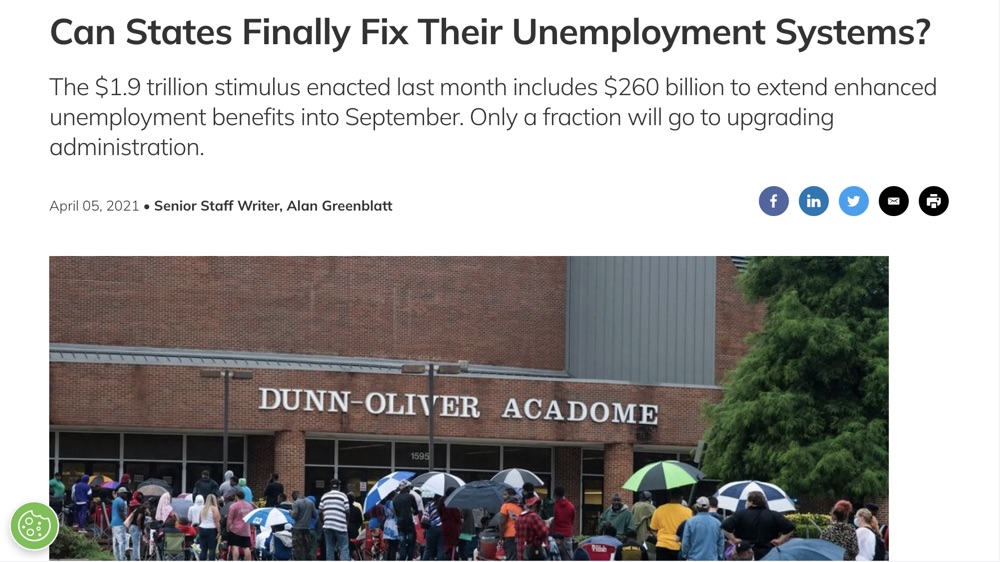
This article explores ongoing efforts to modernize state unemployment insurance (UI) systems, addressing long-standing inefficiencies and challenges exposed by the COVID-19 pandemic.
The Digital Service Network (DSN) spoke with Ashley O’Brien, user experience designer for the City of Saint Paul, MN, about the flexible and resourceful approach she took to reach people across the city.
SNAP Waivers and Adaptations During the COVID-19 Pandemic: A Survey of State Agency Perspectives in 2020 is a study conducted by the Johns Hopkins Institute for Health and Social Policy (IHSP) based at Johns Hopkins Bloomberg School of Public Health and the American Public Human Services Association (APHSA). This research seeks to understand perspectives from state SNAP administrators on the successes, challenges, and lessons learned from waivers and flexibilities used to preserve equitable access to SNAP during the COVID-19 pandemic. Based on state agency survey responses, this report summarizes key findings from the first calendar year of pandemic response and provides policy considerations for the future of SNAP. This research was supported by Healthy Eating Research, a national program of the Robert Wood Johnson Foundation.
Johns Hopkins Institute for Health and Social Policy