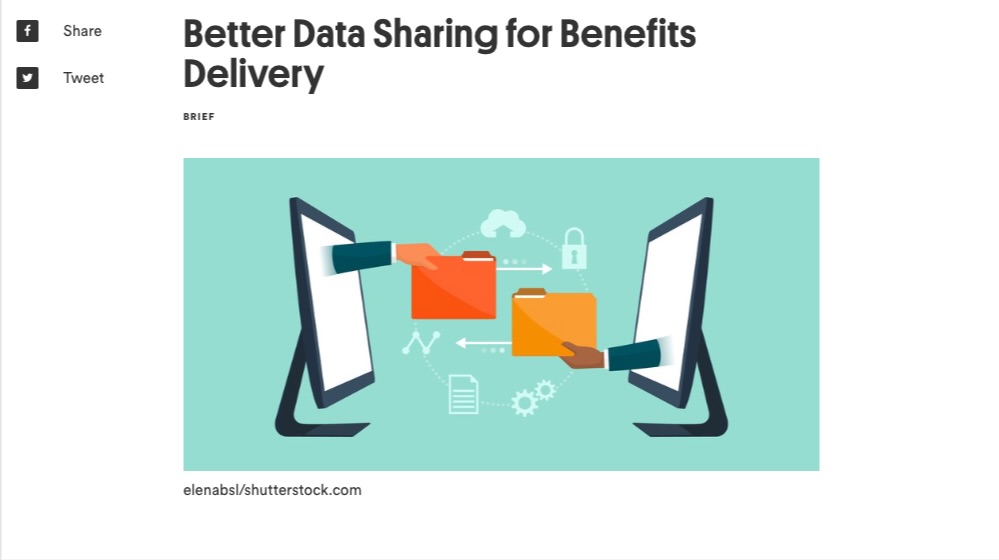
This policy brief outlines how improved data sharing between federal agencies, state and local governments, and institutions can leverage existing data from other benefits programs to streamline eligibility processes and benefits uptake for the Affordable Connectivity Program (ACP) and other programs.
This article describes the General Services Administration’s efforts to get a limited number of state and local governments to try login.gov with their federally funded programs.
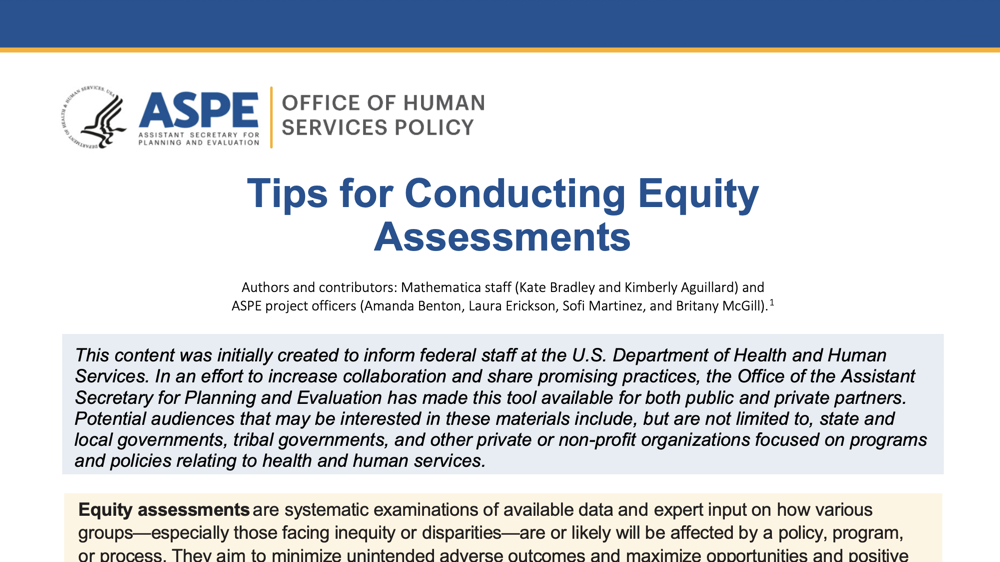
Originally created for use by federal staff at the U.S. Department of Health and Human Services, this tool describes the six steps for conducting equity assessments and provides tips for completing each step.
Office of the Assistant Secretary for Planning and Evaluation (ASPE)
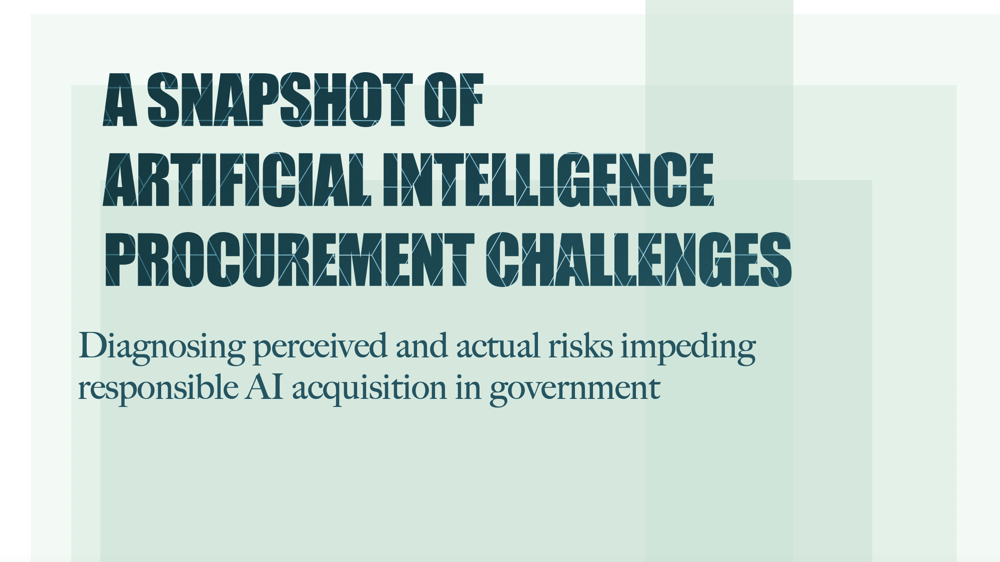
Artificial intelligence promises exciting new opportunities for the government to make policy, deliver services and engage with residents. But government procurement practices need to adapt if we are to ensure that rapidly-evolving AI tools meet intended purposes, avoid bias, and minimize risks to people, organizations, and communities. This report lays out five distinct challenges related to procuring AI in government.
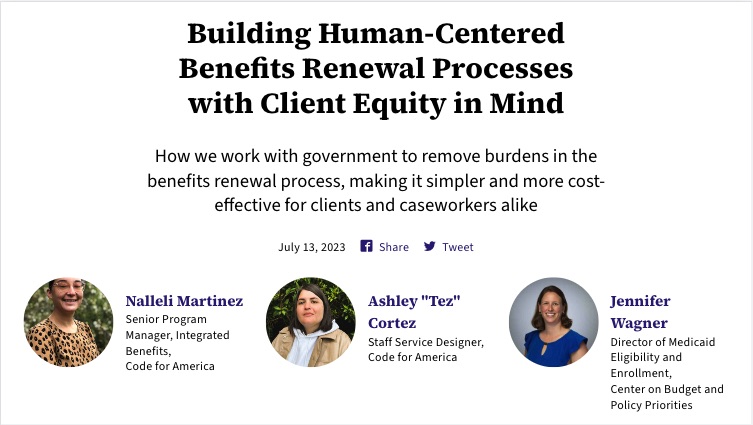
The Building Human-Centered Benefits Renewal Processes with Client Equity in Mind article by Code for America discusses the implementation of ex parte renewals in Minnesota's Medicaid program to streamline benefit renewals for aged, blind, and disabled populations, reducing administrative burdens and enhancing equity.
18F describes modular contracting, the process of breaking up large, custom software procurements into a small constellation of smaller contracts. Modular procurement requires agile, product thinking, user-centered design, DevSecOps, and loosely-coupled architecture.
Study by the Director of the Office of Management and Budget assessing methods for determining whether agency policies and actions create or exacerbate barriers to full and equal participation by eligible individuals. This study followed the Executive Order on racial equity.
In a time of crisis, behavioral science offers insights into how to reduce the paperwork and other administrative burdens that prevent people from taking advantage of crucial support services.
This playbook provides federal agencies with guidance on implementing AI in a way that is ethical, transparent, and aligned with public trust principles.
U.S. Department of Health and Human Services (HHS)