In a time of crisis, behavioral science offers insights into how to reduce the paperwork and other administrative burdens that prevent people from taking advantage of crucial support services.
This playbook provides federal agencies with guidance on implementing AI in a way that is ethical, transparent, and aligned with public trust principles.
U.S. Department of Health and Human Services (HHS)
The State of California government published guidelines for the safe and effective use of Generative Artificial (GenAI) within state agencies, in accordance with Governor Newsom's Executive Order N-12-23 on Generative Artificial Intelligence.
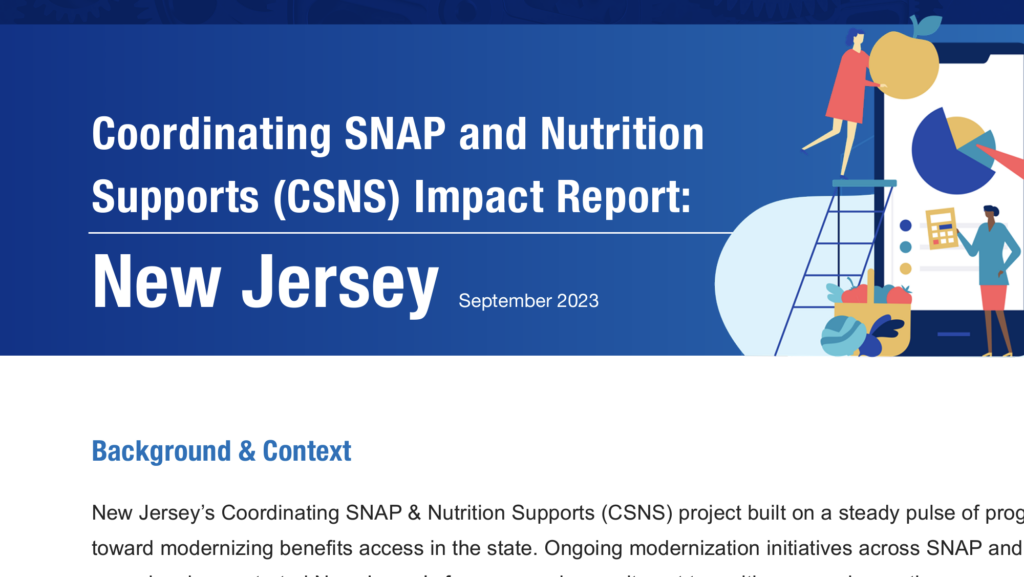
The New Jersey Department of Human Services and New Jersey Department of Health collaborated in their Coordinating SNAP & Nutrition Supports project to enhance the enrollment and coordination of SNAP and WIC programs.
American Public Human Services Association (APHSA)
This guide by Cyd Harrell serves as a comprehensive manual for technologists aiming to engage effectively in public sector projects, offering practical advice on navigating government partnerships and driving impactful change.
This report examines how implementing Asset Verification Systems (AVS) can streamline Medicaid eligibility determinations for seniors and individuals with disabilities by automating the verification of applicants' financial assets.
This toolkit offers strategies for advocates and state agencies to enhance the efficiency of eligibility verification processes for Medicaid and SNAP, aiming to reduce administrative burdens and improve access to benefits.
Programs like Medicaid and SNAP are managed at the federal level, administered at the state level, and often executed at the local level. Because there are so many in-betweens, there is significant duplicated effort, demonstrating the need to simplify eligibility rules to facilitate easier implementation.