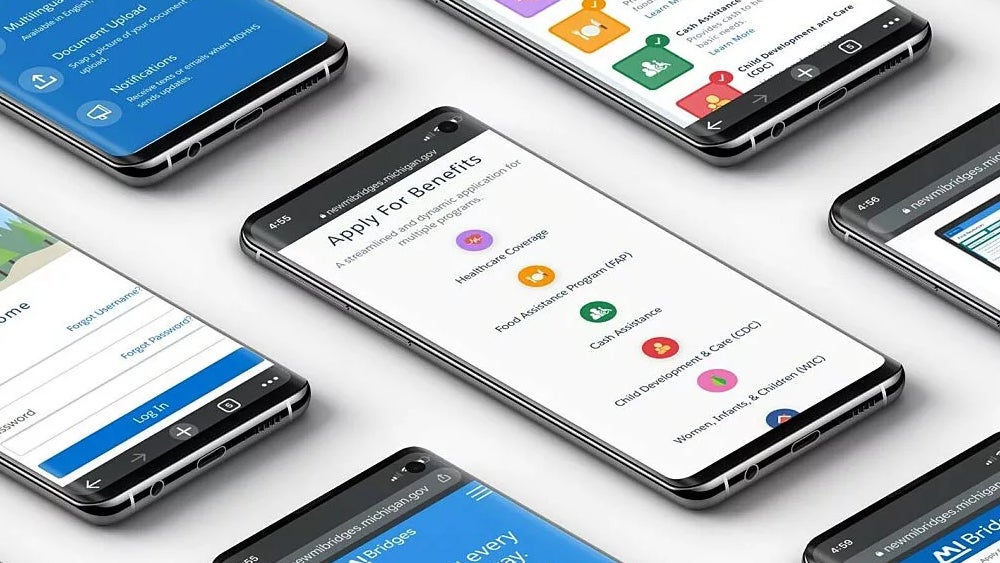
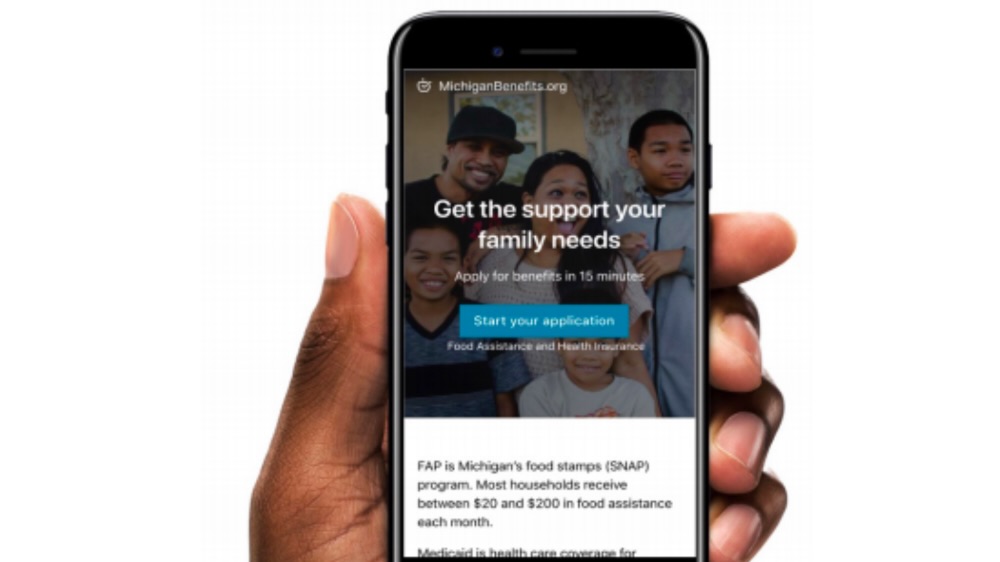
This case study documents how Civilla partnered with the Michigan Department of Health and Human Services (MDHHS) to redesign and modernize online enrollment for the state’s largest benefit programs.
This is the summary version of a report that documents four experiments exploring if AI can be used to expedite the translation of SNAP and Medicaid policies into software code for implementation in public benefits eligibility and enrollment systems under a Rules as Code approach.
This resource describes how different agencies have updated their systems to increase online and mobile access to benefits information and applications, including using text messages to share benefits information with residents.
This presentation, from the Data Sharing Working Group, highlights a Michigan Department of Health and Human Services and Benefits Data Trust project to increase enrollment in the Women, Infants, and Children (WIC) program.
This project portfolio page details a human-centered service design partnership with the Michigan Unemployment Insurance Agency (UIA) to revitalize and streamline the state's unemployment benefits system following crisis-level strain.
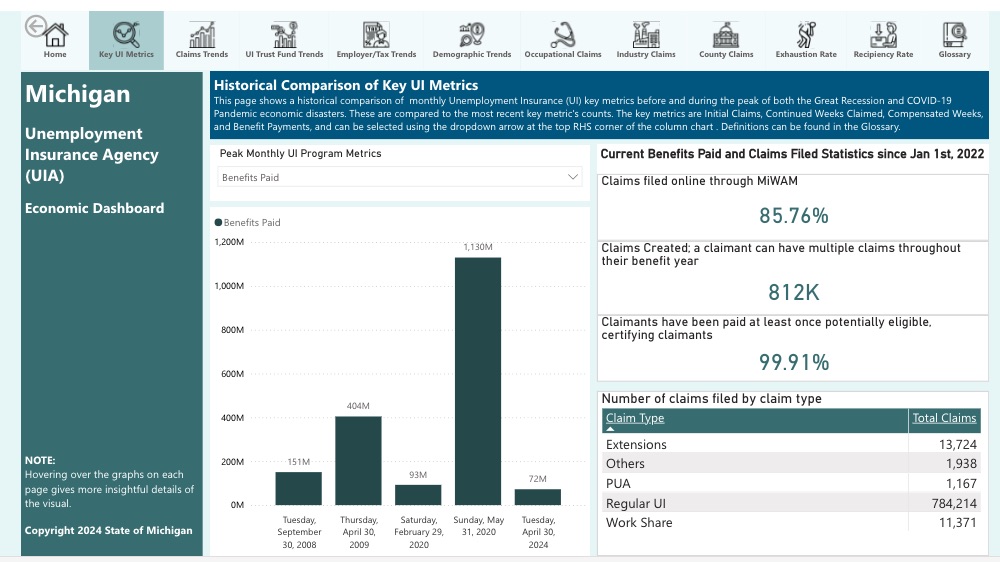
This dashboard provides a comprehensive view of underlying trends in unemployment across Michigan. It serves as an invaluable resource for understanding the impacts of unemployment on various industries, occupations, and communities. By providing detailed insights into sectors experiencing layoffs, claimant demographics, and the regions most affected, the dashboard equips us with the data needed to develop targeted solutions tailored to the needs of Michiganders.
Code for America helped expand GetCalFresh (a service that guides Californians through the SNAP application process and helps government deliver food assistance to people in need) from a small pilot into a statewide service. They also recently concluded a similar pilot in Michigan along with Civilla and the Michigan Department of Health and Human Services.