These principles and best practices for AI developers and employers to center the well-being of workers in the development and deployment of AI in the workplace and to value workers as the essential resources they are.
This guide helps UK public bodies understand how to responsibly procure, develop, and use AI while meeting their legal duties to prevent discrimination and promote equality under the Public Sector Equality Duty (PSED).
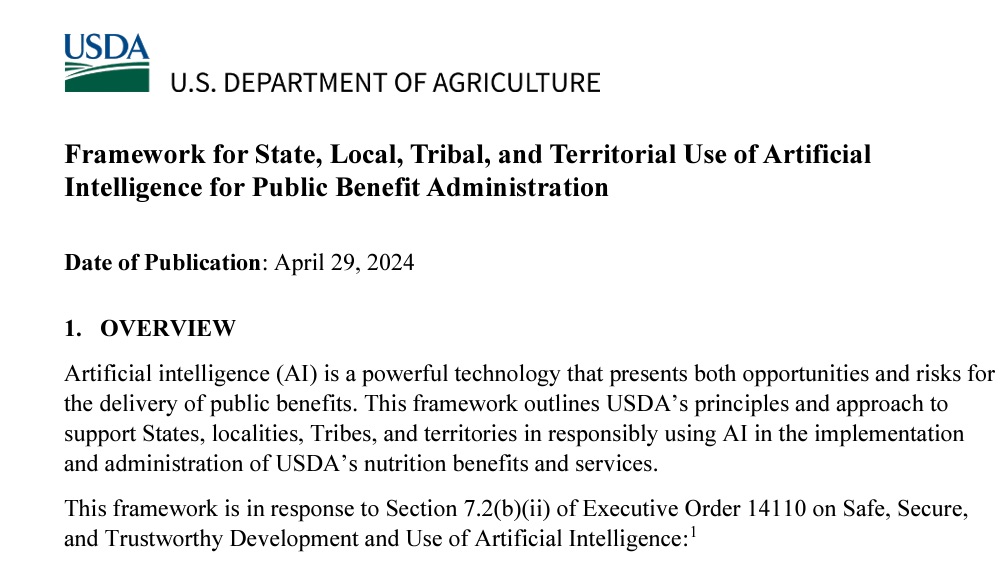
This framework outlines USDA’s principles and approach to support States, localities, Tribes, and territories in responsibly using AI in the implementation and administration of USDA’s nutrition benefits and services. This framework is in response to Section 7.2(b)(ii) of Executive Order 14110 on Safe, Secure, and Trustworthy Development and Use of Artificial Intelligence.
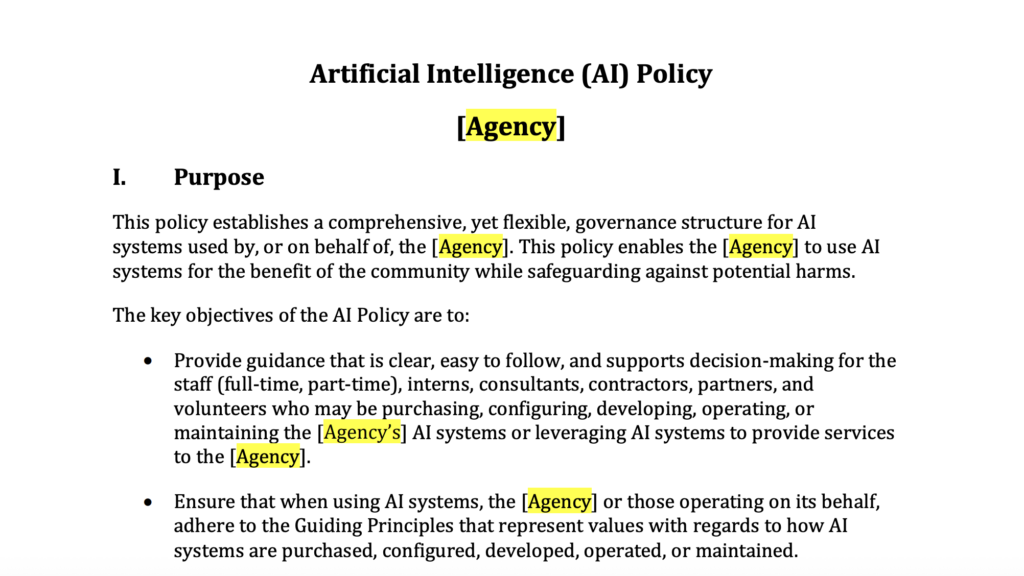
A customizable policy template that establishes governance, roles, principles, and risk-management processes for the responsible use of artificial intelligence within a government agency.
This report reviews global AI governance tools, highlighting their importance in ensuring trustworthy AI, while identifying gaps and risks in their effectiveness, and offering recommendations to improve their development, oversight, and integration into policy frameworks.
This article explores how AI and Rules as Code are turning law into automated systems, including how governance focused on transparency, explainability, and risk management can ensure these digital legal frameworks stay reliable and fair.
A guide from the General Service Administration to help government decision makers clearly see what AI means for their agencies and how to invest and build AI capabilities.