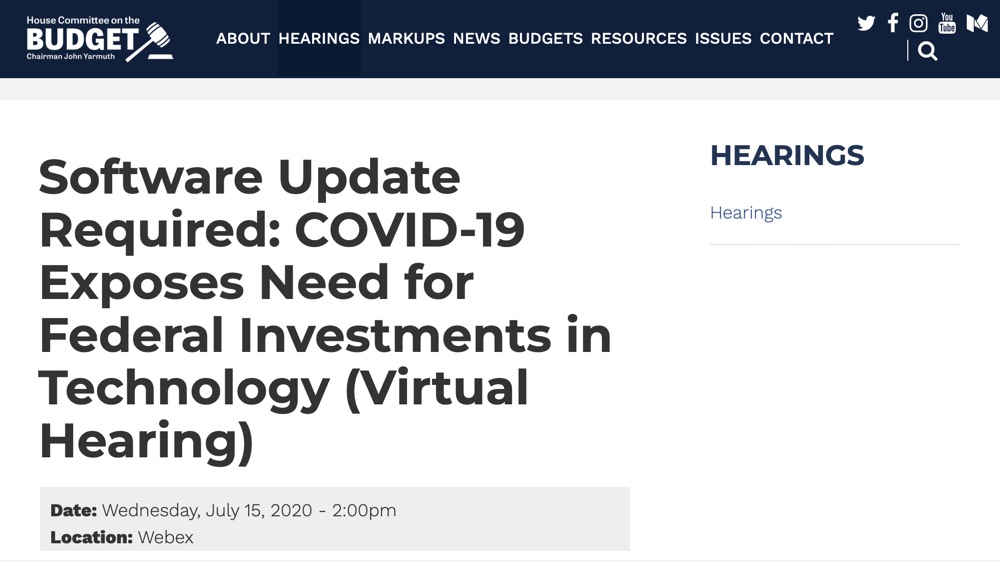
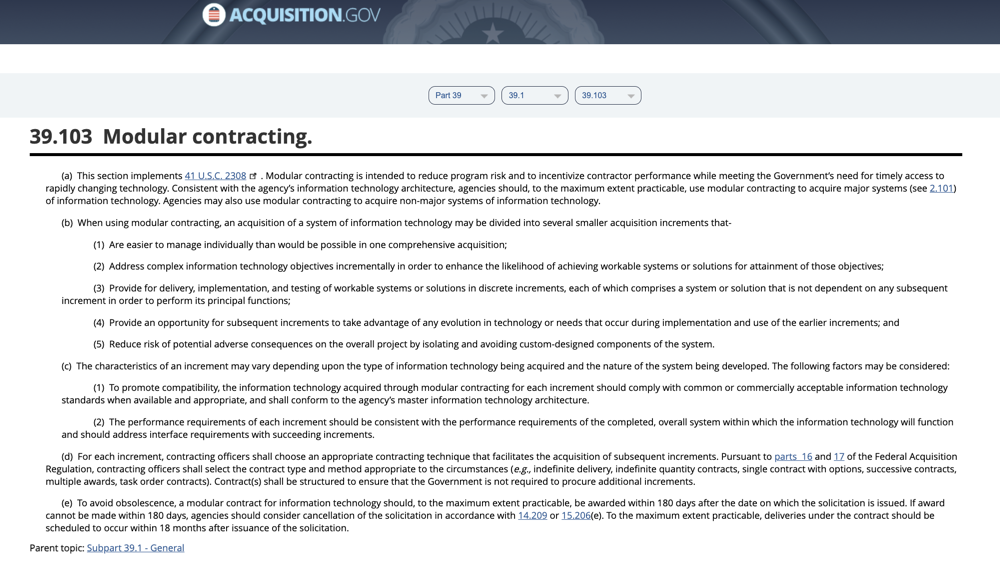
18F describes modular contracting, the process of breaking up large, custom software procurements into a small constellation of smaller contracts. Modular procurement requires agile, product thinking, user-centered design, DevSecOps, and loosely-coupled architecture.
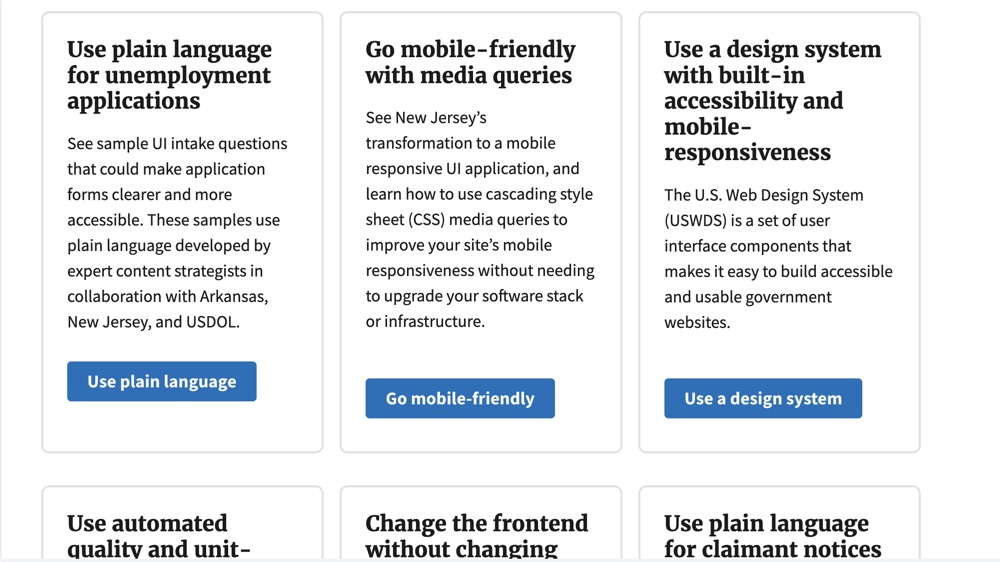
The U.S. Department of Labor is working with states, territories, and the public to develop strategies to continuously improve the nation’s unemployment insurance (UI) systems.
Part of the $1.9 trillion recovery package that Biden signed into law includes a $1 billion grant to the Technology Modernization Fund. The fund’s purpose is to help federal agencies upgrade their cybersecurity and modernize their technology. The TMF is a chance for federal agencies to move toward a responsive model of government, where people quickly and easily access the resources they need.
Jennifer Pahlka, Deputy CTO in President Obama’s Administration and author, shares her new book, Recoding America on how government must be equipped for digital delivery in order to meet ambitious policy goals. This video was recorded at the Digital Benefits Conference (BenCon) at Georgetown University on June 14, 2023.
This booklet is designed to help procurement officers and other stakeholders ensure continuity of service, enable seamless future technology upgrades, and plan for contingencies. You can use it to evaluate a prospective vendor contract or bid, or to document how a project went.
Drawing on interviews and convenings with experts and practitioners from the field of public interest technology, this report contains recommendations across five core priority action areas for cross-sector innovation and collaboration to improve state benefits systems through procurement practices.
The Administration for Children and Families’ Office of Family Assistance (OFA) worked with 18F to replace its legacy data reporting system through product management training, user research, and an assisted acquisition.
A playbook by AdHoc for agencies ready to replace enterprise software patterns with proven techniques from the world of commercial software. These plays can better equip teams with the practices that create resilient, flexible, and customer-friendly digital services.
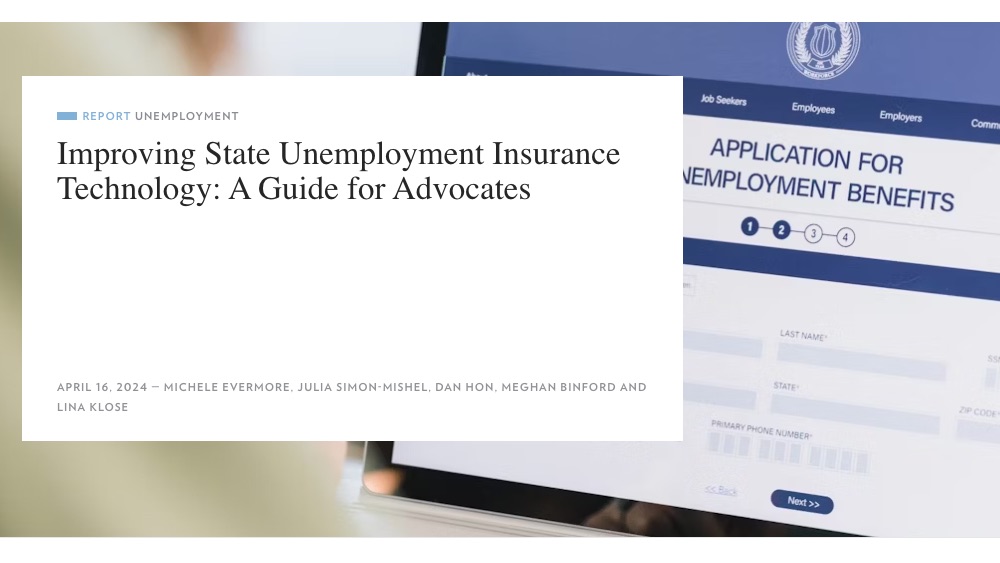
This guide is intended to provide everything else, with a focus on the basics of UI technology projects, guidance on standards for equitable uses of technology, and strategies for how to have a positive impact on these projects.