Code for America partnered with the CBPP, Civilla, and Nava to launch the Integrated Benefits Initiative, testing and piloting human-centered approaches to improve outcomes and learn what an optimal safety net could look like. This article describes key takeaways from short-term pilots implemented as part of this project.
This book is an in-depth exploration of federal programs and controversial legislation demonstrating that administrative burden has long existed in policy design, preventing citizens from accessing fundamental rights. Further discussion of how policymakers can minimize administrative burden to reduce inequality, boost civic engagement, and build an efficient state.
This webinar provides insight on behavioral science concepts and how states can put such ideas into practice to tailor engagement, messaging, and independence planning, as well as promote participation in SNAP E&T programs.
This guide explains the U.S. Digital Service’s “discovery sprint,” a process by which teams can quickly build a common understanding of the status of complex organization, system, or service.
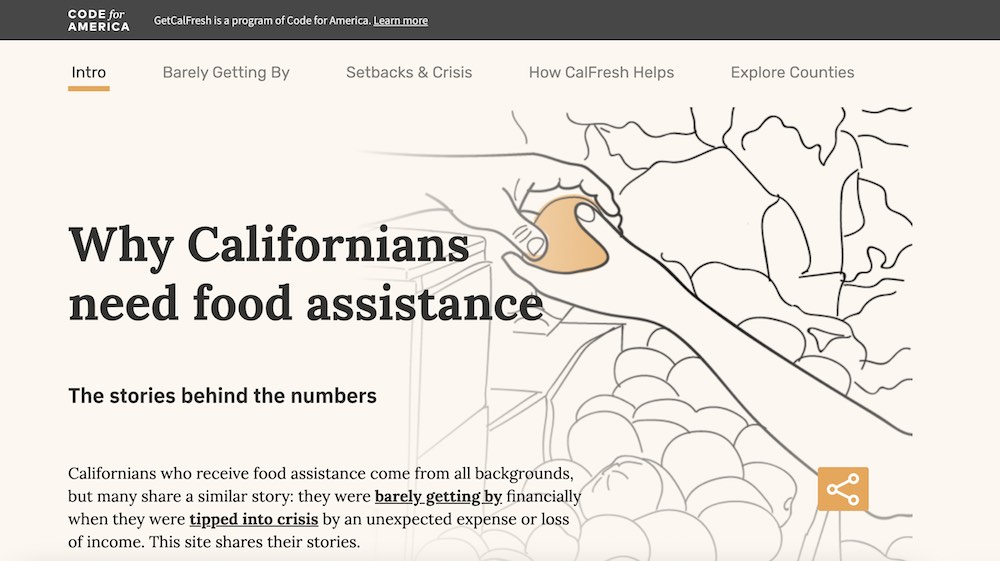
Californians who receive food assistance come from all backgrounds, but many share a similar story: they were barely getting by financially when they were tipped into crisis by an unexpected expense or loss of income. This site shares their stories.
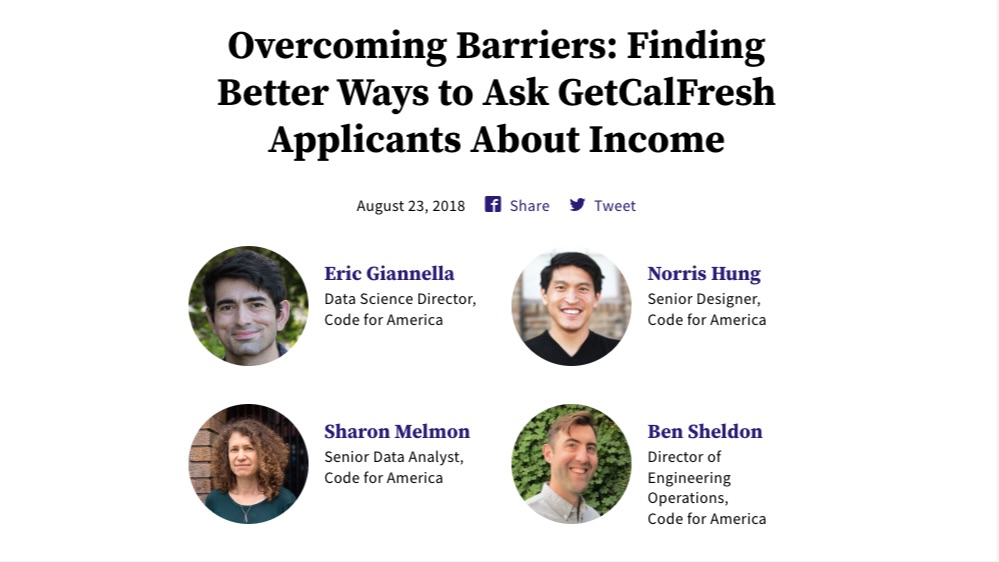
County workers typically spend most of their time trying to get income information right during eligibility interviews. This article provides several recommendations for asking about income, accounting for cognitive biases, under-reporting, and complexities in reporting income.
This Code for America article discusses how tax filing can be a powerful tool for economic justice, highlighting efforts to make the tax system more accessible and equitable for low-income individuals.
The examples in this guide describe how peer-to-peer training and updated interview scripts can help connect residents to the benefits they are eligible for.