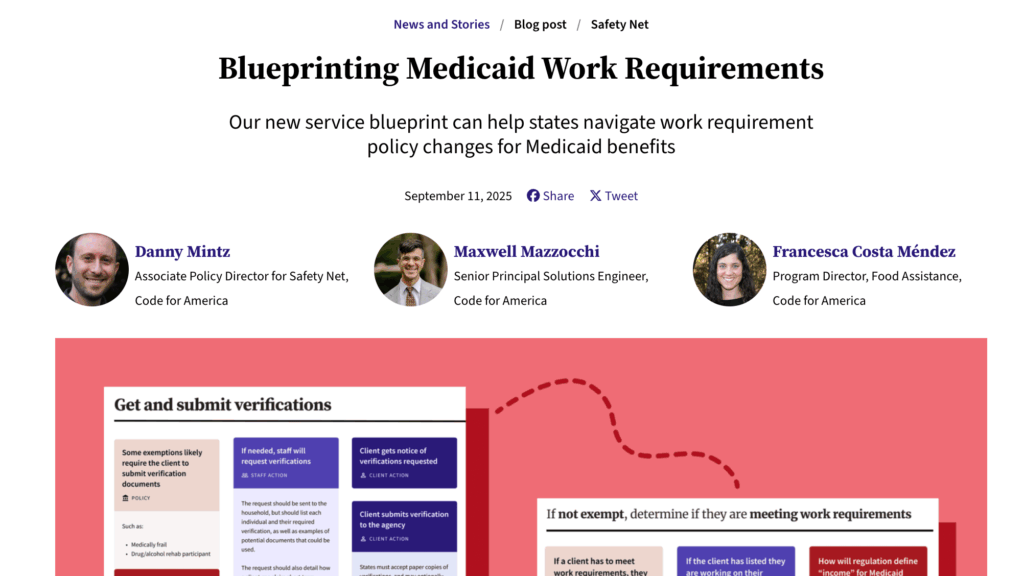
This blog introduces Code for America’s new service blueprint for Medicaid work requirements, highlighting how it can help states map system changes, identify pain points, and prioritize human-centered design.
This is the summary version of a report that documents four experiments exploring if AI can be used to expedite the translation of SNAP and Medicaid policies into software code for implementation in public benefits eligibility and enrollment systems under a Rules as Code approach.
Article announcing five new projects by the Office of Management and Budget that will improve experiences the public has with the government during significant movements in their lives. These “life experience” projects are at the center of a new model for how the Federal Government should better design and deliver benefits, services, and programs to the American people during the moments in their lives that matter most.
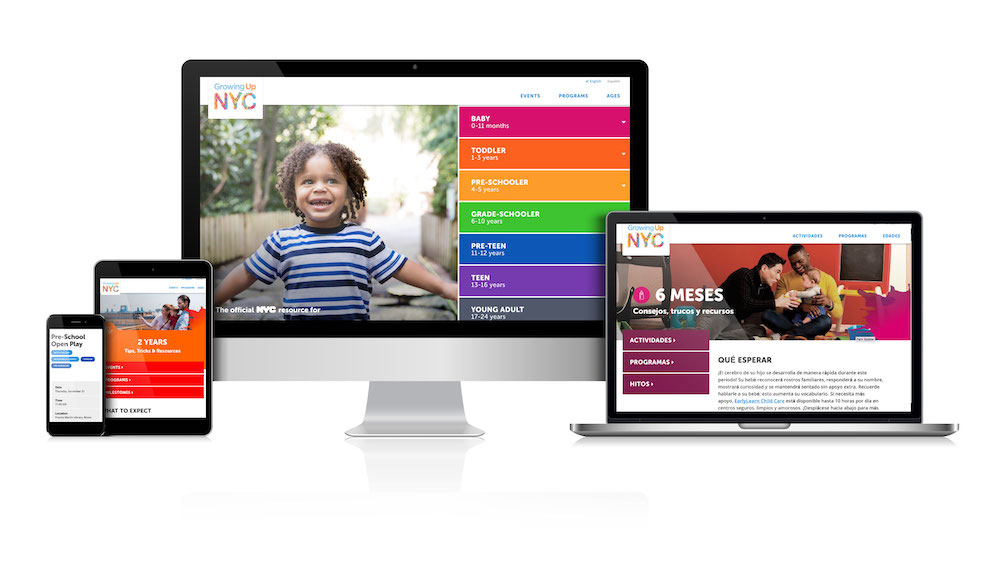
Growing Up NYC is mobile-friendly website that makes it simple for families to learn about and access city programs, as well as services and activities available to New York residents.
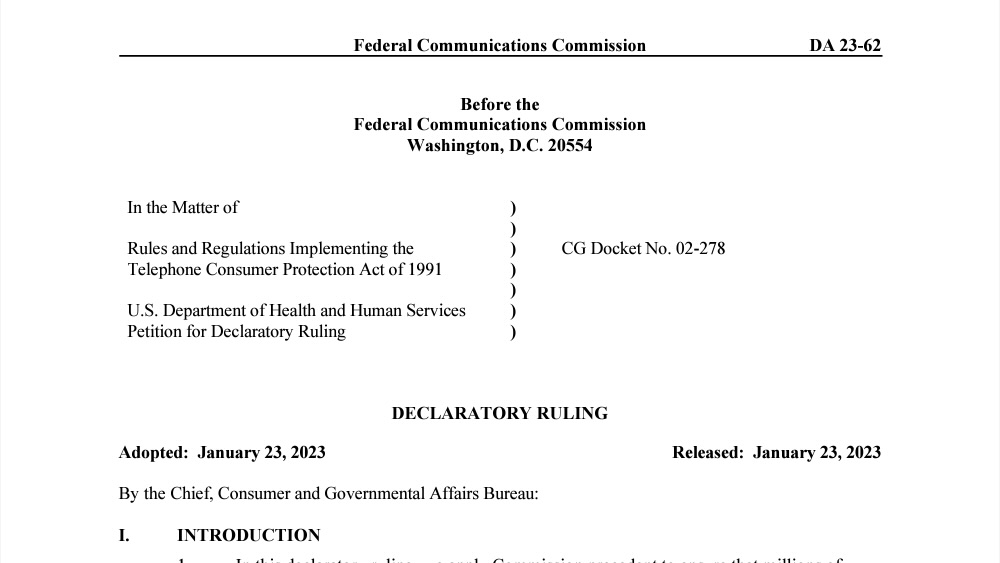
Ruling from the FCC granting the U.S. Department of Health and Human Services (HHS) to confirm that federal and state governmental agencies working in conjunction with local governments, governmental contractors, and managed care entities acting under contract with state governments may, under certain circumstances, make autodialed and prerecorded or artificial voice calls or send autodialed text messages to raise awareness of the eligibility and enrollment requirements for these governmental health care programs without violating the Telephone Consumer Protection Act (TCPA).
Code for America’s Integrated Benefits Initiative has been working in partnership with the State of Colorado to demonstrate how user-centered approaches lead to measurably better delivery of safety net programs. This article describes their work with the state of Colorado in simplifying how clients report common life changes that can affect their eligibility.
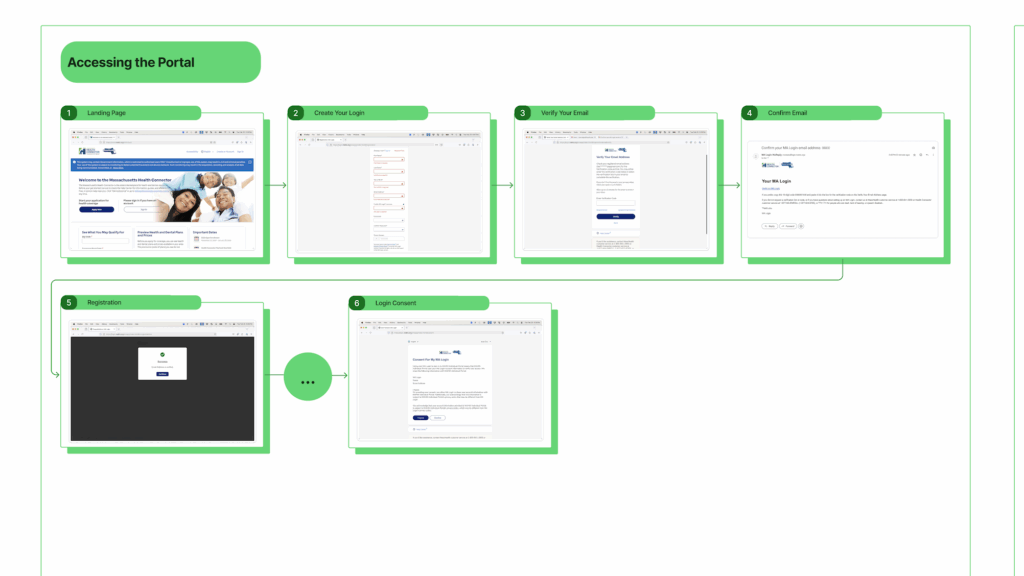
Created for use in the Digital Doorways research project, this design stimuli shows the steps of submitting an application, sharing personal information, and verifying identity for Massachusetts' online application for Medicaid.
Through its work with USDS, California identified key strategies and quick implementation steps to automate federal unwinding waivers that would net the largest impact for Medi-Cal redeterminations.
California Health and Human Services Agency (Cal HHS)
This report provides an early 2025 snapshot of state Medicaid and CHIP policies as they return to normal operations post‑pandemic, focusing on eligibility, enrollment, and renewal processes.