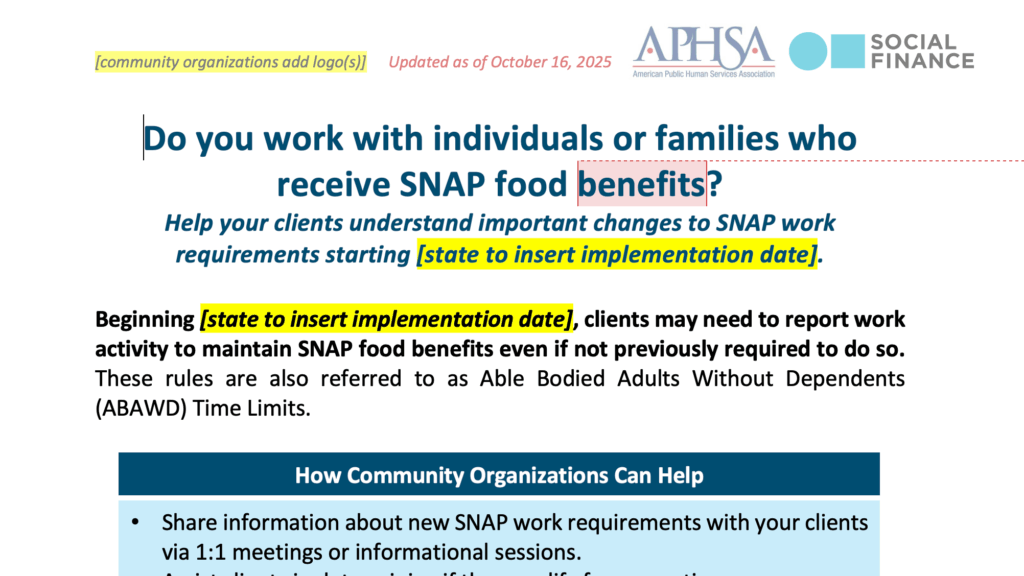
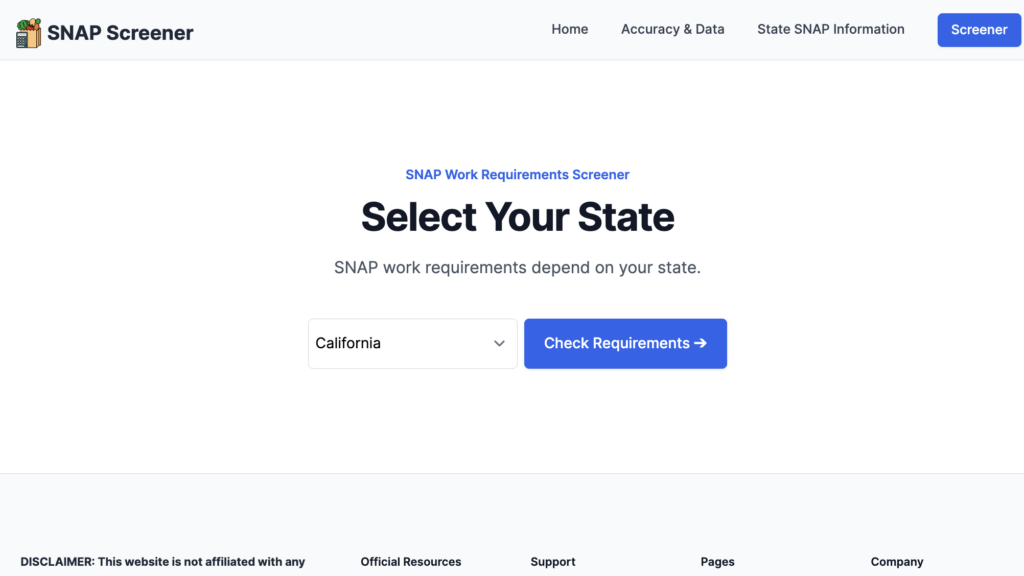
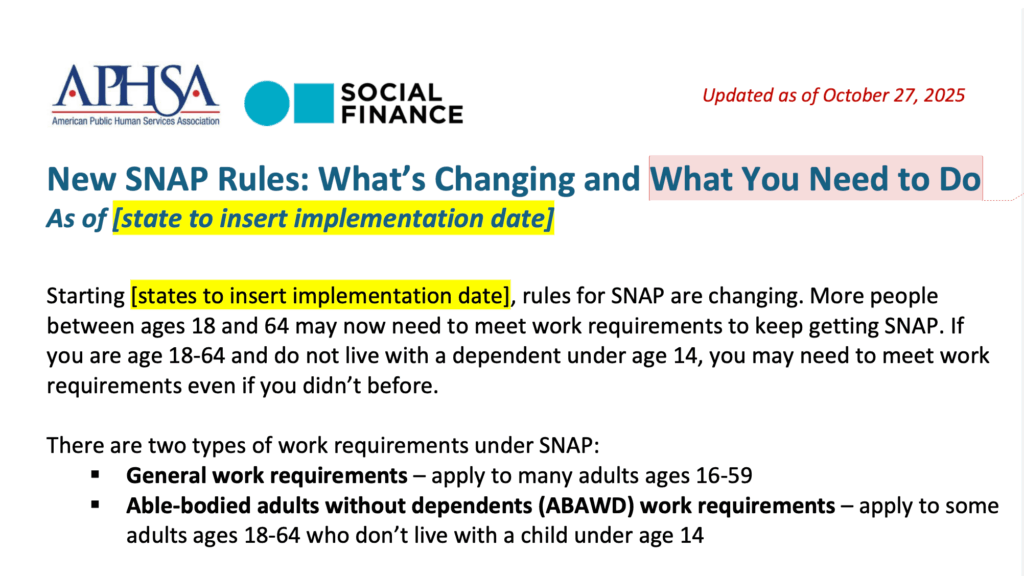
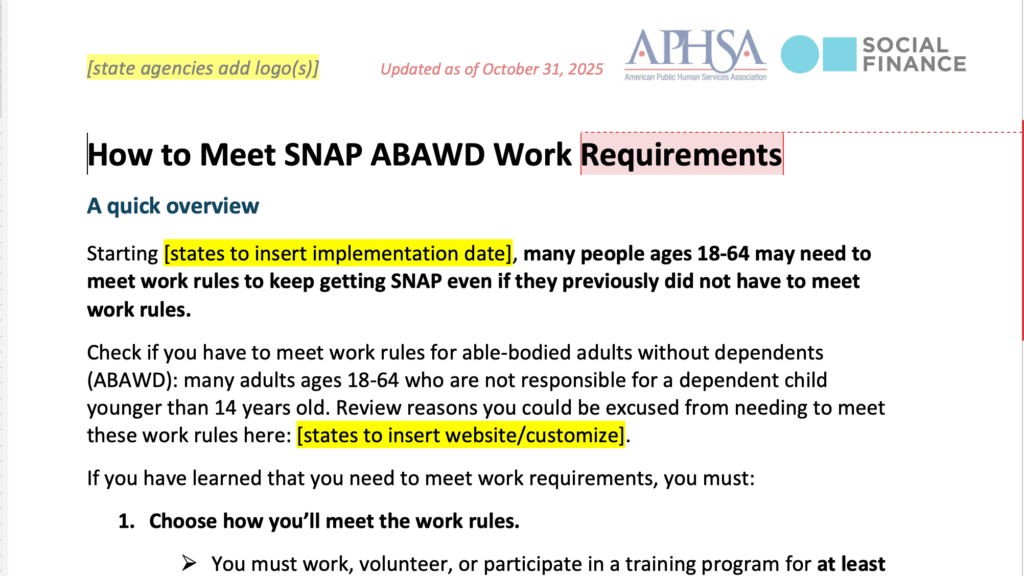
This document is a template for creating a community-based organization (CBO)-facing flyer that explains HR1 work requirements changes and how CBOs can help spread the work and screen SNAP participants and applicants.
American Public Human Services Association (APHSA)
This economic analysis article examines how state-level policy variations have created increasingly wide disparities in Unemployment Insurance (UI) benefit levels and access.
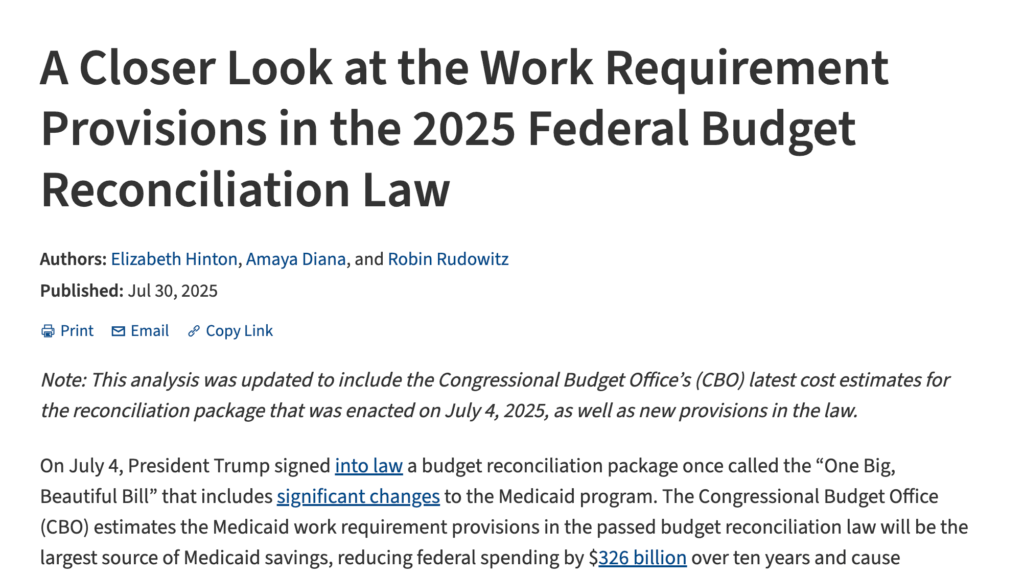
This guide explains how states can implement new Medicaid work requirements introduced by H.R. 1, focusing on minimizing harm to eligible clients while preparing for compliance by 2027.
A detailed guide outlining how states can minimize coverage losses and administrative burden while implementing new Medicaid work requirements established under the 2025 federal reconciliation law.
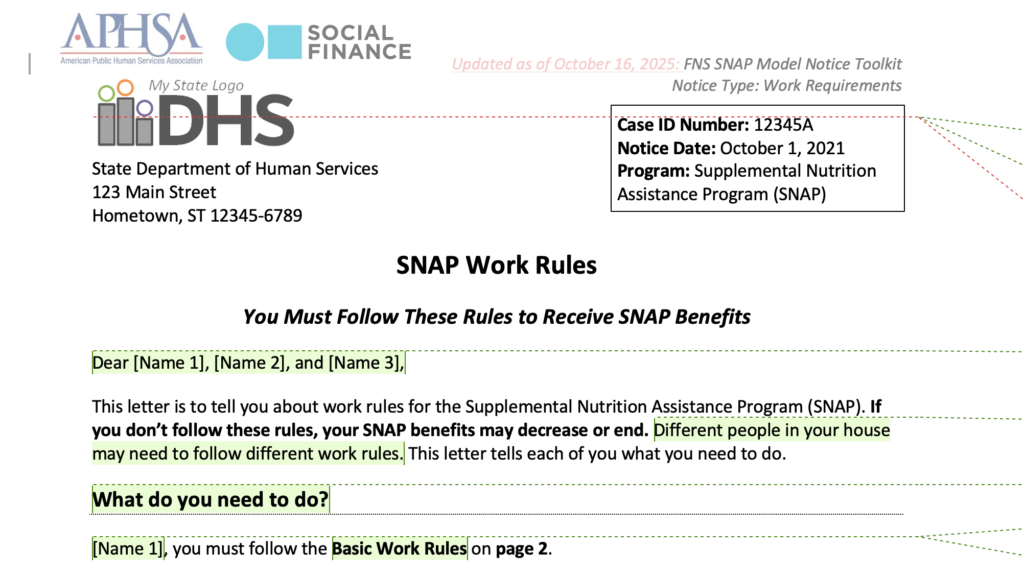
This document provides a template for SNAP agencies to use to communicate how they can meet able-bodied adults without dependents (ABAWD) work requirements.
American Public Human Services Association (APHSA)
This research article explores how framing income eligibility guidelines in either dollar amounts or as a percentage of the Federal Poverty Line (FPL) affects public attitudes toward program access and administrative burdens in Medicaid and SNAP.
This discussion paper advocates for states to use the implementation of OBBBA (One Big Beautiful Bill Act) as a catalyst to build integrated, cross-agency data systems.
This presentation focuses on data-driven and analytic strategies for identifying and verifying medical frailty exemptions within Medicaid work requirements.