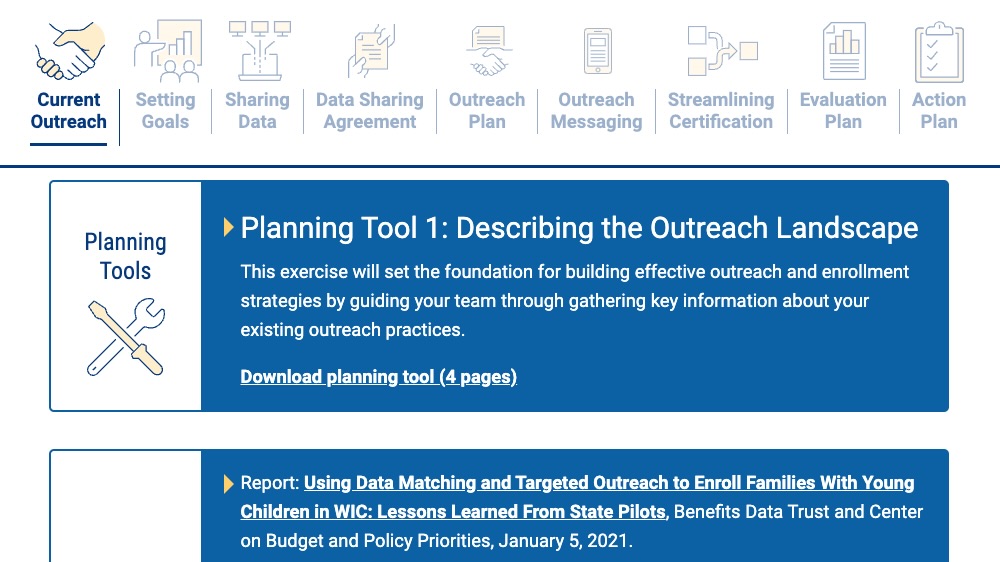
The Assessing Your WIC Certification Practices guide by the Center on Budget and Policy Priorities (CBPP) provides state and local WIC agencies with a framework to evaluate and improve their certification and enrollment processes to enhance access and participation.
A framework that helps policy and digital service teams interpret legislation by identifying user needs, intent, and implementation challenges to support more effective, human-centered government service delivery.
This is a monorepo managing the web components of the Government of Canada's Design System, facilitating the creation of consistent and accessible digital services.
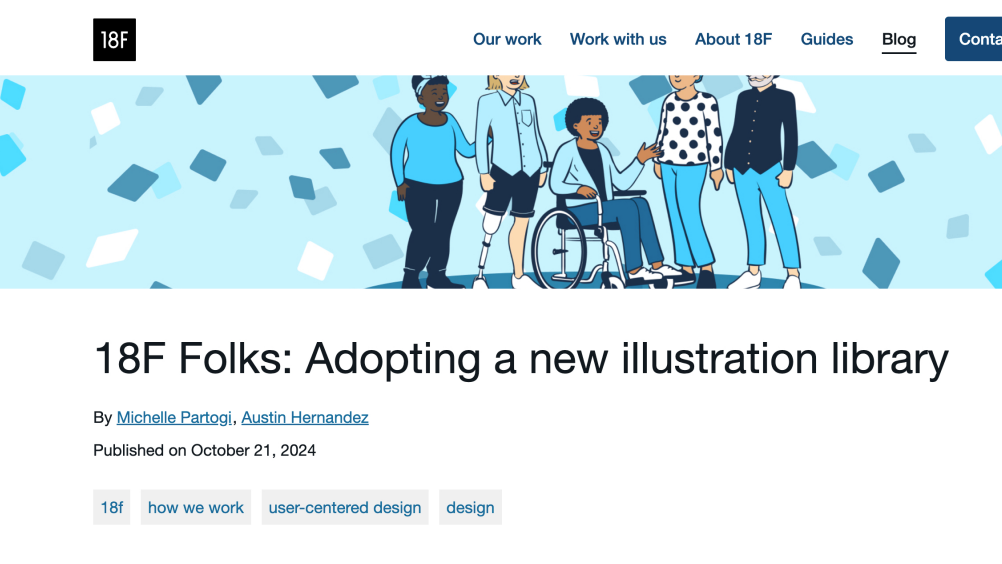
This blog describes how 18F adopted a new illustration library (“18F Folks”) based on Open Peeps, to better represent diversity, context, and human experiences in their visual communications.
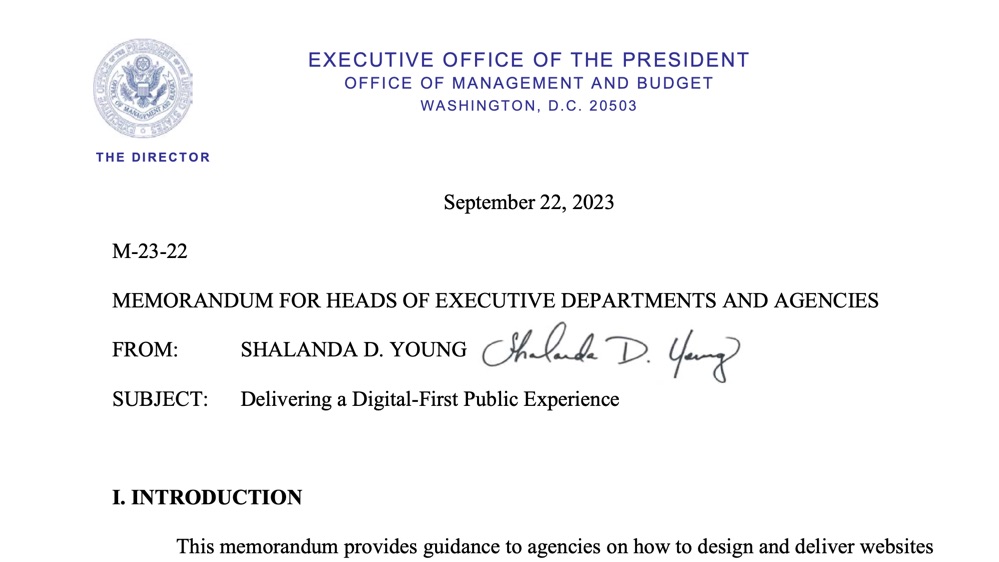
This memorandum provides guidance to agencies on how to design and deliver websites and digital services to the public and to assist agencies as they continue to implement the 21st Century Integrated Digital Experience Act1 (21st Century IDEA). It summarizes relevant statutory requirements, clarifies policy requirements, and expands best practices for agency websites and digital services.
Government leaders discuss how to ensure seamless access to public benefits through breaking down silos, user-friendly digital identities, and privacy-focused security measures.
A profile on FormFest speakers Paul Pistorius and Julian Rosner, featuring stories about their motivations for working on public sector form innovation.
The GSA’s Service Design program implemented a data-driven evaluation process to enhance digital experiences, improve compliance, and streamline its website portfolio, achieving significant cost savings and customer-centric digital transformation.
This "Styles" section introduces design tokens that encode brand and design decisions for basic style elements like colors, typography, and spacing, ensuring consistency across Government of Canada digital services.