This guidance document provides a framework for developing an agency-wide data strategy that aligns data governance, management, and analytics with organizational goals and service delivery.
This policy establishes a framework for ensuring the quality, accuracy, and reliability of government data to support effective decision-making, analytics, and artificial intelligence initiatives.
An event recap from one of FormFest 2025’s breakout sessions featuring speakers from Code for America and Arizona’s Department of Economic Security (DES).
The 2022 Dobbs v. Jackson decision overturned Roe v. Wade, leading 21 states to ban or heavily restrict abortion, exacerbating economic and health challenges for women denied care while these states also often lack supportive policies like paid leave, fair wages, and accessible public benefits for growing families.
An evaluation of the impact of the USDA’s FFRCA waivers on the WIC program during the COVID-19 pandemic, focusing on how temporary flexibilities such as remote certification and relaxed physical presence requirements affected participant access, program operations, and staff capacity.
This blog describes how the CDC relaunched its website through a “Clean Slate” redesign—streamlining content, improving navigation, refreshing visual design, and adopting a new CMS—to better meet user needs and rebuild trust in public health communication.
A public event that explored workers’ real-world experiences with unemployment insurance systems, focusing on barriers, inequities, and policy insights from their perspectives.
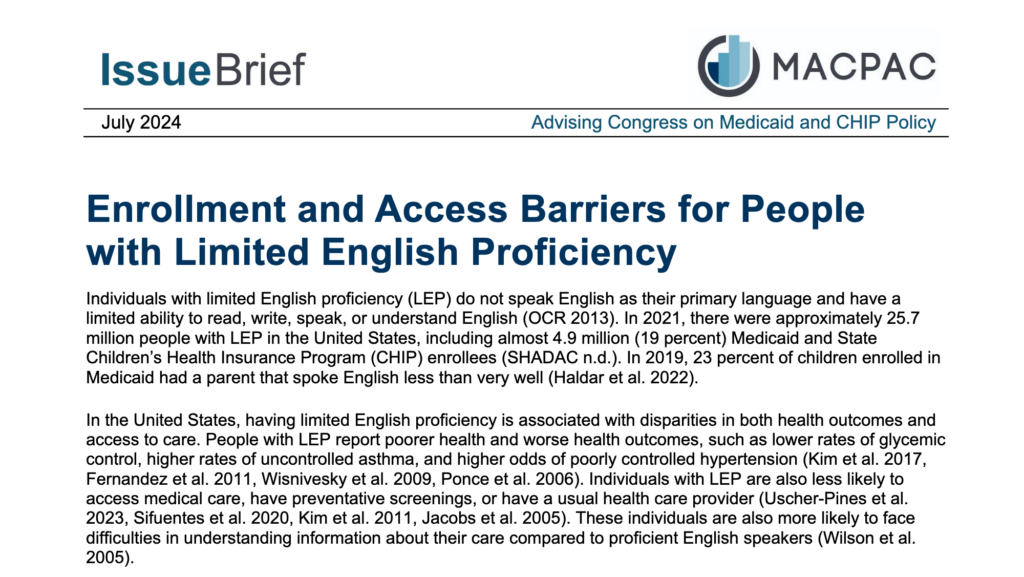
This issue brief examines how limited English proficiency creates barriers to enrolling in and accessing Medicaid and CHIP, and how states provide language access services to address these challenges.
A practical playbook for designing and running technical challenges in procurement to evaluate vendors’ real-world problem-solving ability rather than just written proposals.