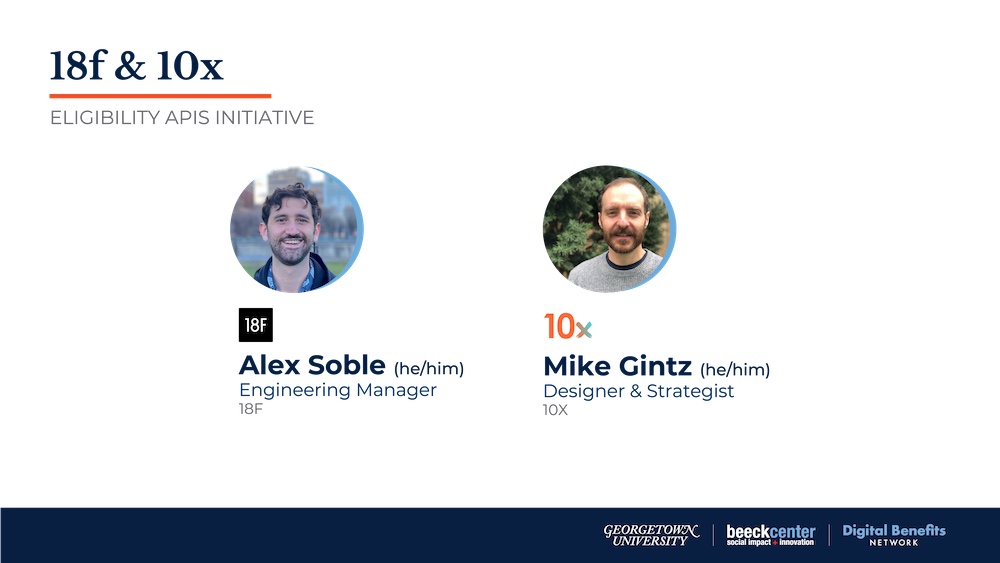
We kicked off Rules as Code Demo Day with Alex Soble of 18F and Mike Gintz of 10x presenting their Eligibility APIs Initiative that explores whether APIs and rules as code might improve the efficiency and effectiveness with which federal public benefits programs communicate their policy to states. They demonstrated their original prototype, and how the open source code has now been extended into several initiatives.
This report highlights 5 key takeaways from the Aspen Institute Financial Security Program's 2022 Benefits Forum, where 55 experts from various sectors discussed solutions for improving public and private benefits to better support workers and their families.
Building on our February 2022 report Benefit Eligibility Rules as Code: Reducing the Gap Between Policy and Service Delivery for the Safety Net, the Beeck Center’s Digital Benefits Network (DBN) recently held a convening to share progress and potential in digitizing benefits eligibility and to begin addressing how a national approach could be started.
In this panel conversation, presenters at the Better Identity Coalition’s 2022 policy forum “Identity, Authentication, and the Road Ahead” discuss the challenges of identity verification and access in pandemic unemployment benefits.
In this video, Susan S. Gibson, chair of the Pandemic Response Accountability Committee's (PRAC) Identity Fraud and Redress Working Group, speaks with Jeremy Grant of the Better Identity Coalition, about the challenges of identity fraud for benefits program during the COVID-19 pandemic.
In this panel conversation from Better Identity Coalition’s 2022 policy forum “Identity, Authentication, and the Road Ahead” presenters from the General Services Administration, the Transportation Security Administration, the Consumer First Coalition, and the congressional branch, discuss government’s role in digital identity.
This report outlines a dozen fintech and civic tech organizations working across fourteen safety net programs to show what’s possible when modern technology is married to a consumer insights perspective.
Implementing client-centered communication strategies, such as clear language and digital reminders, can significantly reduce churn in public benefit programs, ensuring eligible individuals maintain continuous access to essential services.
Implementing flexible interview scheduling in Los Angeles County's CalFresh program significantly increased benefit approval rates and reduced processing times, particularly aiding working families, students, and individuals experiencing homelessness.
Our work with Pennsylvania to implement user experience and user interface changes shows that innovation can be easier to implement than it might seem.
A brief report on our quantitative research about messages that increase people's take-up of government benefits by making them feel like those benefits belong to them.
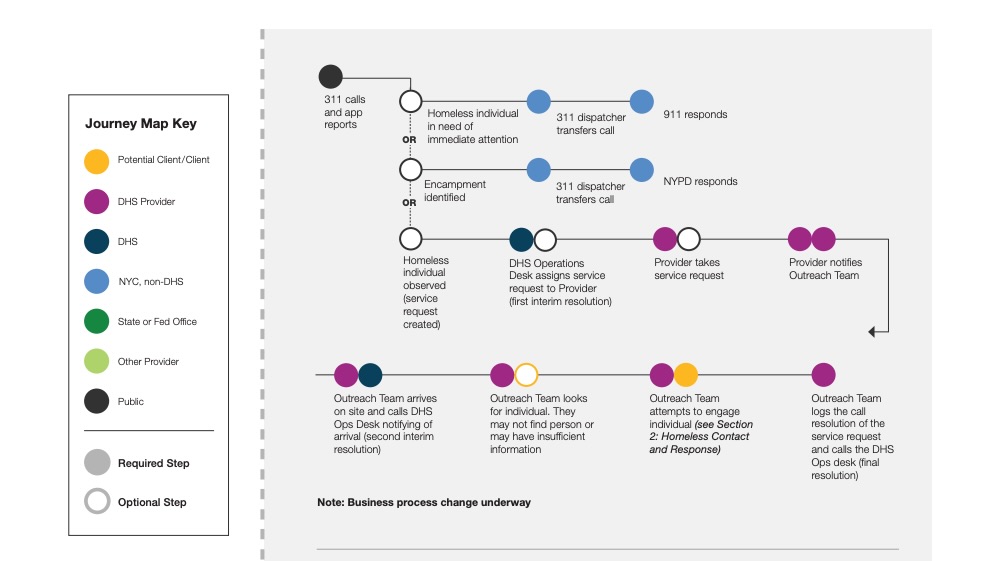
This overview journey map of street homeless outreach reflects the business process, and worker and client experience during the period January–April 2016 from initial observation, contact, case management, and placement in permanent housing. The map is displayed in eleven high-level sections, each with individual sub-level sections. Summaries and details for all the sections are presented in the subsequent pages. Each dot represents an individual or agency. Each cluster of dots represents a service interaction.