The Sprint 2 Report: Michigan UI Claimant Experience by Civilla and New America examines challenges in Michigan’s unemployment insurance (UI) system and provides human-centered design recommendations to improve accessibility, clarity, and user experience.
Building on our February 2022 report Benefit Eligibility Rules as Code: Reducing the Gap Between Policy and Service Delivery for the Safety Net, the Beeck Center’s Digital Benefits Network (DBN) hosted Rules as Code Demo Day on June 28, 2022 where there were eight demonstrations of projects and code followed by a collaborative problem solving session on how to continue advancing rules as code for the U.S. social safety net.
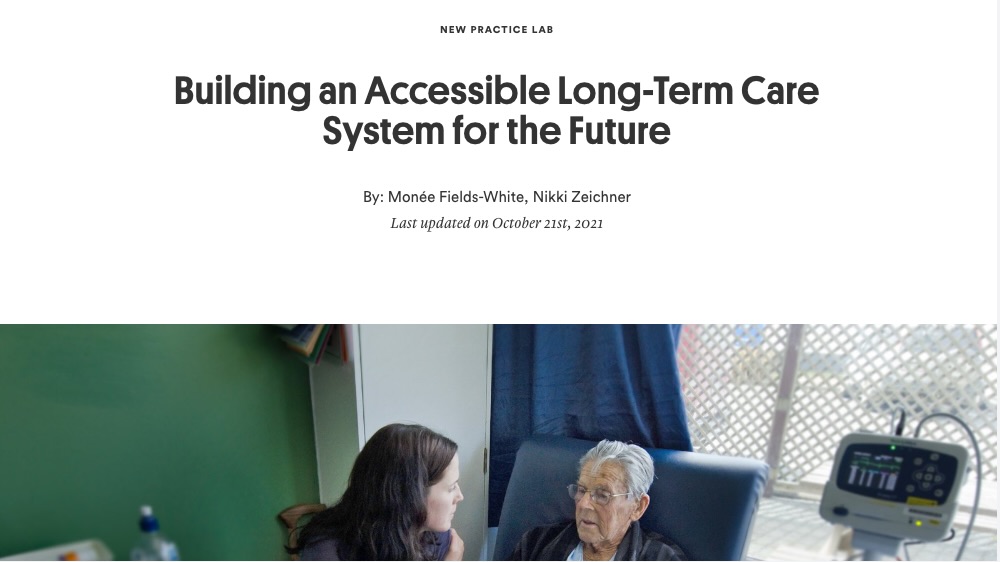
The nation’s long-term care system has struggled for many years, and those constraints are expected to deepen as our nation ages. In 2019, Washington State became the first in the United States to pass legislation that would enable a public state-operated long-term care insurance program, the Washington Cares Fund. We conducted research with the goal to identify concrete ways for Washington State to implement this fund so that it is accessible to all and it supports living-wage jobs for care workers. In this report, we discuss our research methods, we present personas of individuals seeking long-term supports and services from the Washington Cares Fund, and we offer a list of recommendations that, while intended for Washington State, we see as applicable to other states that will embark on offering similar long-term services to residents.
This report explores the financial challenges faced by U.S. workers, analyzing the roles of work arrangements and public and workplace benefits in achieving financial security, while highlighting the disparities in access and effectiveness for low- and moderate-income workers.
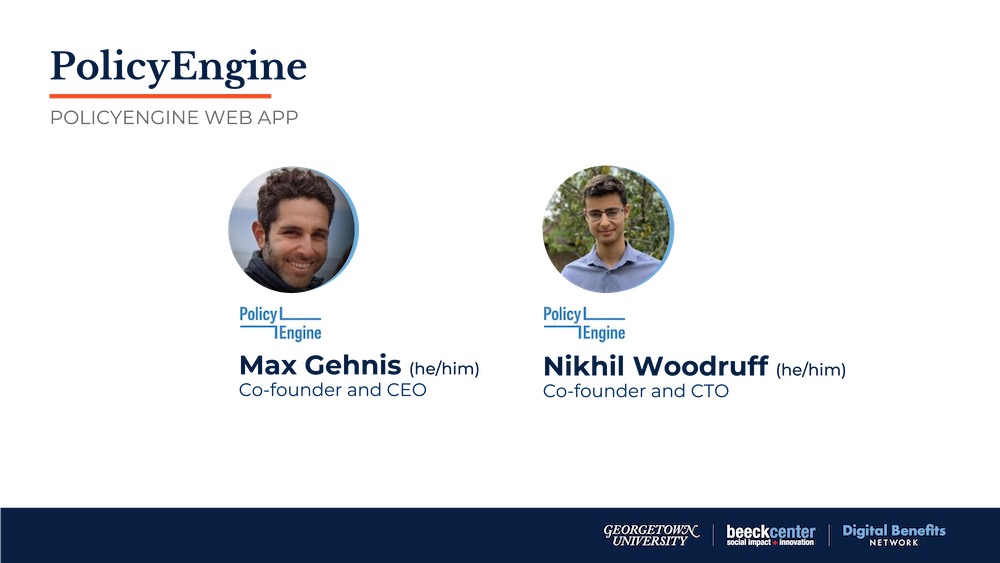
We wrapped up Rules as Code Demo Day with Max Ghenis and Nikhil Woodruff, the founders of PolicyEngine. The PolicyEngine web app computes the impact of tax and benefit policy in the US and the UK. With PolicyEngine, anyone can freely calculate their taxes and benefits under current law and customizable policy reforms, and also estimate the society-wide impacts of those reforms. Policymakers and think tanks from across the political spectrum can analyze actual policy. PolicyEngine is built atop the open source OpenFisca US and UK microsimulation models and they are building an open unified data set utilizing data from the Policy Rules Database, Current Population Survey, Survey of Consumer Finances, Consumer Expenditures, tax records, and IRS Public Use File.
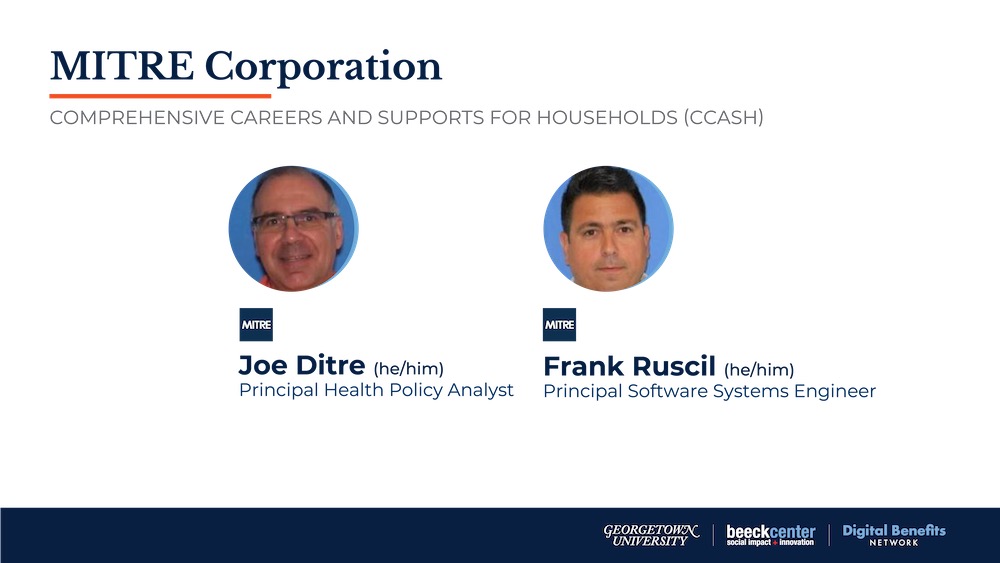
MITRE’s Joe Ditre and Frank Ruscil demoed the code for the Comprehensive Careers and Supports for Households (C-CASH) at Rules as Code Demo Day. The MITRE team expanded the accessibility of the Policy Rules Database and the Cost-of-Living Database (the prior demo) by creating a web service API and a front-end Window’s application called C-CASH Analytic Tool (CAT). CAT provides a more scalable, flexible, and portable functionality which allows end-users to generate various households to run eligibility scenarios across different U.S. counties and states. They are currently working to create a national data hub and analytics tool, starting with utilizing U.S. Census data and populating the data warehouse by pushing large amounts of data through the PRD.
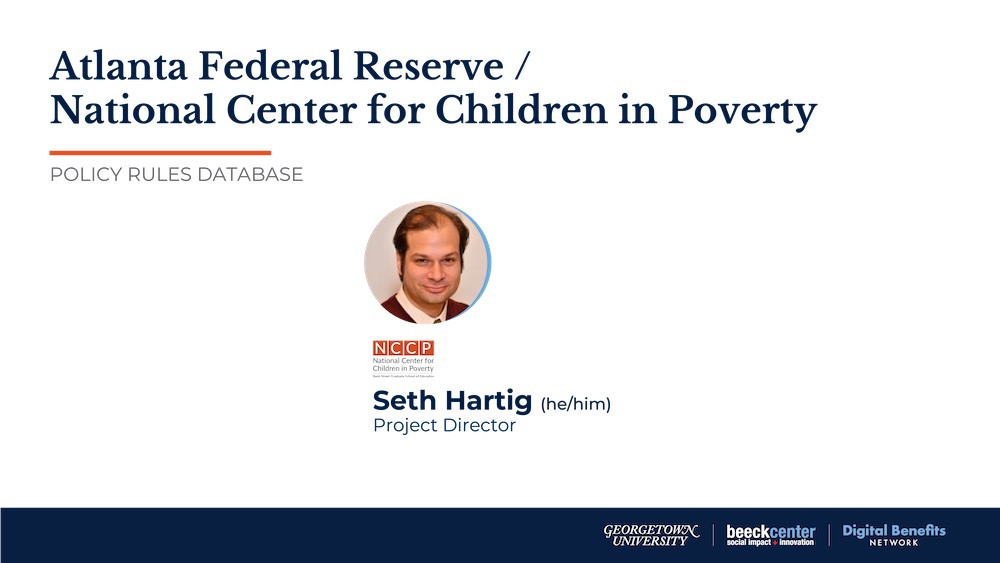
At Rules as Code Demo Day Seth Hartig from the National Center for Children in Poverty (NCCP) and Bank Street College demoed the Policy Rules Database (PRD), a collaborative effort between the Federal Reserve Bank of Atlanta and the NCCP. The primary purpose of the PRD is to simplify the interpretation of all programs by creating a common structure and a common terminology. The repository allows for research on public assistance programs and tax policies, and helps users model benefits cliffs on career pathways. The PRD is supported by a technical manual with pseudocode that helps guide integration and usage in other platforms.
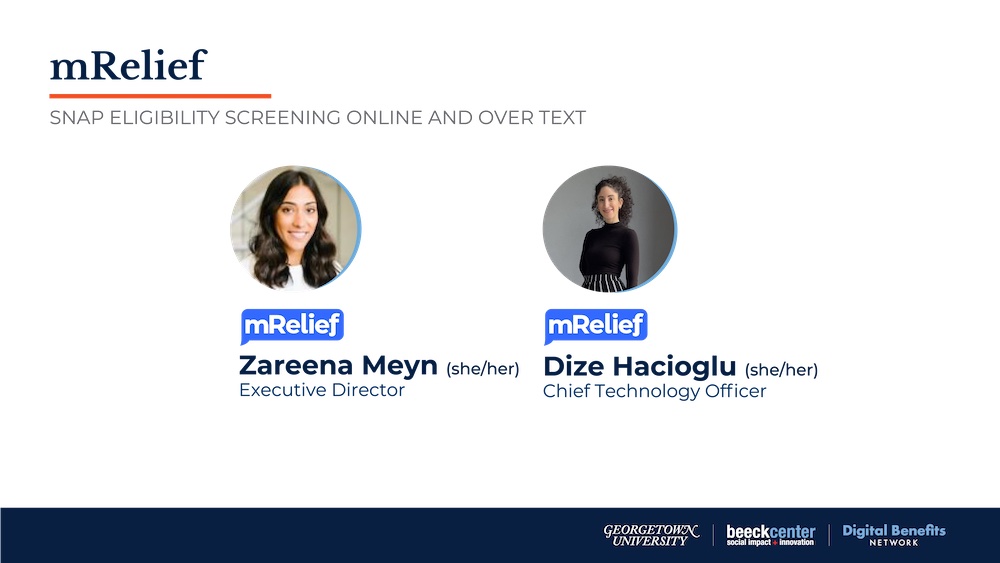
At Rules as Code Demo Day Executive Director Zareena Mayn and Chief Technology Officer Dize Hacioglu of mRelief demoed the code for their Supplemental Nutrition Assistance Program (SNAP) eligibility screener. mRelief is a women-led team that provides a web-based and text message-based SNAP eligibility screener to all 53 states and territories that participate in SNAP. They demonstrated how they have modularized their code to host federal program rules and state-specific rules.
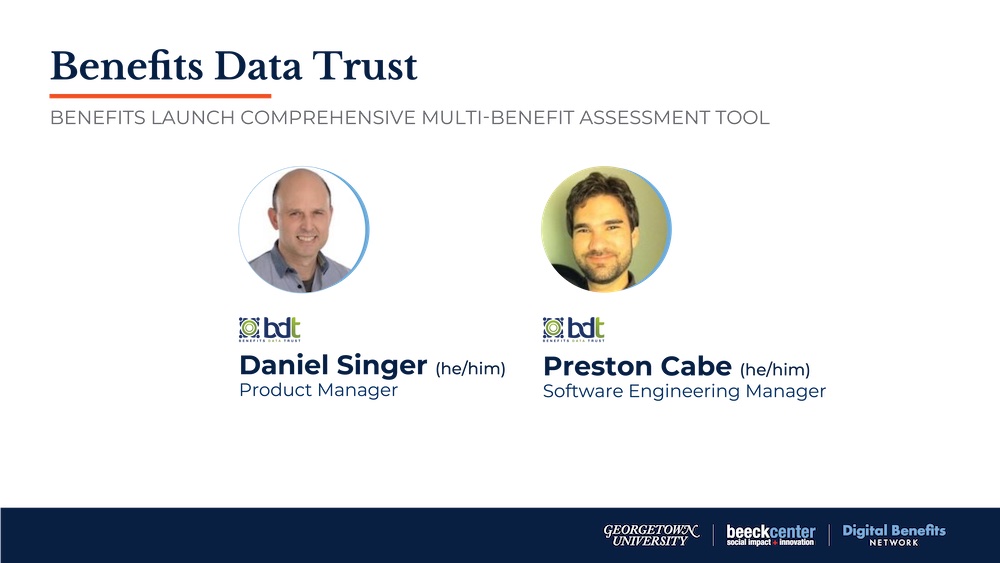
We continued Rules as Code Demo Day with Daniel Singer and Preston Cabe from Benefits Data Trust. Benefits Data Trust provides benefit outreach and application assistance services in seven states. Using Benefits Launch, their in-house interview and rules engine, they support two hundred contact center employees as they screen and apply thousands of clients each year. They also offer a self-service screener, Benefits Launch Express. Additionally, they offer an eligibility API to integrate with other services.
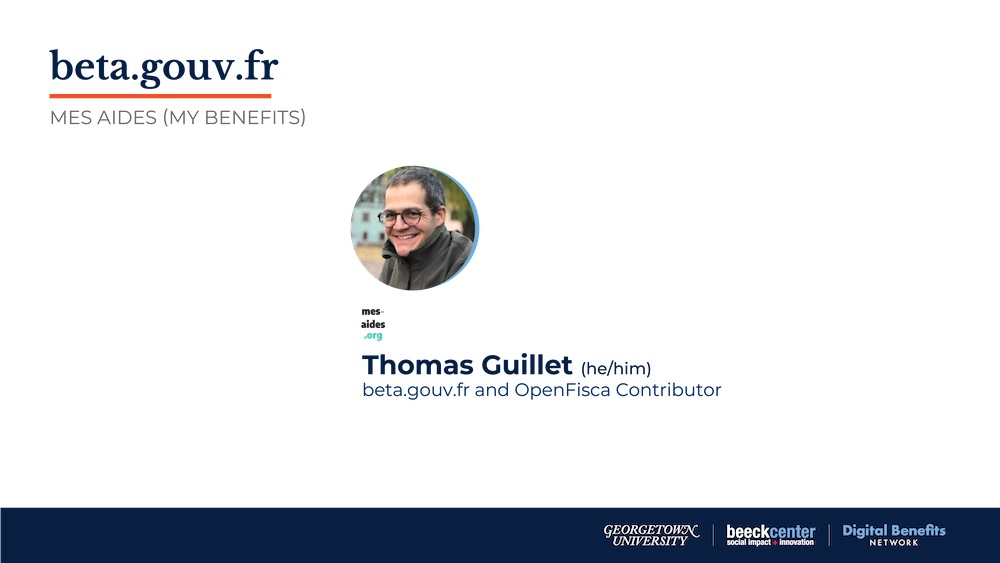
The first half of Rules as Code Demo Day was wrapped up with Thomas Guillet who has contributed to Open Fisca France and beta.gouv. He demoed the code for Mes Aides—or My Benefits—which is France’s social benefit simulator that leverages open source rule models for over 600 benefits while keeping the displayed complexity to its minimum.
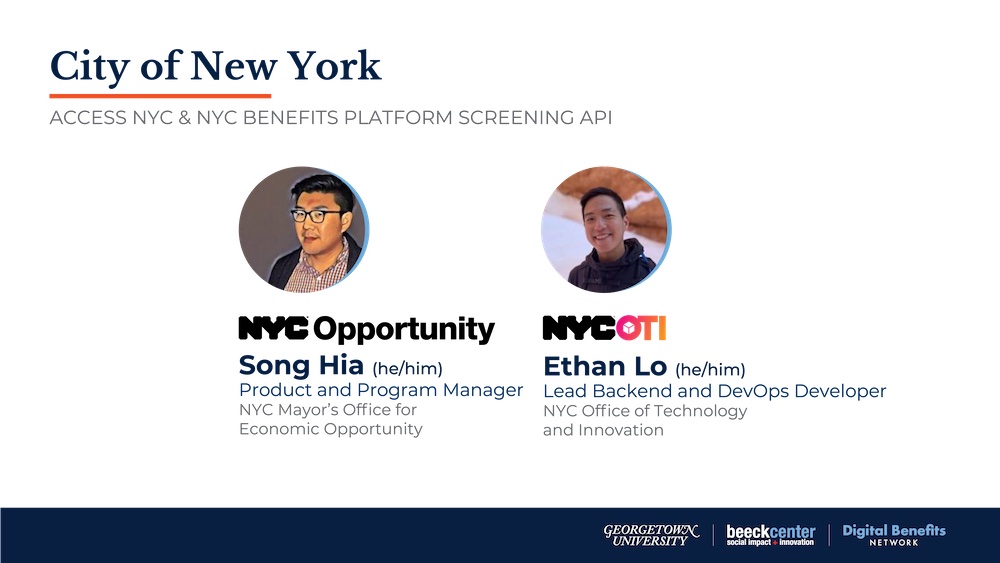
At Rules as Code Demo Day we heard from Song Hia of the NYC Mayor’s Office for Economic Opportunity and Ethan Lo of the NYC Office of Technology and Innovation who demoed the NYC Benefits Platform Screening API which provides machine-readable calculations and criteria for benefits screening that power the ACCESS NYC screening questionnaire. This makes it easier for NYC residents to discover multiple benefits they may be eligible for. The City is now extending the API to support the new MyCity platform, a one-stop shop for all services and benefits.