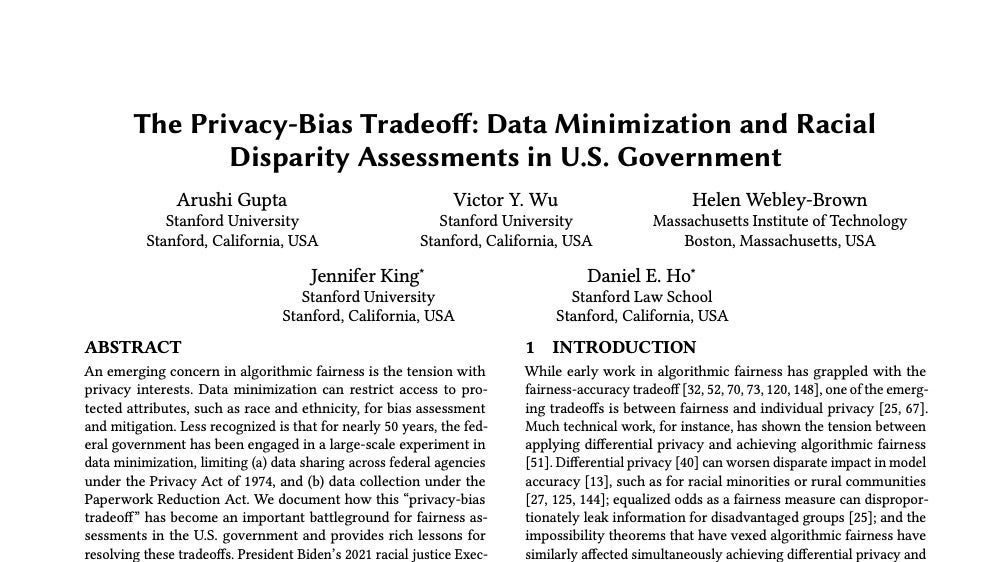
This academic paper examines how federal privacy laws restrict data collection needed for assessing racial disparities, creating a tradeoff between protecting individual privacy and enabling algorithmic fairness in government programs.
ACM Conference on Fairness, Accountability, and Transparency (ACM FAccT)
This UN report warns against the risks of digital welfare systems, emphasizing their potential to undermine human rights through increased surveillance, automation, and privatization of public services.
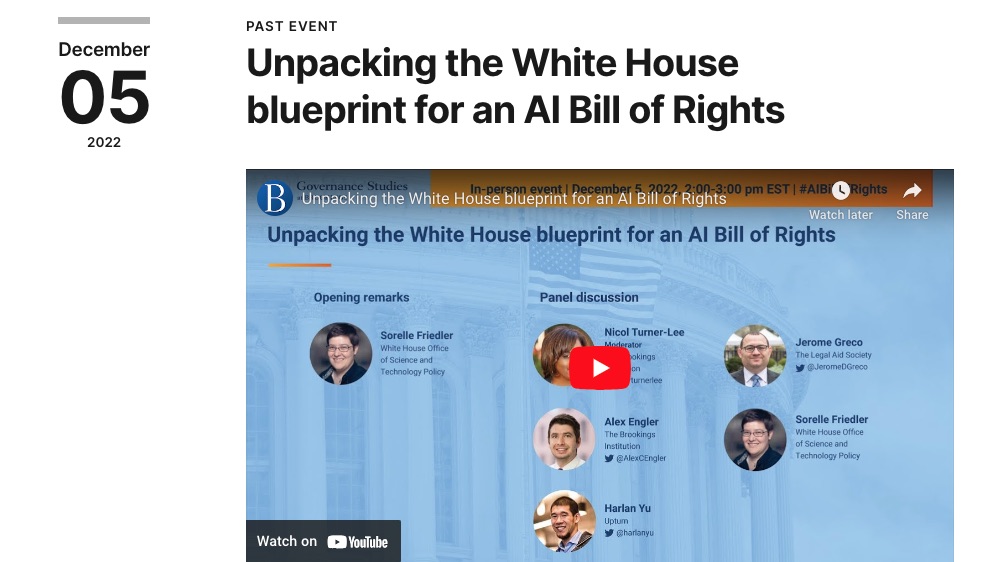
On December 5, 2022, an expert panel, including representatives from the White House, unpacked what’s included in the AI Bill of Rights, and explored how to operationalize such guidance among consumers, developers, and other users designing and implementing automated decisions.
This paper argues that a human rights framework could help orient the research on artificial intelligence away from machines and the risks of their biases, and towards humans and the risks to their rights, helping to center the conversation around who is harmed, what harms they face, and how those harms may be mitigated.
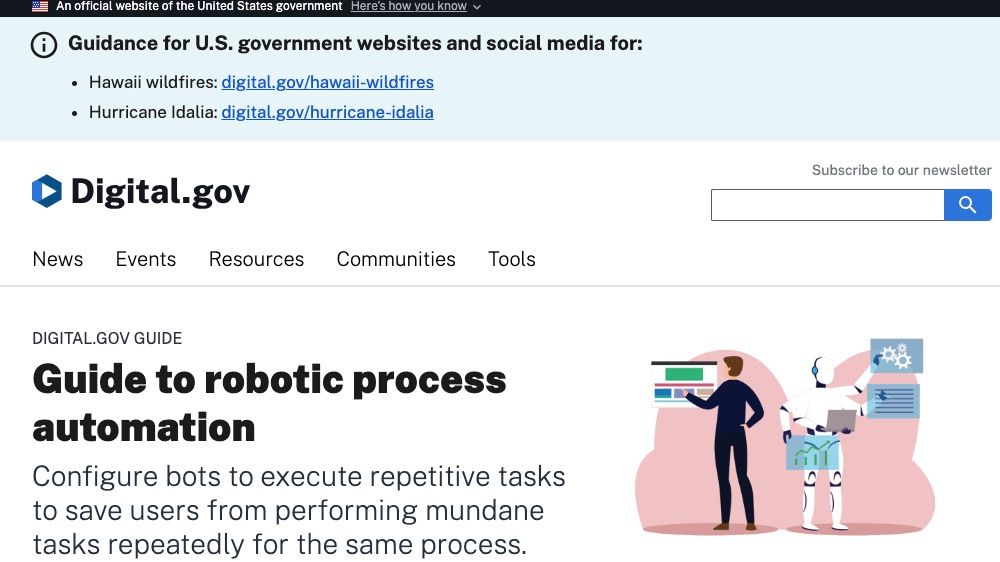
The Guide to Robotic Process Automation, including the RPA Playbook provides detailed guidance for federal agencies starting a new RPA program or evolving an existing one.
Recording of GOVChats hosted by GTA's Digital Services Georgia, where speakers dive into the artificial intelligence (AI) programs and initiatives unfolding across the states of Georgia, Maryland, and Vermont.
This post argues that for the types of large-scale, organized fraud attacks that many state benefits systems saw during the pandemic, solutions grounded in cybersecurity methods may be far more effective than creating or adopting automated systems.
This report presents evidence on the use of algorithmic accountability policies in different contexts from the perspective of those implementing these tools, and explores the limits of legal and policy mechanisms in ensuring safe and accountable algorithmic systems.
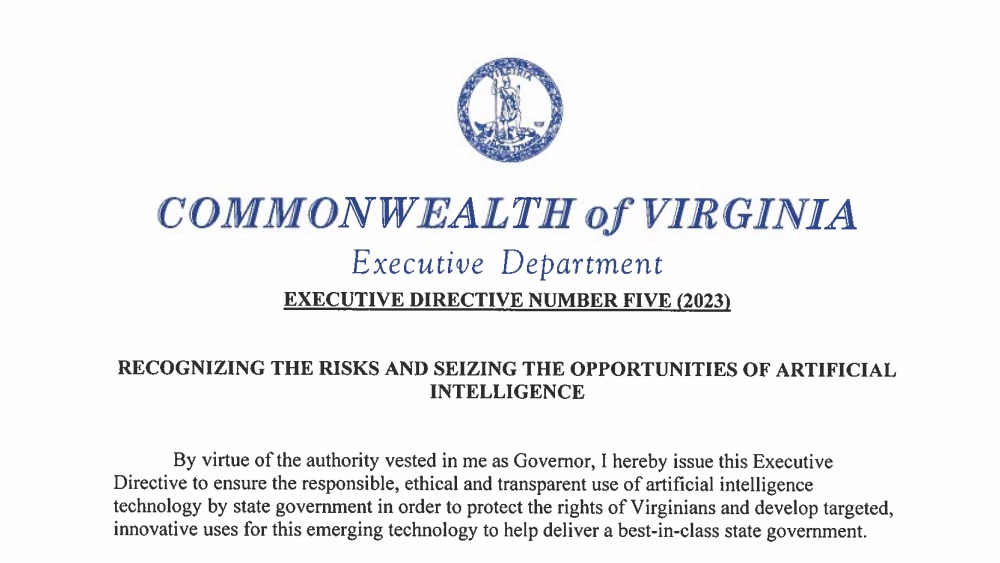
The Commonwealth of Virginia's Executive Order Number Five (2023): Recognizing The Risks And Seizing The Opportunities Of Artificial Intellignece to ensure responsible, ethical, and transparent use of artificial intelligence (AI) technology by state government.