A comprehensive report outlining a student-led strategy to improve access to mental health supports through prevention, early intervention, and treatment across schools and community partners.
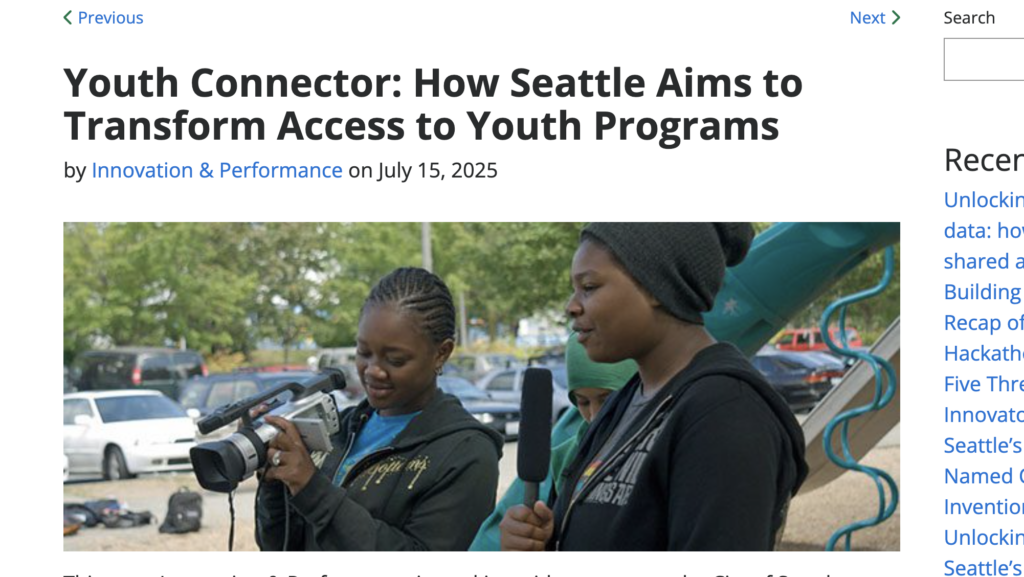
A blog post describing Seattle’s Youth Connector initiative, a city effort to make it easier for young people to discover, access, and connect with youth programs and supports that promote mental health, enrichment, and opportunity.
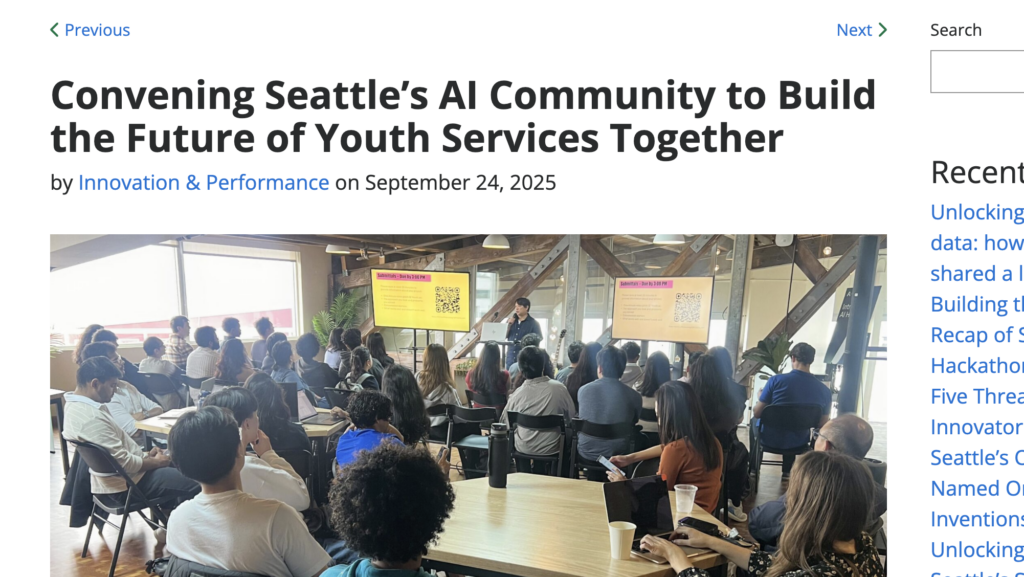
A recap of a community innovation hackathon in Seattle where technologists and students used AI to prototype solutions that help youth discover and access local programs and services.
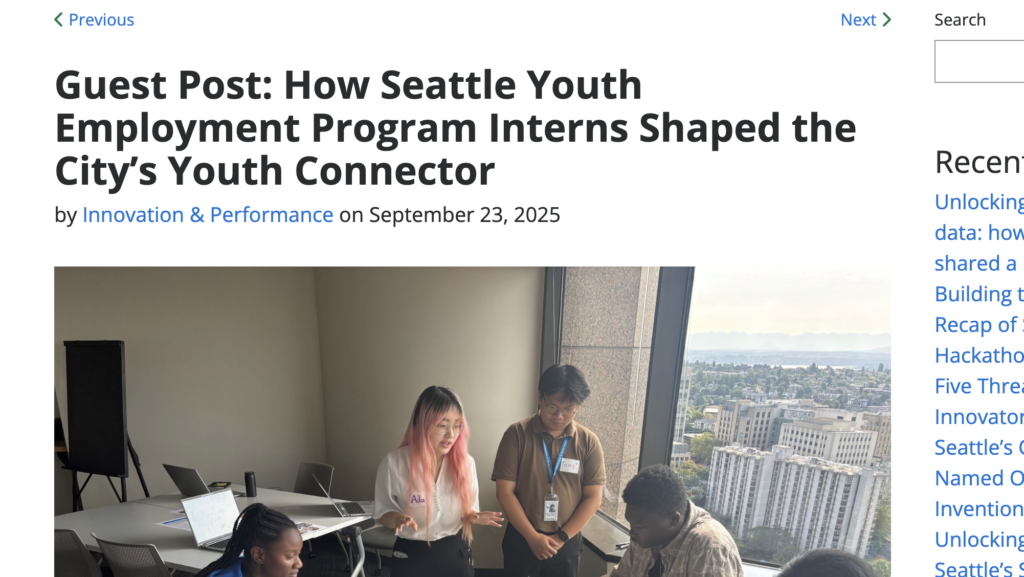
A blog post highlighting how youth employment interns contributed to shaping and co-designing the Youth Connector project by leading research, feedback sessions, and design testing to ensure the platform reflects youth needs.
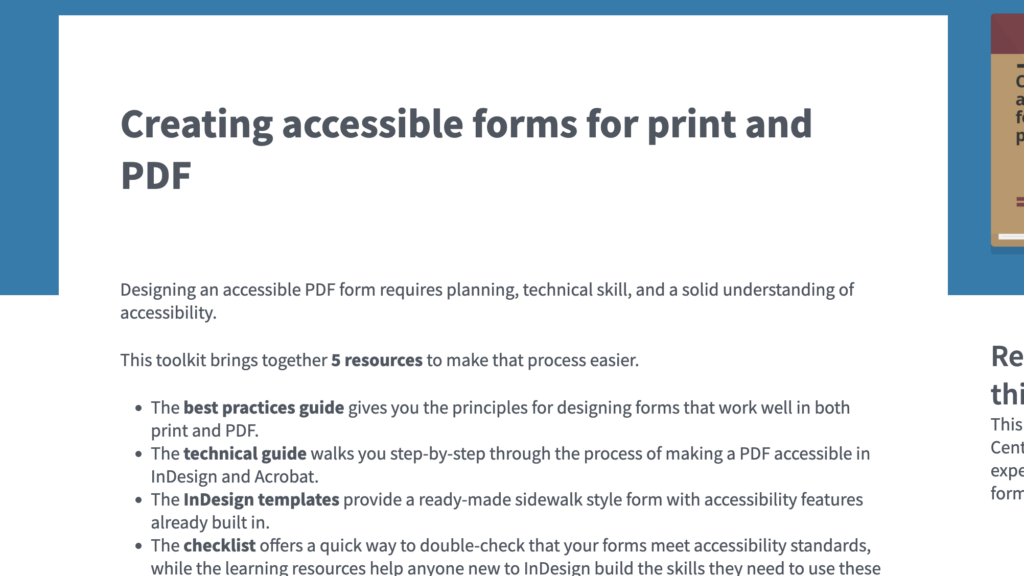
A practical toolkit that guides teams through designing and building accessible forms in print and PDF formats that are usable by people with disabilities and meet accessibility standards.
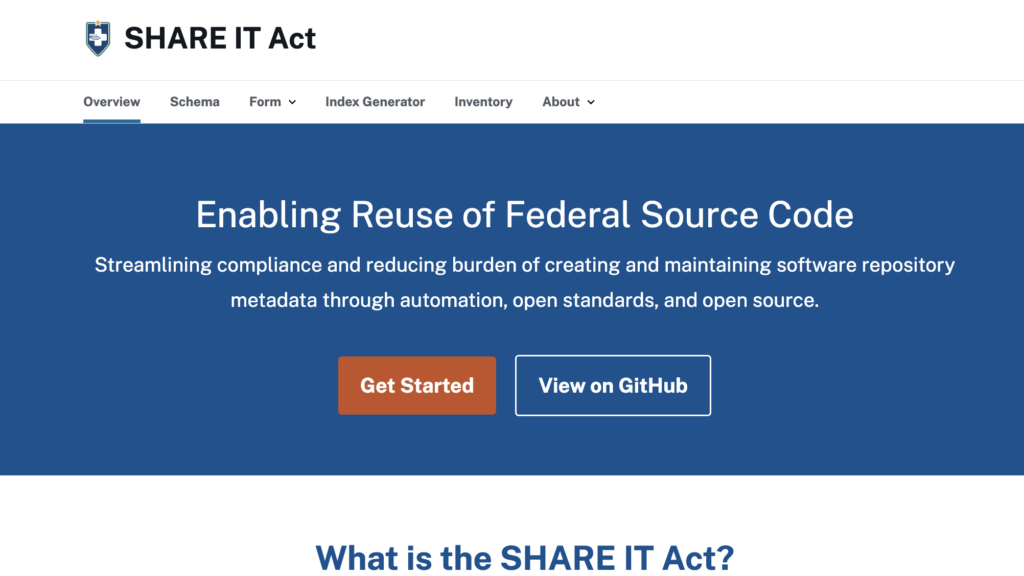
A public web guide designed to help federal agencies understand and implement the SHARE IT Act’s code-sharing requirements, with documentation, tools, and procedural resources for compliance.
U.S. Department of Health and Human Services (HHS)
A practical guide for advocates that explains how automated benefit notices are generated, where common notice failures originate, and how to push for effective fixes.
A report examining how risk assessment tools are used to improve payment accuracy in nutrition assistance programs and identifying effective practices for their design and implementation.
A practical toolkit that helps human services agencies coordinate programs and benefits to better support whole families through aligned policies, processes, and service delivery.
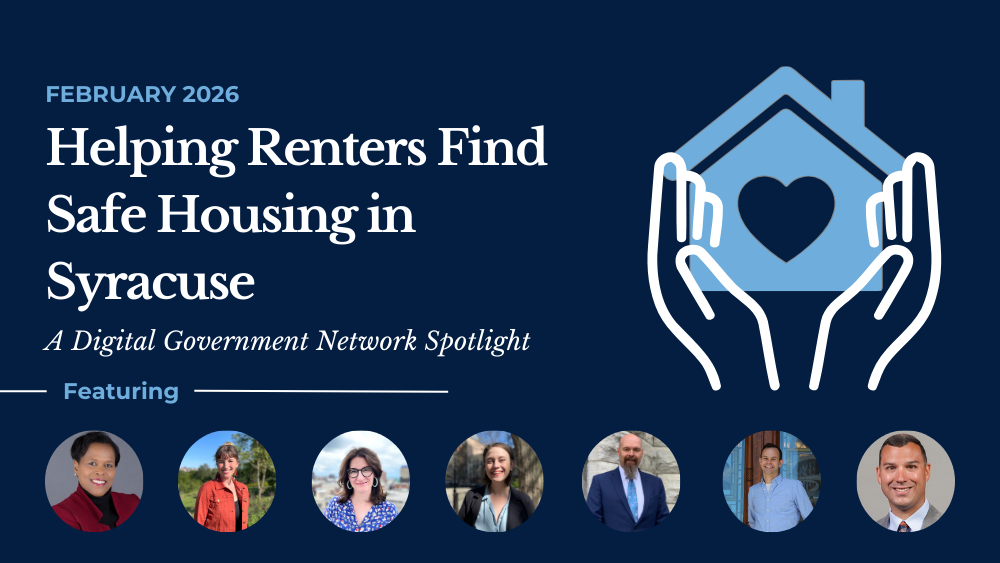
DGN Spotlights are short-form project profiles that feature exciting work happening across our network of digital government practitioners. Spotlights celebrate our members’ stories, lift up actionable takeaways for other practitioners, and put the resources + examples we host in the Digital Government Hub in context.
This publication summarizes a body of research about how state benefits administering agencies build and maintain integrated eligibility and enrollment (IEE) systems. It is an easy to reference guide for state administrators, legislators, advocates, and delivery partners.