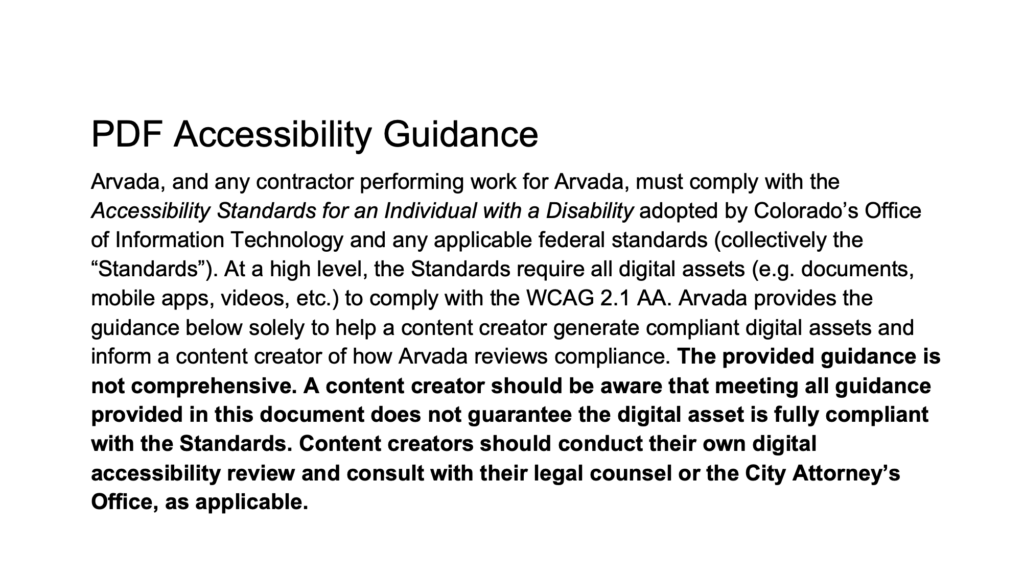
This guidance document outlines how to create and review accessible PDFs to help ensure compliance with WCAG 2.1 AA and other digital accessibility standards.
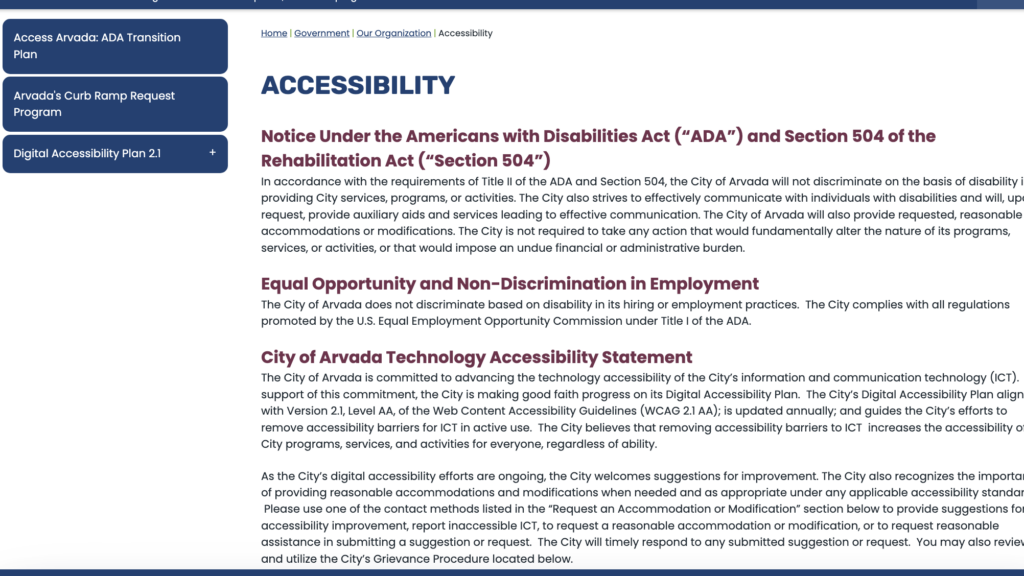
This accessibility webpage outlines the City of Arvada’s commitment to making its digital services, programs, and information accessible to people with disabilities.
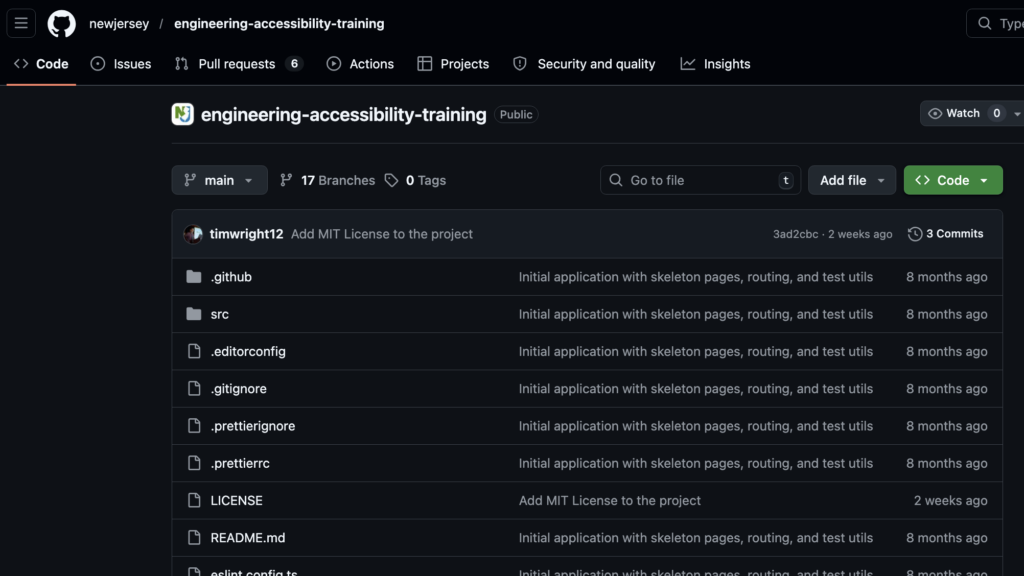
This codebase is a web-based accessibility training project designed to support engineering-focused learning and practice around accessible development.
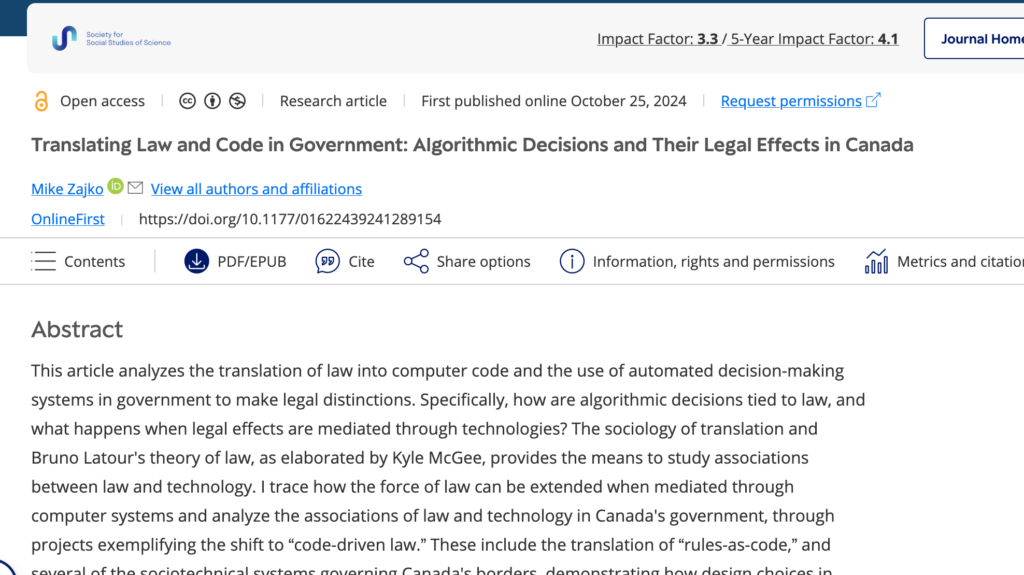
This article analyzes the translation of law into computer code and the use of automated decision-making systems in government to make legal distinctions. Specifically, how are algorithmic decisions tied to law, and what happens when legal effects are mediated through technologies?
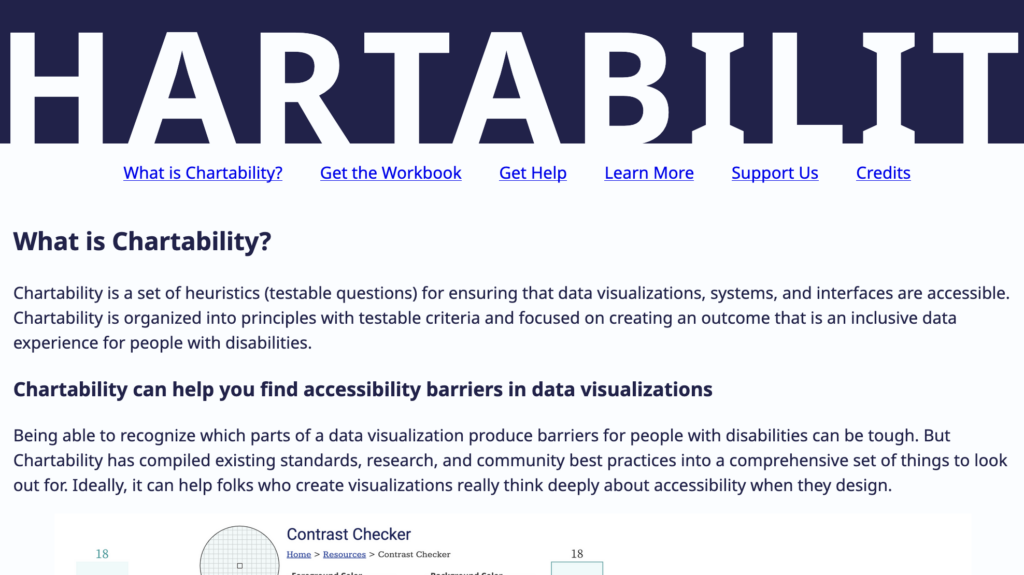
A practical accessibility framework that provides testable heuristics to help designers and developers evaluate and improve the inclusivity of data visualizations and data-driven interfaces.
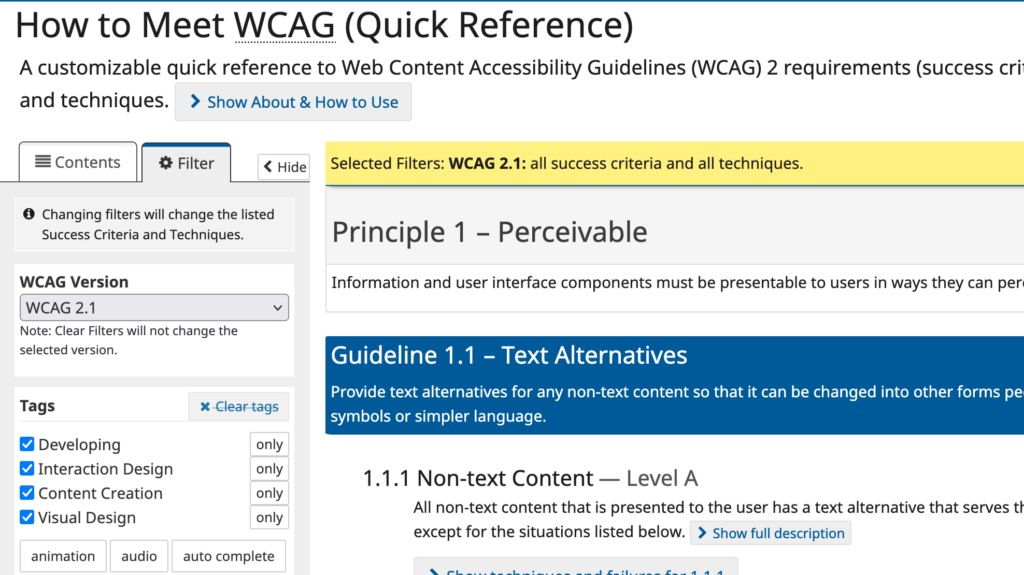
An interactive tool from the W3C Web Accessibility Initiative that provides a customizable, filterable view of WCAG 2.x success criteria and implementation techniques to help teams design and evaluate accessible digital content.
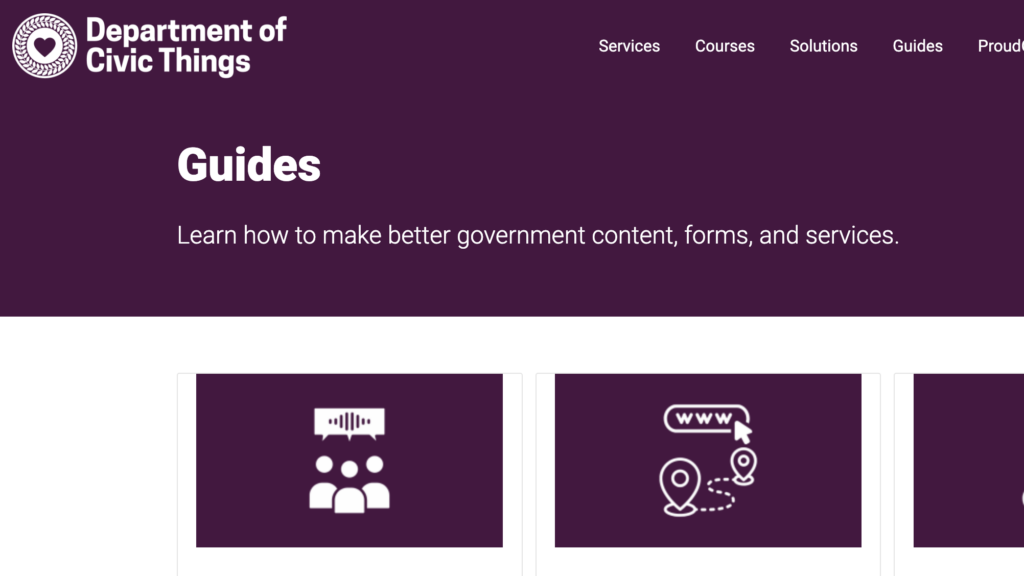
A curated collection of practical guides that help government teams improve digital services, website content, and forms using plain language, content design, and user-centered practices.
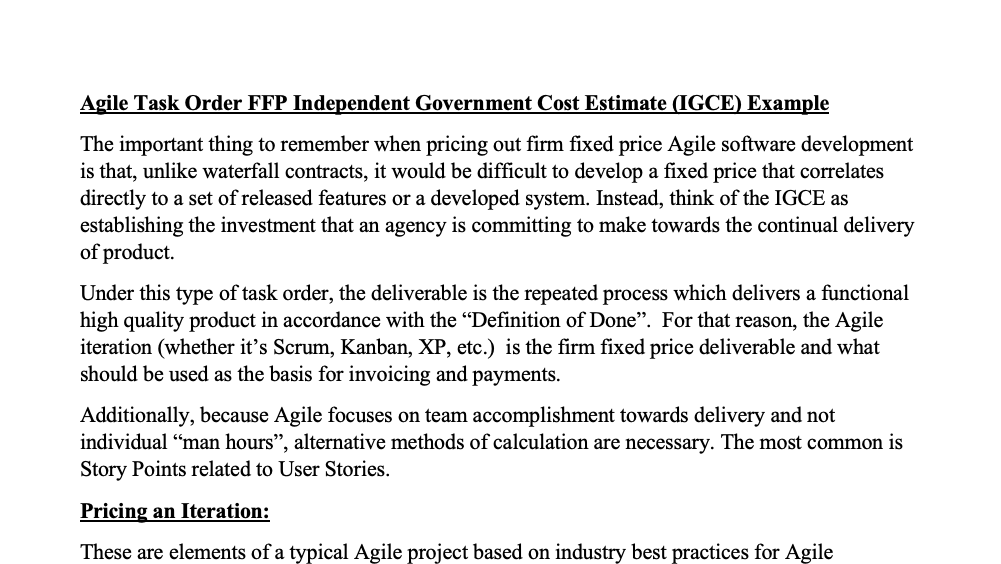
A practical example showing how to estimate and structure firm-fixed-price costs for agile software development task orders using iteration-based pricing and performance metrics.
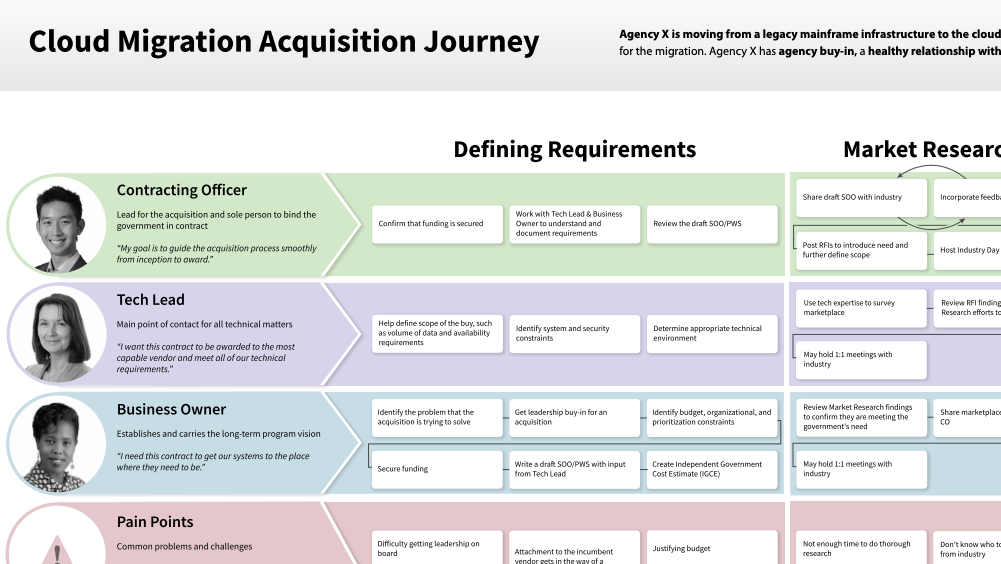
A visual journey map that outlines the end-to-end steps, roles, and decisions involved in procuring cloud migration support services for modernizing a legacy system.
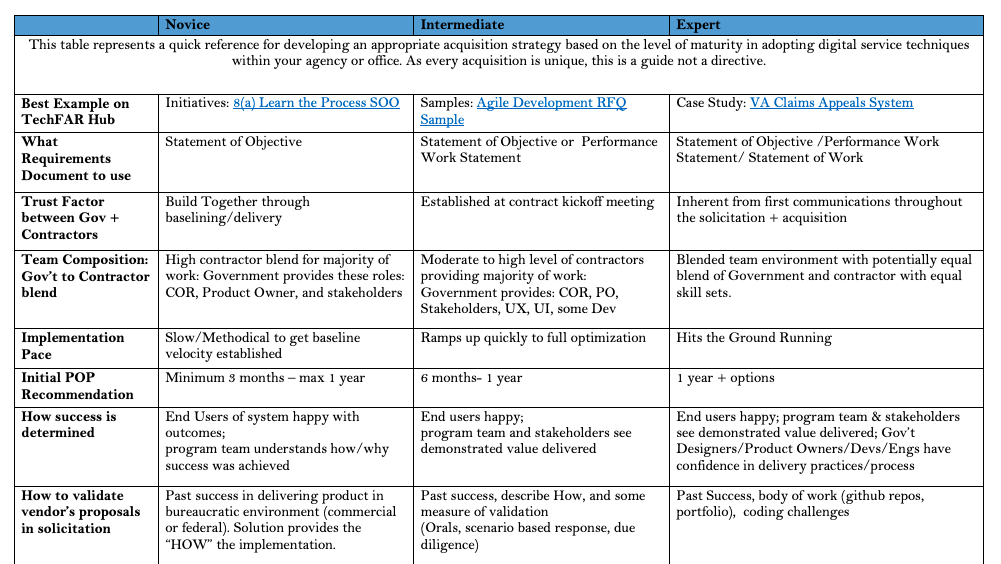
A practical guide that helps agencies choose appropriate acquisition strategies for digital projects based on their maturity with modern delivery practices.