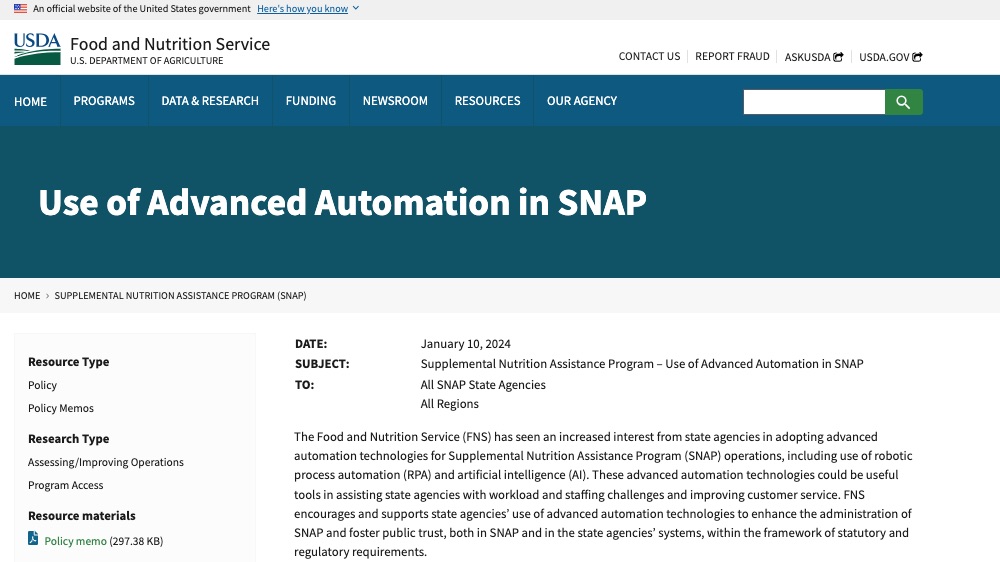
For the past year, modernization teams at the Department of Labor (DOL) have been helping states identify opportunities to automate rote, non-discretionary, manual tasks, with the goal of helping them speed up the time that it takes to process claims. This post provides more context on Robotic Process Automation (RPA) and potential use cases in unemployment insurance.
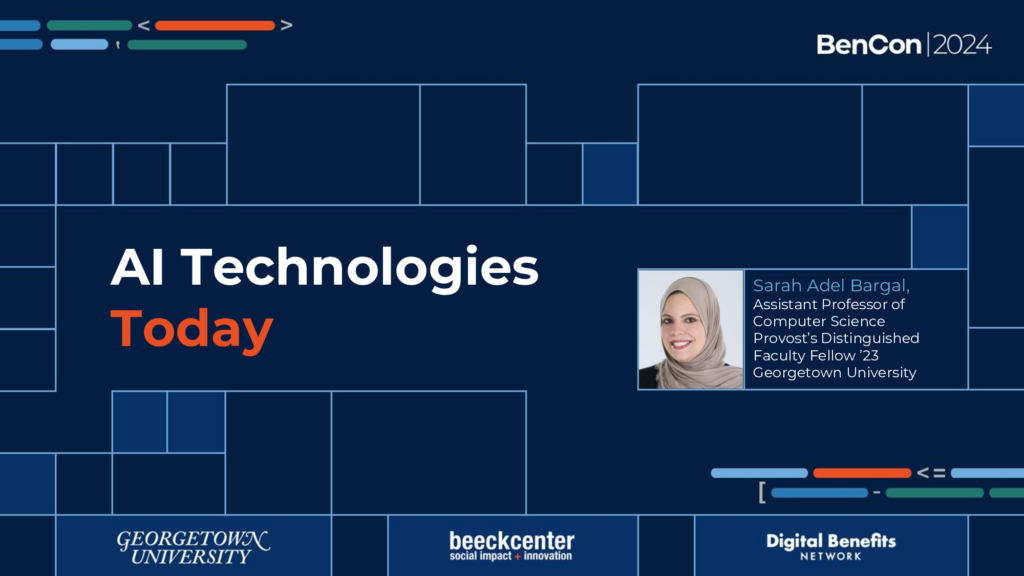
Sarah Bargal provides an overview of AI, machine learning, and deep learning, illustrating their potential for both positive and negative applications, including authentication, adversarial attacks, deepfakes, generative models, personalization, and ethical concerns.
A comprehensive assessment that maps how artificial intelligence is currently being used, governed, and managed across local, state, and federal governments in the United States.
The Digital Benefit Network's Digital Identity Community of Practice held a session to hear considerations from civil rights technologists and human-centered design practitioners on ways to ensure program security while simultaneously promoting equity, enabling accessibility, and minimizing bias.
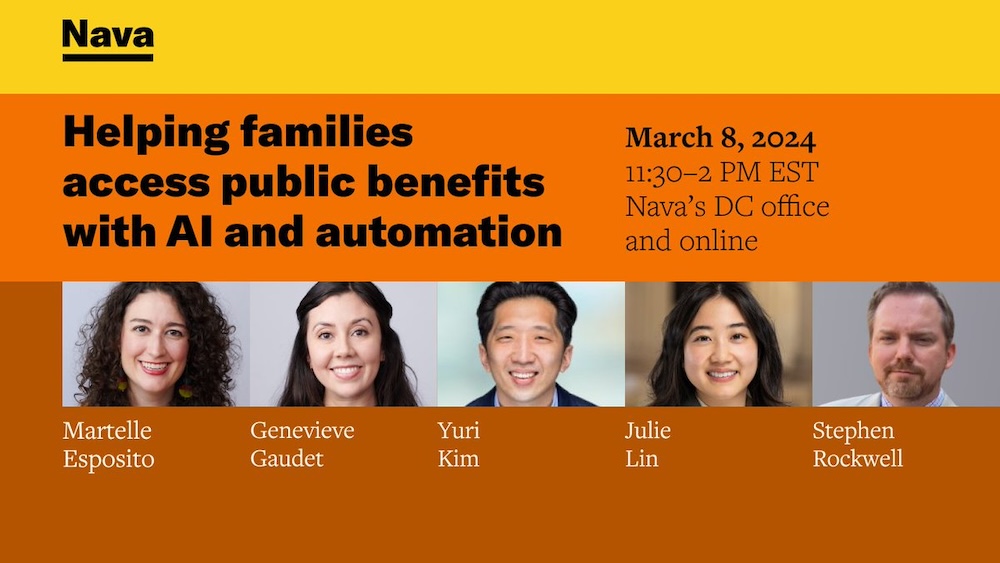
Webinar that shares Nava’s partnership with the Gates Foundation and the Benefits Data Trust that seeks to answer if generative and predictive AI can be used ethically to help reduce administrative burdens for benefits navigators.
This case study details the development of a document extraction prototype to streamline benefits application processing through automated data capture and classification.
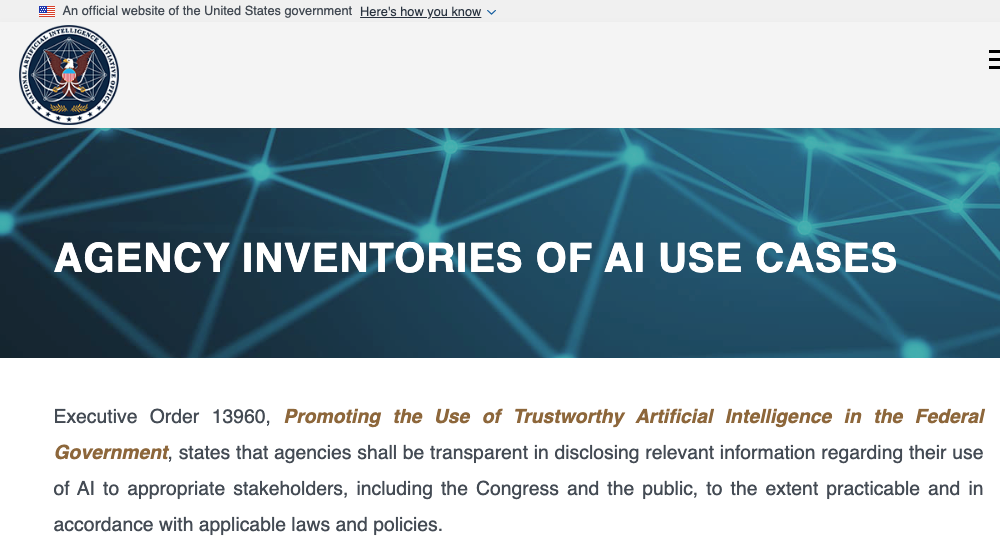
In accordance with Executive Order 13960, Promoting the Use of Trustworthy Artificial Intelligence in the Federal Government, Federal agencies began publishing their first annual inventories of artificial intelligence (AI) use cases in June 2022.
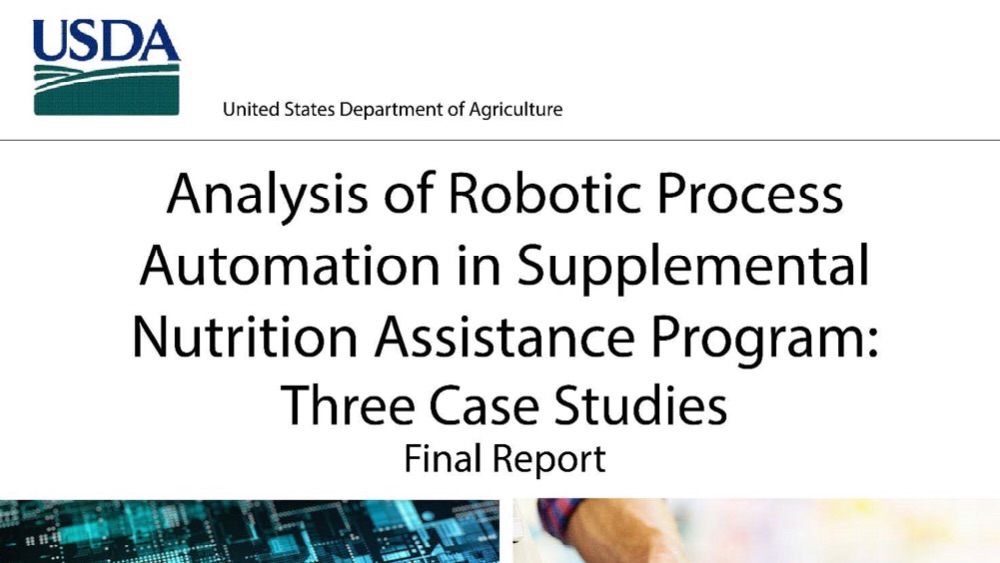
This study evaluates the use of RPA technology by three states to automate SNAP administration, focusing on repetitive tasks previously performed manually.
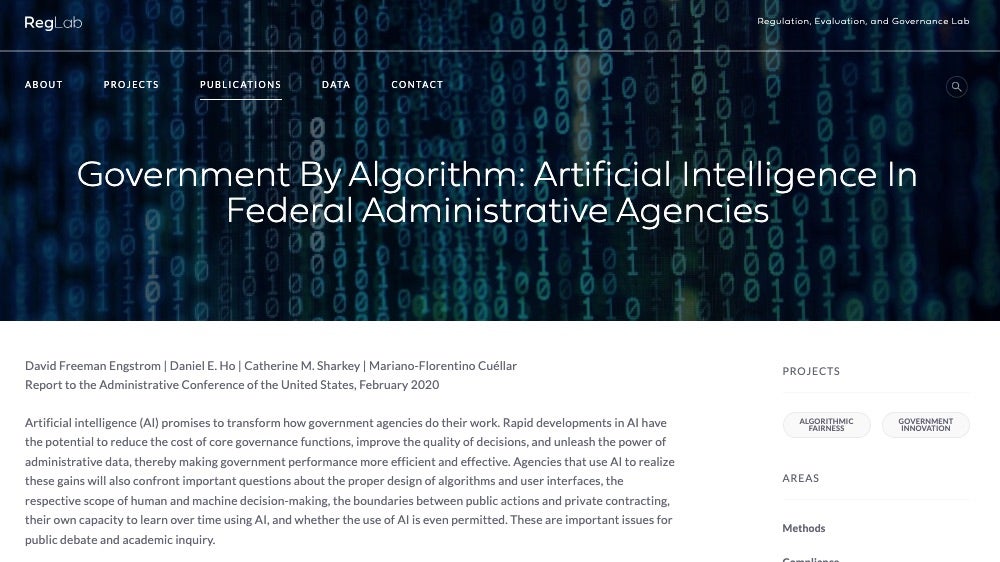
Little is known about how agencies are currently using AI systems, and little attention has been devoted to how agencies acquire such tools or oversee their use.
Outlines recommendations from the U.S. House of Representatives for the responsible adoption, governance, and oversight of artificial intelligence technologies across state agencies.
Bipartisan House Task Force on Artificial Intelligence
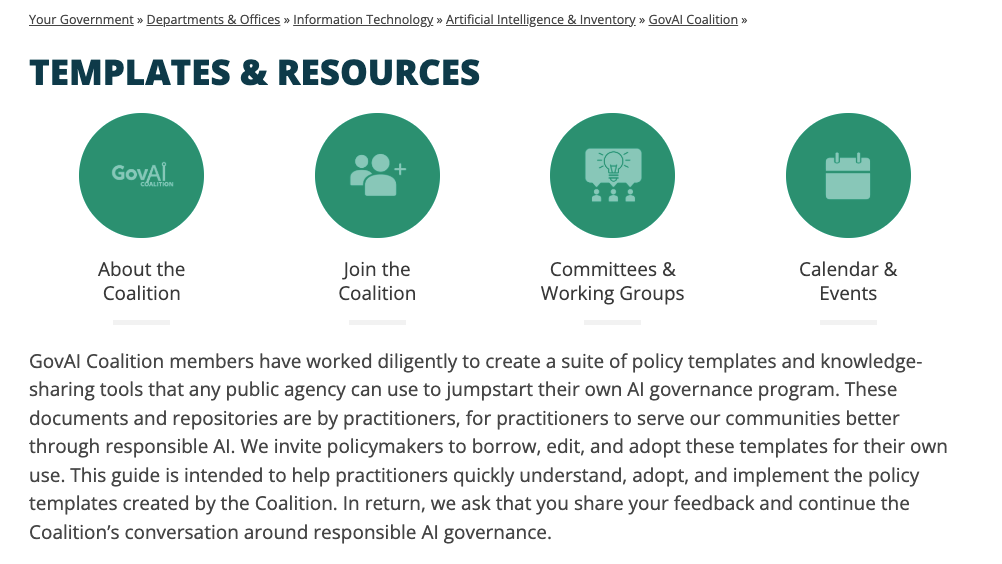
A publicly-available suite of policy templates and knowledge-sharing tools offered by the GovAI Coalition (via the City of San José) to help public agencies launch or refine responsible AI governance programs.