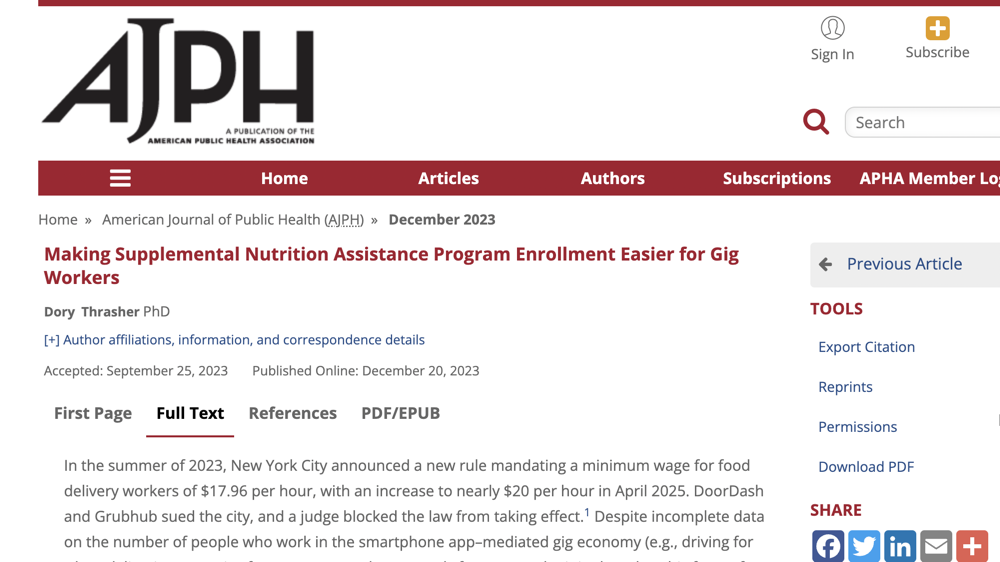
This article examines the concept of "viral cash" and suggests that the future growth of basic income programs will depend on advocacy networks rather than traditional policy diffusion across jurisdictions.
This resource is a research paper examining the role of the public safety net in insuring job losers against income loss, analyzing which government programs provide financial support and how benefits vary based on pre-job loss income levels.
An academic research paper introducing SHADES, a multilingual benchmark designed to evaluate how large language models (LLMs) generate and reinforce stereotypes across different languages and cultural contexts.
This paper examines the challenges U.S. state and local digital service teams face in retaining talent and offers strategies to improve retention and team stability.
This brief analyzes the current state of federal and state government communication around benefits eligibility rules and policy and how these documents are being tracked and adapted into code by external organizations. This work includes comparisons between coded examples of policy and potential options for standardizing code based on established and emerging data standards, tools, and frameworks.
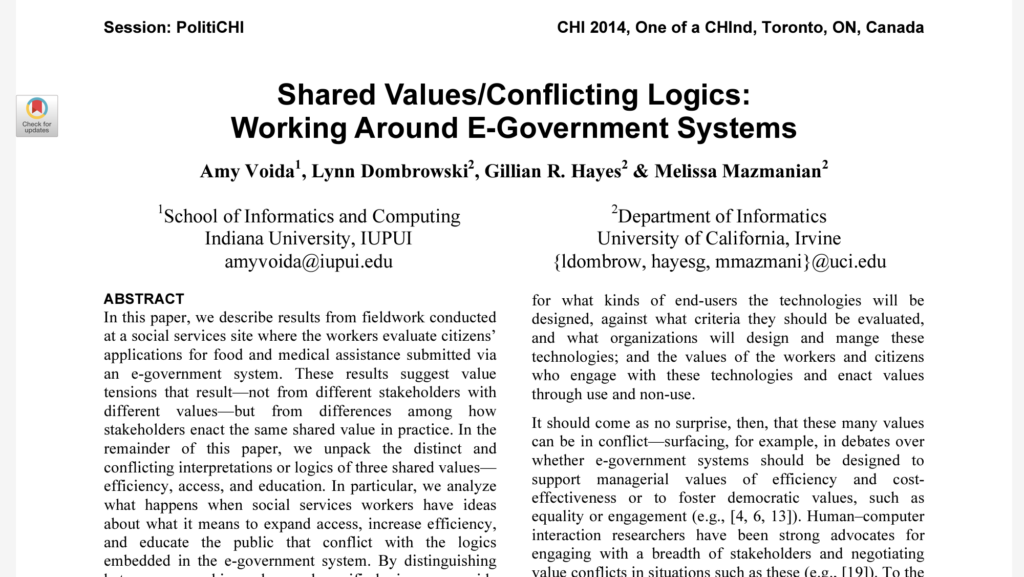
This paper describes results from fieldwork conducted at a social services site where the workers evaluate citizens' applications for food and medical assistance submitted via an e-government system. These results suggest value tensions that result - not from different stakeholders with different values - but from differences among how stakeholders enact the same shared value in practice.
CHI '14: Proceedings of the SIGCHI Conference on Human Factors in Computing Systems
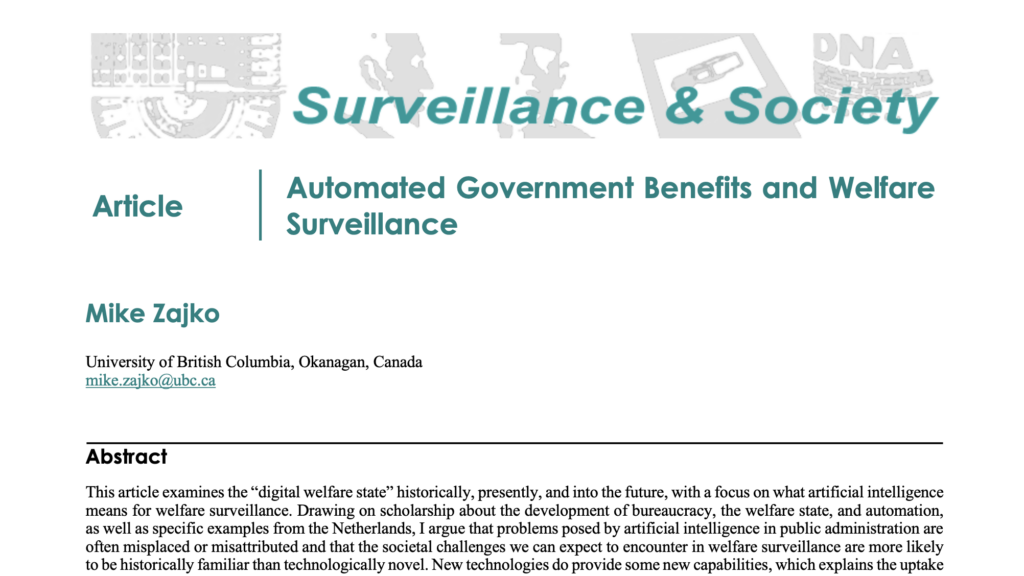
An article examining how automation and AI are being used in welfare systems, arguing that digital benefits administration often reproduces longstanding patterns of surveillance, exclusion, and inequality.
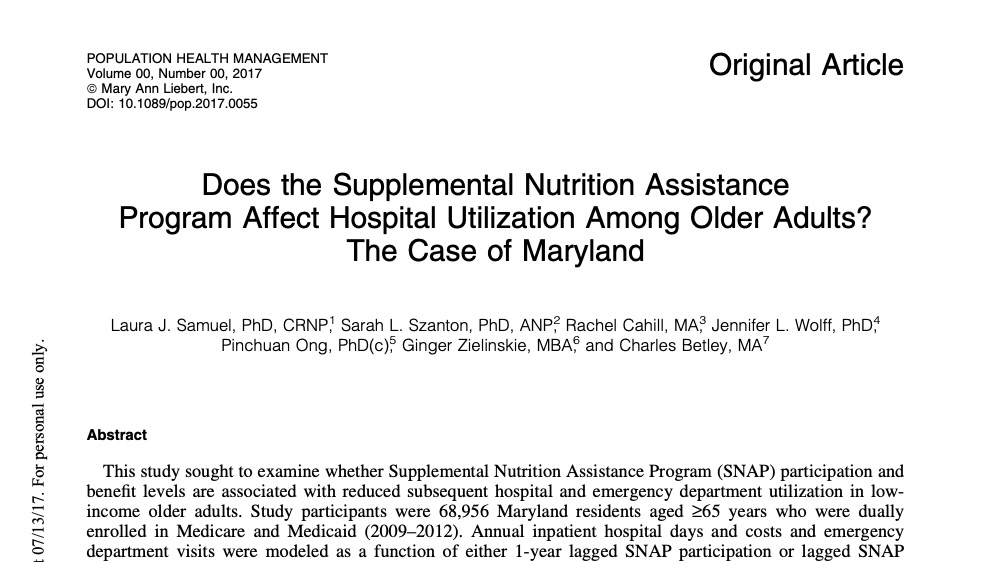
Accounting for the strong effects of health care access, this study finds that SNAP is associated with reduced hospitalization in dually eligible older adults. Policies to increase SNAP participation and benefit amounts in eligible older adults may reduce hospitalizations and health care costs for older dual eligible adults living in the community.