Many low-income households lack the savings to weather financial shocks like layoffs, and SNAP plays a crucial role in helping them manage essential expenses during difficult times.
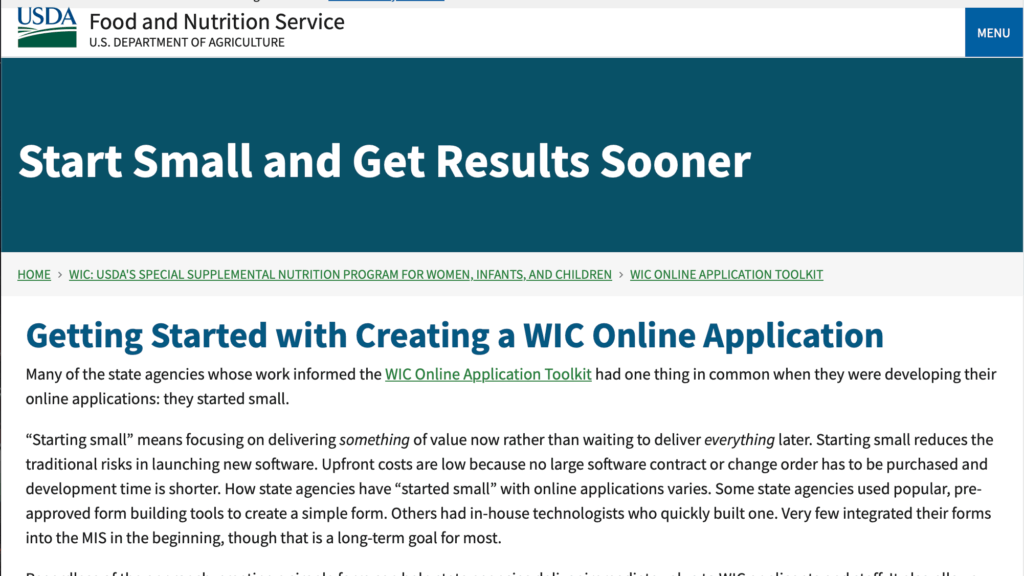
The “Start Small” approach encourages agencies to begin with targeted, manageable improvements in their WIC application process before expanding changes more broadly, fostering easier implementation and measurable early successes.
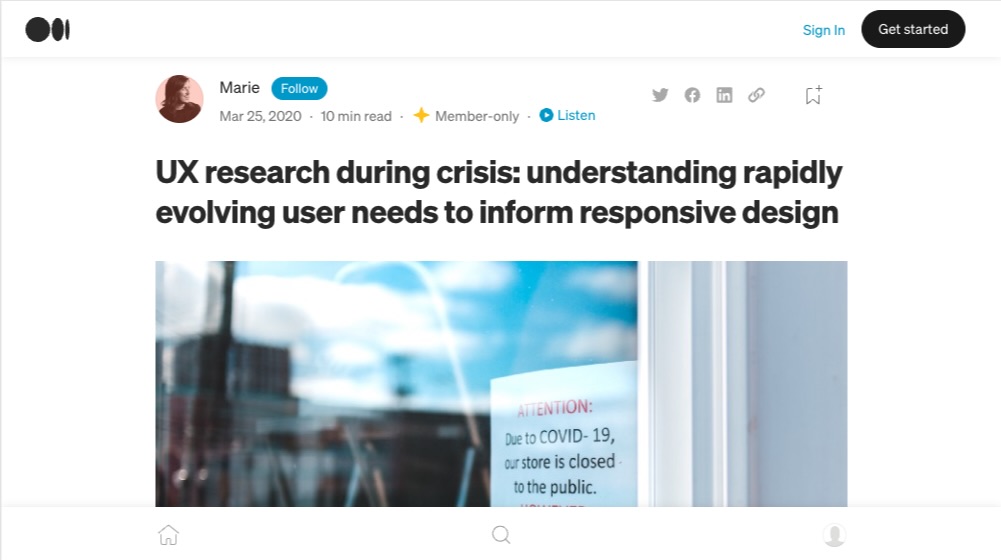
Important considerations for understanding user needs to inform responsive design in rapidly changing contexts are discussed, including how context, threat perception, decision-making, and crisis affects disaster management and UX research.
The experience of the COVID-19 pandemic and its induced recession underscored the crucial importance of unemployment insurance (UI) to workers, and to the stability of the American economy. Temporary federal expansions of unemployment systems during the pandemic showed how they can quickly be scaled to increase benefit levels and to include categories of workers who were not previously eligible, such as the self-employed, caregivers, and low-wage workers. And, states showed that separate programs can be set up to provide similar benefits to workers who are explicitly excluded from unemployment insurance—in particular immigrants who do not have a documented immigration status.
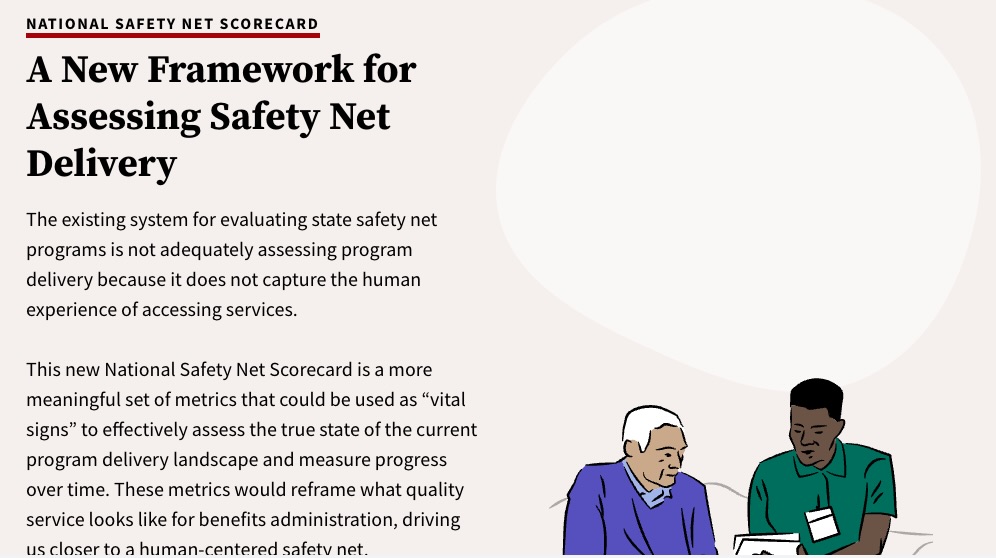
The existing system for evaluating state safety net programs does not adequately capture the human experience of accessing services. This new National Safety Net Scorecard is a more meaningful set of metrics that can effectively asses the true state of the current program delivery landscape and measure progress over time, creating a more human-centered safety net.
This case study describes Nava's with the state of Montana’s Special Supplemental Nutrition Program for Women, Infants, and Children (WIC) agency to build an eligibility screener tool.
This report explores strategies for developing a new generation of technologists dedicated to public interest work, emphasizing the need for a stronger talent pipeline to support government and nonprofit technology initiatives.
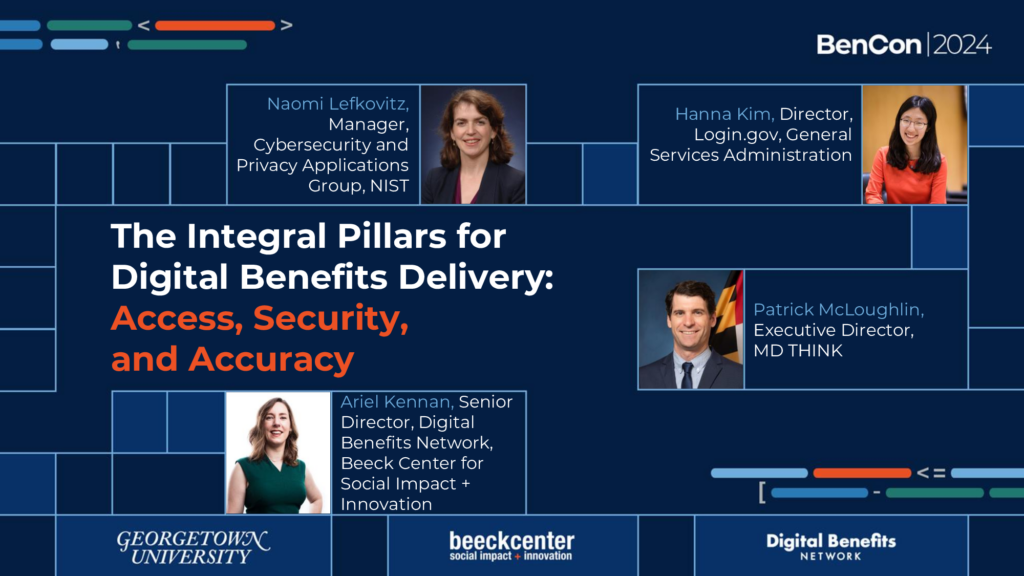
Government leaders discuss how to ensure seamless access to public benefits through breaking down silos, user-friendly digital identities, and privacy-focused security measures.
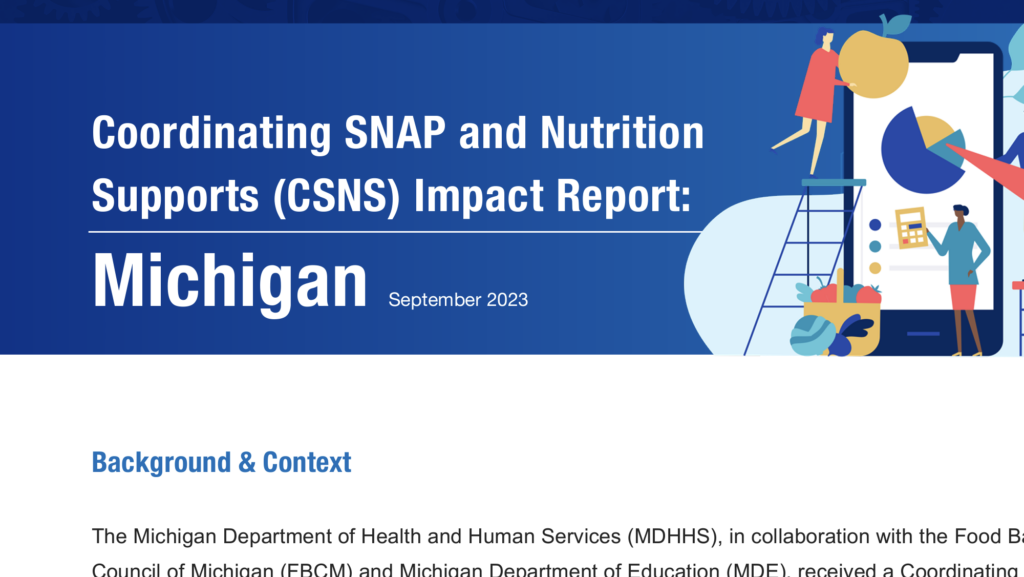
The Michigan Department of Health and Human Services, together with the Food Bank Council of Michigan and the Michigan Department of Education developed a comprehensive Food Insecurity Map and a closed-loop referral system for nutrition and economic supports.
American Public Human Services Association (APHSA)
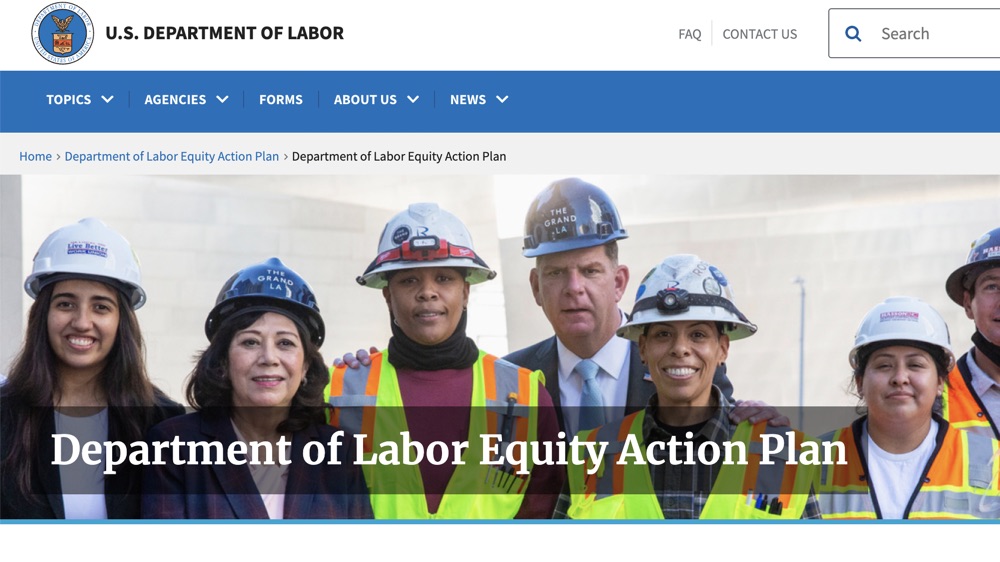
This document, submitted in response to Executive Order 13985 on Advancing Racial Equity and Support for Underserved Communities, summarizes key aspects of DOL’s principles and approach to advancing equity. One of the five areas outlined includes administering and improving the federal-state Unemployment Insurance systems.
Report by the Aspen Institute discussing Benefits21, a multi-stakeholder, multi-faceted initiative to integrate and modernize benefits systems. This paper provides an overview of Benefits21, along with a discussion of the shortcomings of current public and private benefit systems.