When COVID-19 hit, the State of New Jersey recognized the need to both receive data on the spread of the disease from the public and provide information to them on how to mitigate it.
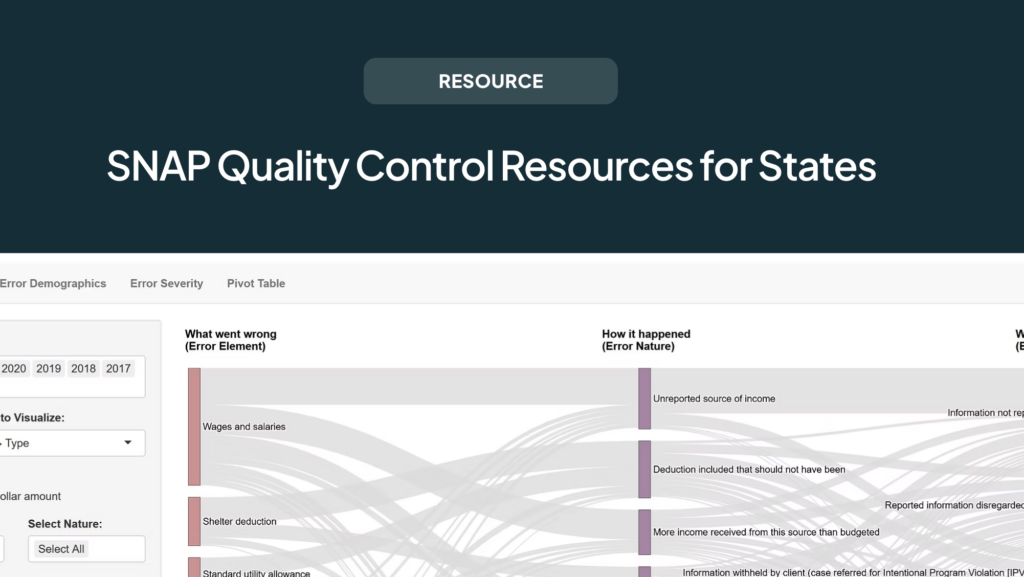
A blog introducing an interactive viewer that helps users explore SNAP Quality Control error data to better understand payment accuracy trends and administrative challenges across states.
This report presents evidence on the use of algorithmic accountability policies in different contexts from the perspective of those implementing these tools, and explores the limits of legal and policy mechanisms in ensuring safe and accountable algorithmic systems.
This report describes how the government can use widespread social media feedback and begin to build long-term measures to center people’s experience as an important component of policy design
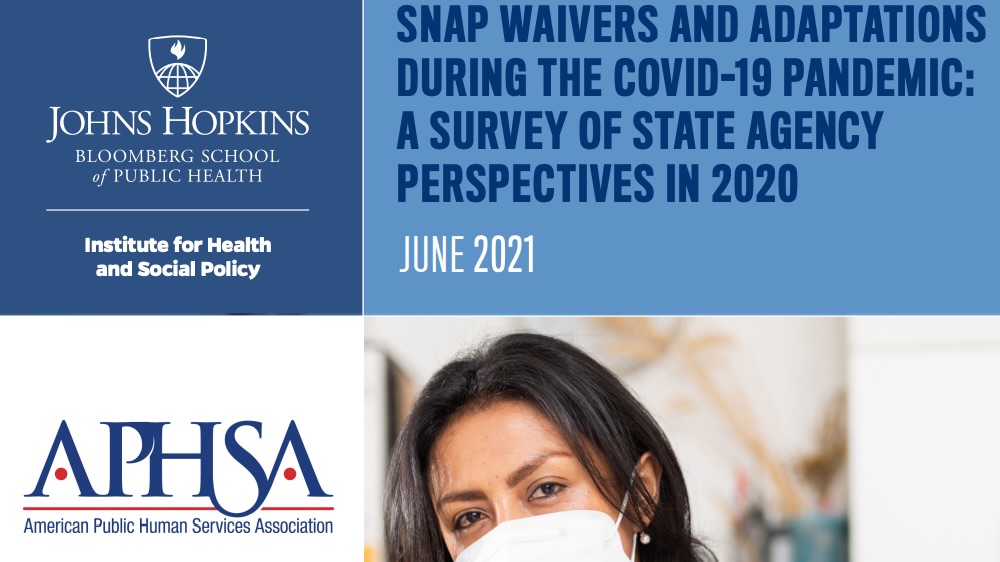
Based on state agency survey responses, this report summarizes key findings from the first calendar year of pandemic response and provides policy considerations for the future of SNAP.
American Public Human Services Association (APHSA)
A recent study challenges the common belief that income support programs like SNAP reduce employment, finding that for individuals with a work history, receiving SNAP benefits can actually increase long-term employment.
This paper concludes that the substantial COVID-19 unemployment insurance expansion had limited disincentive effects on job searches, particularly among lower-income individuals, despite high wage replacement rates.
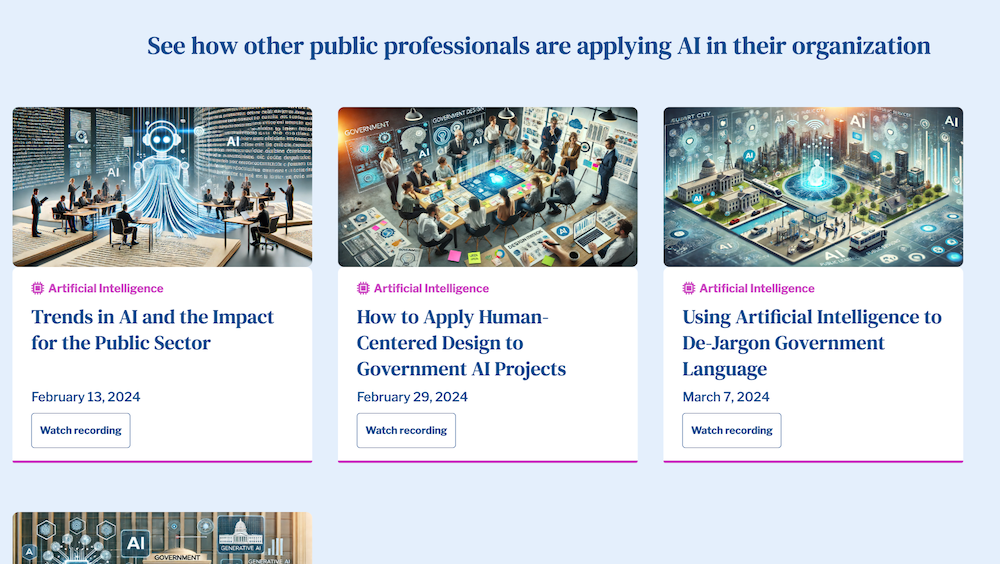
AI resources for public professionals on responsible AI use, including a course showcasing real-world applications of generative AI in public sector organizations.