This Guide to Artificial Intelligence provides a strategic framework for the ethical and responsible implementation of GenA technologies in state operations.
Colorado Governor's Office of Information Technology (OIT)
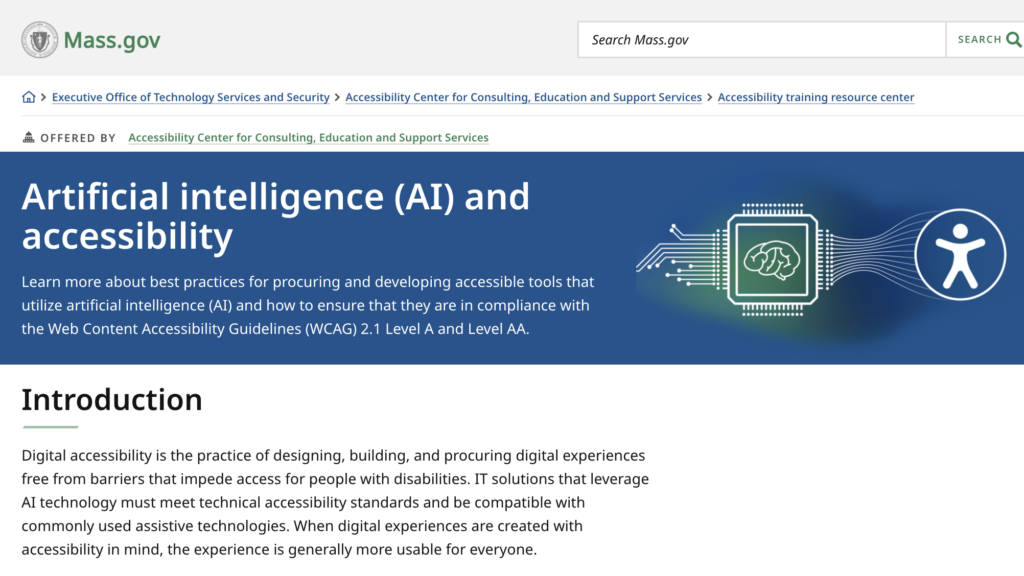
Best practices for procuring and developing accessible tools that utilize artificial intelligence (AI) and how to ensure that they are in compliance with the Web Content Accessibility Guidelines (WCAG) 2.1 Level A and Level AA.
The Commonwealth of Massachusetts Executive Office of Technology Services and Security (EOTSS)
This report outlines the team's achievements in enhancing state digital services through human-centered design, agile development, and cross-agency collaboration from its inception through 2024.
Colorado Governor's Office of Information Technology (OIT)
This action plan outlines Oregon’s strategic approach to adopting AI in state government, emphasizing ethical use, privacy, transparency, and workforce readiness.
This resource page provides comprehensive information on the state's initiatives, policies, training, and governance related to the adoption and implementation of generative AI technologies in government operations.
This news release highlights Pennsylvania’s first-in-the-nation Generative AI pilot under Governor Shapiro, showcasing its positive impact on state employees and commitment to responsible, ethical AI use.
This report provides an overview of the task force’s work in assessing, guiding, and recommending policies for the safe, ethical, and effective use of generative AI across Alabama’s executive-branch agencies.
State of Alabama Generative Artificial Intelligence (GenAI) Task Force
An economic analysis estimating how recipients of emergency SNAP benefits during the pandemic allocated additional funds, primarily to food consumption.
Led by the Digital Benefits Network in partnership with Public Policy Lab, the Digital Doorways research project amplifies the lived experiences of beneficiaries to provides new insights into people’s experiences with digital identity processes and technology in public benefits. This executive summary gives an overview of the project’s findings.
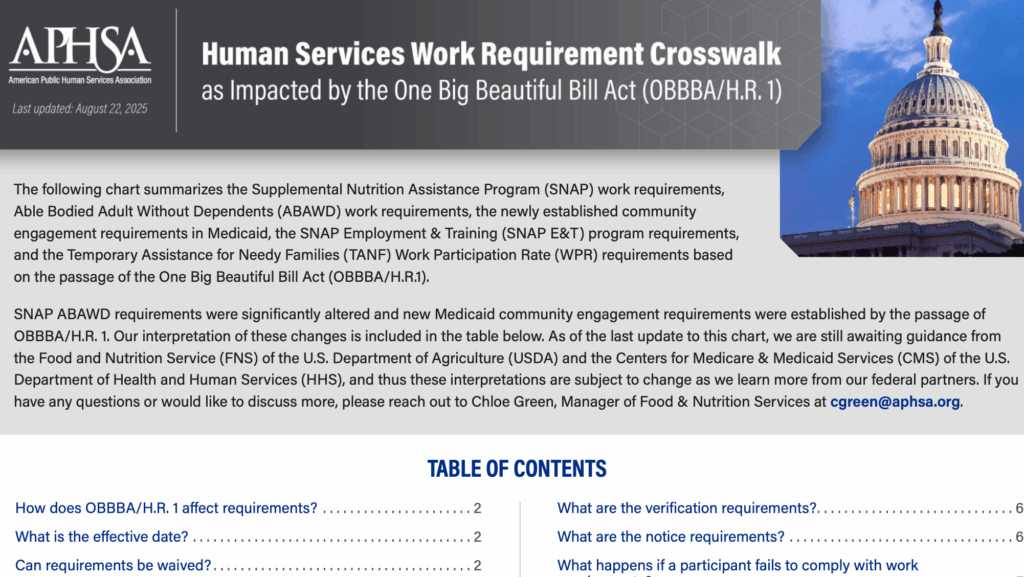
This crosswalk compares provisions in H.R. 1 with existing human services policies, focusing on how proposed federal work requirements could affect programs like TANF, SNAP, and Medicaid.
American Public Human Services Association (APHSA)
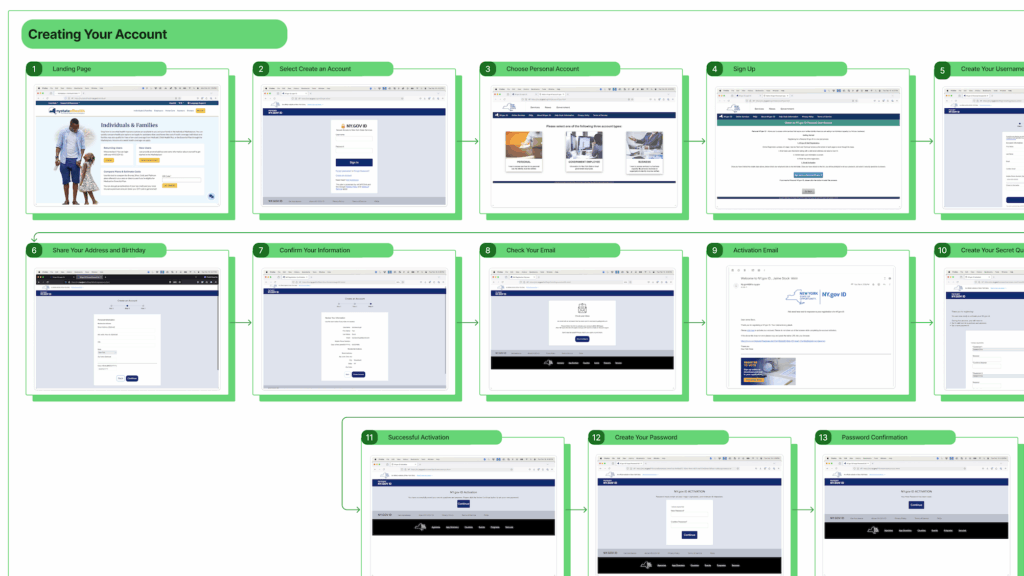
Created for use in the Digital Doorways research project, this design stimuli shows the steps of submitting an application, sharing personal information, and verifying identity for New York's online application for Medicaid.