This section of the Building Resilience plan outlines comprehensive strategies to help states prevent, detect, and recover unemployment insurance (UI) fraud while protecting legitimate claimants.
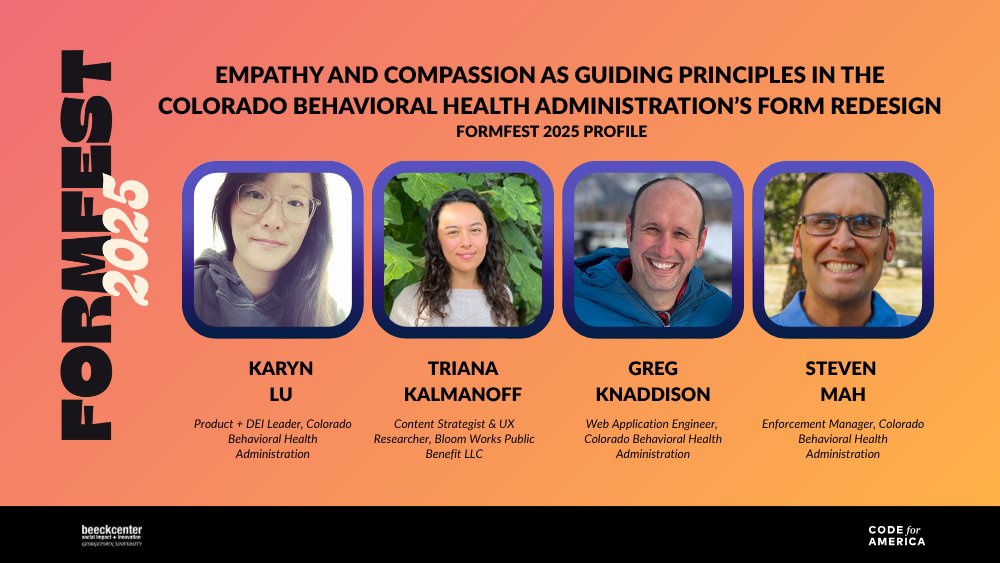
This FormFest profile highlights how the Colorado Behavioral Health Administration redesigned its complaint submission form using empathy, human-centered design, and trauma-informed research methods to make the process more accessible, compassionate, and secure for all users.
An event recap from one of FormFest 2024's breakout sessions featuring speakers from the state of Maryland's Department of Social Services and the U.S. Department of Health and Human Services (HHS).
An event recap from one of FormFest 2024's breakout sessions featuring speakers from Digital Service Teams across the United States and the Department of Veteran Affairs.
A case study documenting how a human-centered claimant portal was developed for the New Jersey Department of Labor (NJDOL) to modernize unemployment insurance access using agile development and API technology.
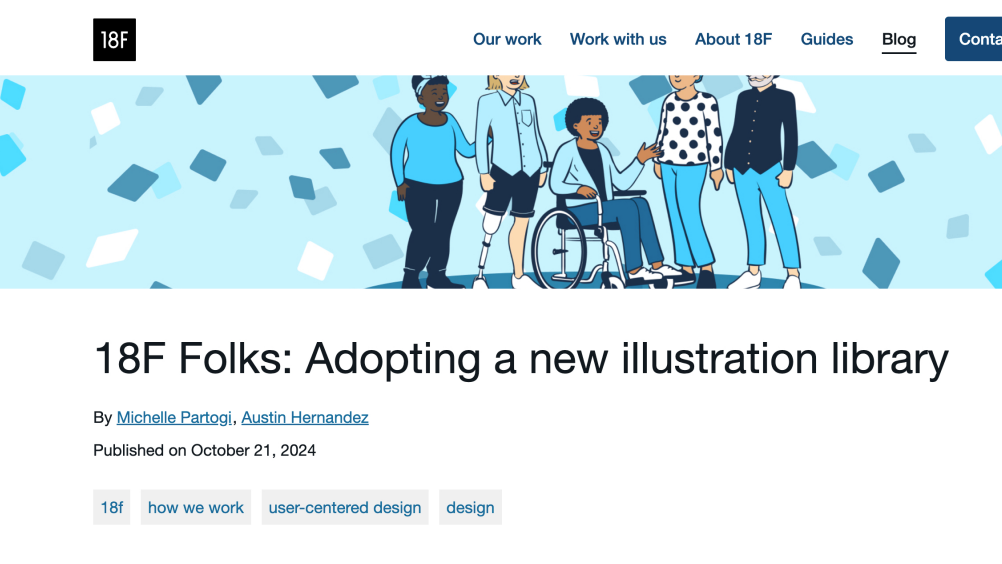
This blog describes how 18F adopted a new illustration library (“18F Folks”) based on Open Peeps, to better represent diversity, context, and human experiences in their visual communications.
This report highlights 5 key takeaways from the Aspen Institute Financial Security Program's 2022 Benefits Forum, where 55 experts from various sectors discussed solutions for improving public and private benefits to better support workers and their families.
This memo provides information to child and family service agencies on improving support for intersex children, adolescents, and their families through affirming practices, resources, and partnerships.
U.S. Department of Health and Human Services (HHS)
This event convened policy experts and state leaders to explore how states can operationalize new Medicaid work reporting mandates—covering technical, legal, and implementation challenges.
DSN Spotlights are short-form project profiles that feature exciting work happening across our network of digital government practitioners. Spotlights celebrate our members’ stories, lift up actionable takeaways for other practitioners, and put the resources + examples we host in the Digital Government Hub in context.
Drawing on the Beeck Center’s research on government, nonprofit, academic, and private sector organizations that are working to improve access to safety net benefits, this report highlights best practices for creating accessible benefits content.