Practitioner Picks is a quarterly series designed to add fresh resources to the Digital Government Hub’s library, helping people improve government digital service delivery. Each issue spotlights resources chosen by practitioners in a specific service delivery area along with their insights on why these picks are valuable additions to the Hub.
A technical guide that outlines policy and system design strategies states can use to reduce procedural terminations when implementing Medicaid work reporting requirements.
A foundational guide that introduces the principles, governance considerations, and technical approaches involved in sharing and integrating administrative data across organizations.
EBT theft has deeply damaged the lives of the lowest-income Americans. The following insights reveal a system that leaves people in the dark and fails to protect a crucial lifeline.
When COVID-19 hit, the State of New Jersey recognized the need to both receive data on the spread of the disease from the public and provide information to them on how to mitigate it.
This presentation from Steph White, Cross Enrollment Coordinator at the Michigan Department of Health and Human Services offers an in-depth example on implementing cross enrollment with WIC and general tools for cross enrollment.
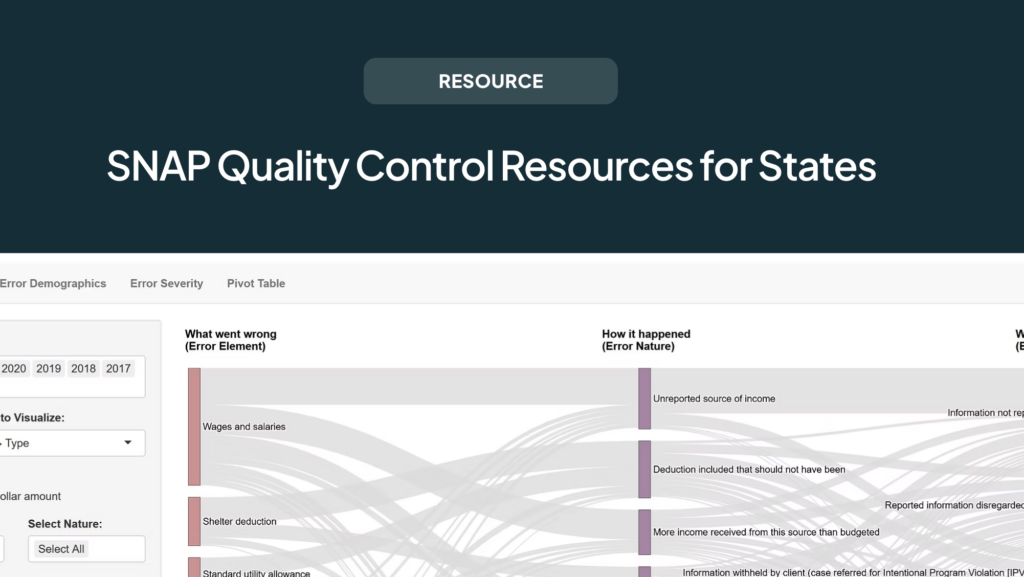
A blog introducing an interactive viewer that helps users explore SNAP Quality Control error data to better understand payment accuracy trends and administrative challenges across states.
Based on state agency survey responses, this report summarizes key findings from the first calendar year of pandemic response and provides policy considerations for the future of SNAP.
American Public Human Services Association (APHSA)