
Intended Audience: State/Provincial Government: Agency
-
Pennsylvania Executive Order 2023-08 – Bolstering Service Delivery Through a Digital Experience Strategy
Executive Order issued by Pennsylvania Governor Josh Shapiro bolstering service delivery through the creation of a digital experience strategy
-

GetCalFresh Demo Website
Demo website for GetCalFresh—Code for America and the state of California’s efforts to simplify the SNAP application process.
-

Design Lead
This is a job description for the role of Design Lead from the New York City Mayor's Office for Economic Opportunity (NYC Opportunity).
-

Visual Storyteller
This is a job description for the role of Visual Storyteller from the Canadian Digital Service (CDS).
-
Communications Design Fellow
This is a job description for the role of Communications Design Fellow from the New York City Mayor's Office for Economic Opportunity (NYC Opportunity).
-
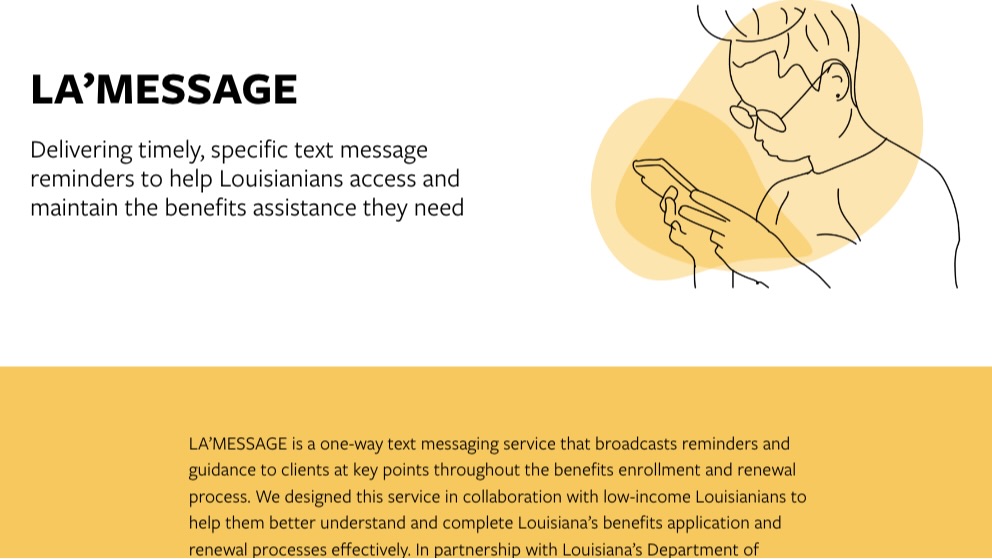
LA’MESSAGE Demo and Scripts
LA’MESSAGE is a one-way text messaging service developed by Code for America in partnership with Louisiana to broadcast reminders and guidance to residents enrolled in and eligible for SNAP, Medicaid, TANF, and WIC at key points throughout the benefits enrollment and renewal process.
-
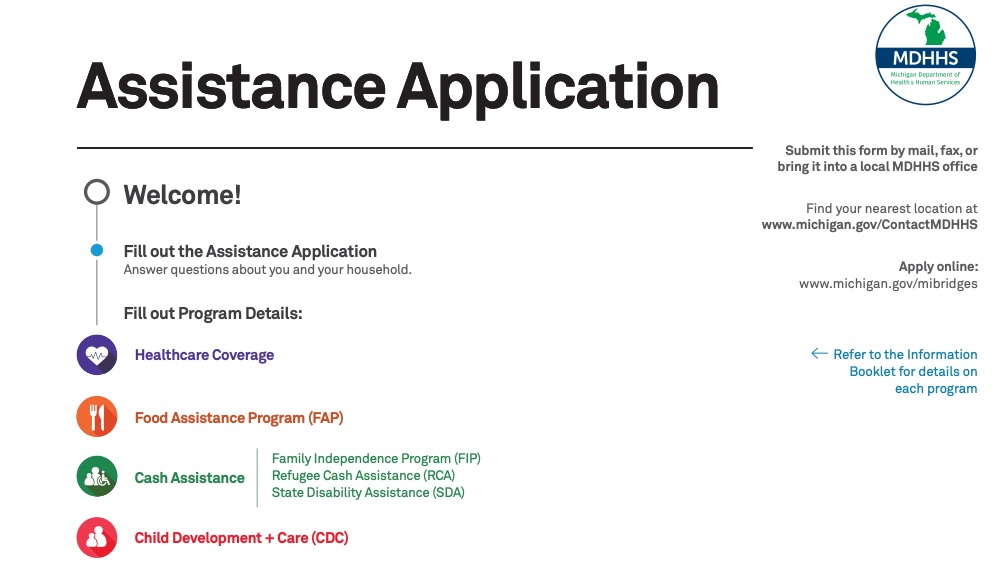
MDHHS-1171 Assistance Application and Program Supplements
Michigan Department of Health and Human Service's benefits application form.
-

Human Centered Design Specialist
This is a job description for the role of Human Centered Design Specialist from the Colorado Digital Service.
-
Visual Designer
This is a job description for the role of Visual Designer from the Canadian Digital Service (CDS).
-
Executive Order on Transforming Federal Customer Experience and Service Delivery to Rebuild Trust in Government
Executive Order 14058, issued by President Joe Biden on December 13, 2021, aims to enhance the federal customer experience and service delivery to rebuild trust in government.
-
Product Management Fellow
This is a job description for the role of Product Management Fellow from the New York City Mayor's Office for Economic Opportunity (NYC Opportunity).
-
Head of Partnerships
This is a job description for the role of Head of Partnerships from the Canadian Digital Service (CDS).