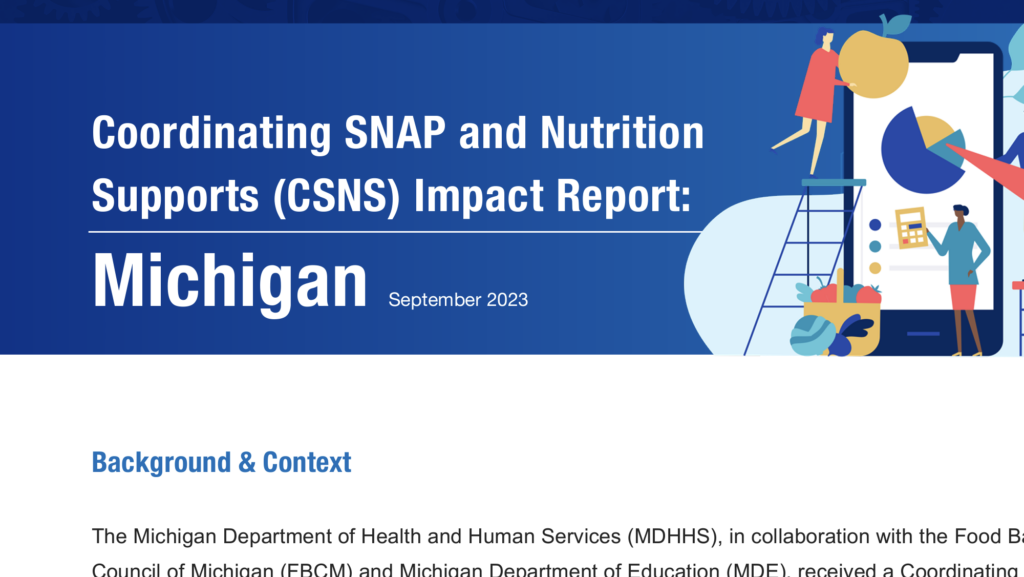
The Michigan Department of Health and Human Services, together with the Food Bank Council of Michigan and the Michigan Department of Education developed a comprehensive Food Insecurity Map and a closed-loop referral system for nutrition and economic supports.
American Public Human Services Association (APHSA)
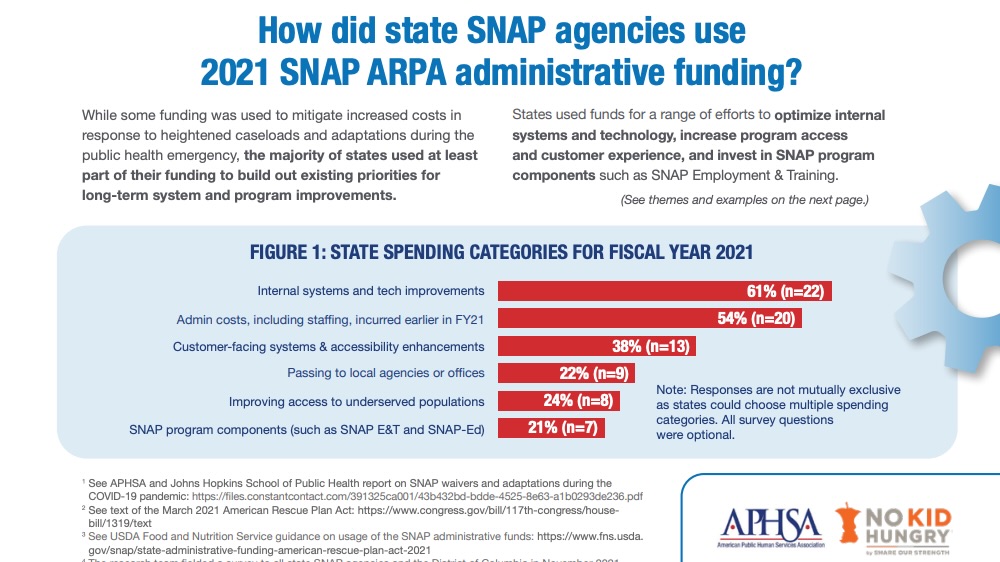
This brief shares findings from a November 2021 survey of state SNAP agencies about their use of the SNAP ARPA funds in fiscal year 2021, and their initial planned activities for fiscal year 2022 and 2023.
American Public Human Services Association (APHSA)
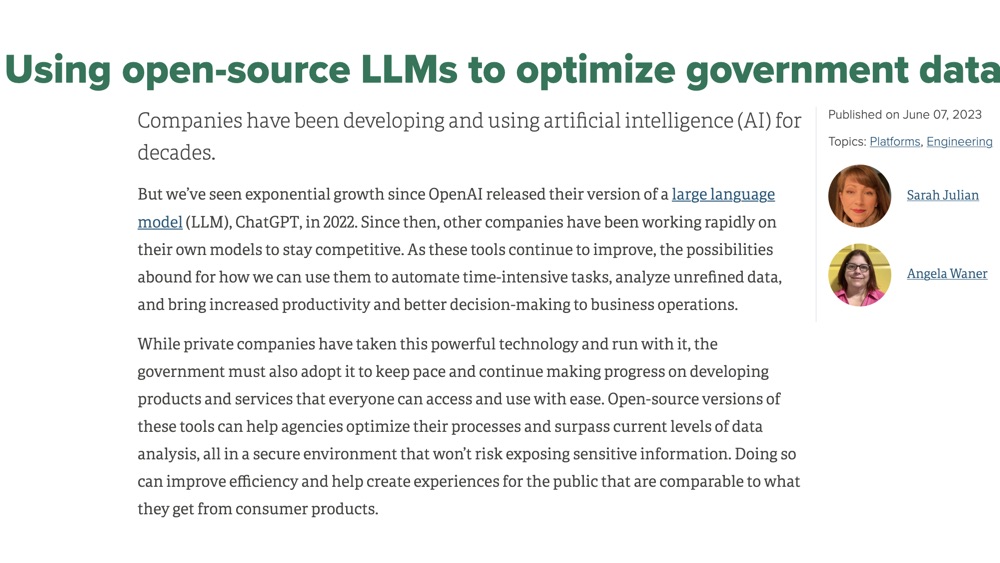
Companies have been developing and using artificial intelligence (AI) for decades. But we've seen exponential growth since OpenAI released their version of a large language model (LLM), ChatGPT, in 2022. Open-source versions of these tools can help agencies optimize their processes and surpass current levels of data analysis, all in a secure environment that won’t risk exposing sensitive information.
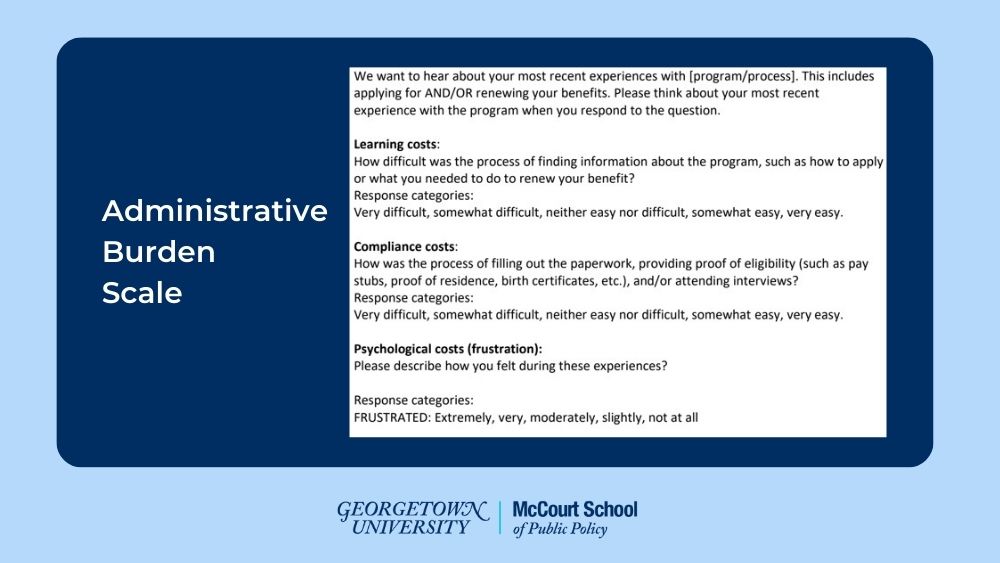
The Better Government Lab at the McCourt School of Public Policy at Georgetown University has developed a new scale for measuring the experience of burden when accessing public benefits. They offer both a three-item scale and a single-item scale, which can be utilized for any public benefit program. The shorter scales provide a less burdensome way to measure by requiring less information from users.
Based on state agency survey responses, this report summarizes key findings from the first calendar year of pandemic response and provides policy considerations for the future of SNAP.
American Public Human Services Association (APHSA)
This book is an in-depth exploration of federal programs and controversial legislation demonstrating that administrative burden has long existed in policy design, preventing citizens from accessing fundamental rights. Further discussion of how policymakers can minimize administrative burden to reduce inequality, boost civic engagement, and build an efficient state.
Building on our February 2022 report Benefit Eligibility Rules as Code: Reducing the Gap Between Policy and Service Delivery for the Safety Net, the Beeck Center’s Digital Benefits Network (DBN) recently held a convening to share progress and potential in digitizing benefits eligibility and to begin addressing how a national approach could be started.
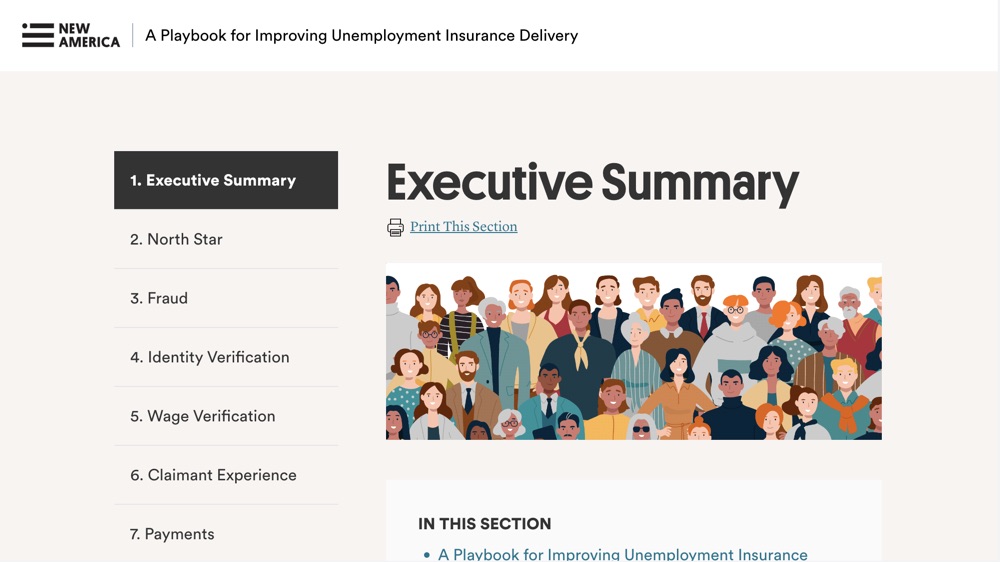
This playbook offers a comprehensive guide to enhancing unemployment benefits systems, focusing on claimant-centric approaches, equitable access, and actionable steps for state agencies.
On May 19, 2023, the Digital Benefits Network published a new, open dataset documenting authentication and identity proofing requirements across online SNAP, WIC, TANF, Medicaid, child care (CCAP) applications, and unemployment insurance applications.
This report documents best practices and lessons learned from project streamlined data sharing between SNAP and WIC, enhancing cross-enrollment processes
American Public Human Services Association (APHSA)
The New Jersey Department of Human Services and New Jersey Department of Health collaborated in their Coordinating SNAP & Nutrition Supports project to enhance the enrollment and coordination of SNAP and WIC programs.
American Public Human Services Association (APHSA)