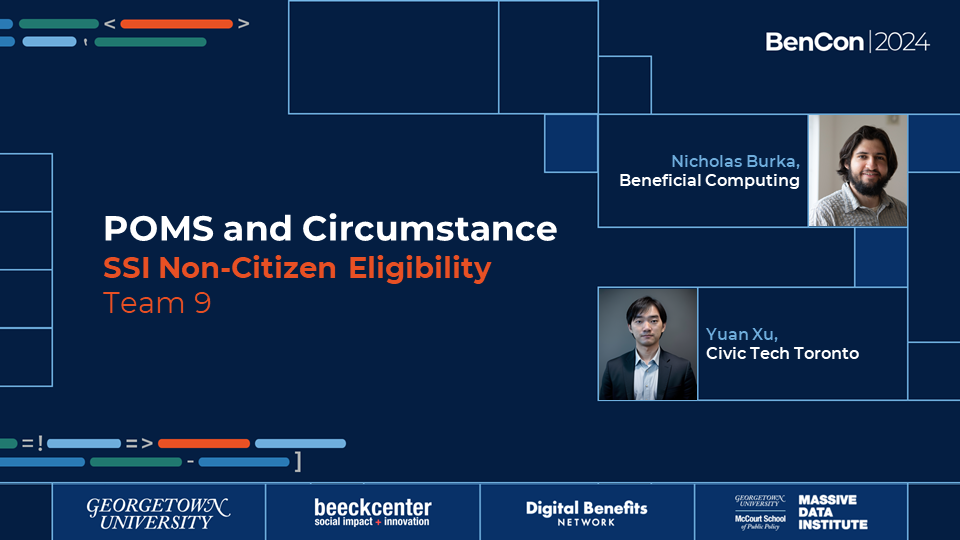
The team explored using LLMs to interpret the Program Operations Manual System (POMS) into plain language logic models and flowcharts as educational resources for SSI and SSDI eligibility, benchmarking LLMs in RAG methods for reliability in answering queries and providing useful instructions to users.
Governor Kathy Hochul announced a new client feedback initiative in partnership with Code for America to improve New York's WIC program by implementing live online chat to gather input from participants, streamline enrollment, and increase access to healthy food for eligible families.
The report evaluates the 2023 Newborn Supply Kit pilot program, highlighting its effectiveness in reducing maternal stress, alleviating financial burdens, and increasing trust in government services among new parents, especially in low-income communities.
U.S. Department of Health and Human Services (HHS)
This session from FormFest 2024 focused on improving service delivery by hearing about work in multiple cities to rapidly digitize service delivery and work by the Department of Veteran Affairs around implementing service design principles in form revisions.
This section of the Building Resilience plan outlines strategies to expand access to unemployment insurance (UI) for underserved populations and improve benefit adequacy through system reform, outreach, and data-driven equity efforts.
This section of the Building Resilience plan outlines strategies to improve reemployment outcomes for unemployment insurance (UI) claimants by expanding access to services, updating work search requirements, and increasing use of Short-Time Compensation programs.
The New York State Customer Experience (NYX) Strategy is a comprehensive plan aimed at transforming state government services to be more efficient, accessible, and responsive to the needs of residents.
The design system provides standardized components, templates, and design tokens to help developers and designers create consistent, accessible, and user-friendly Canadian government digital services.