The article discusses effective strategies for training government partners in digital services, emphasizing the importance of prioritizing training, setting clear objectives, and fostering mutual understanding and trust.
This interview template includes questions designed to help teams conduct exploratory, semi-structured interviews with government stakeholders involved in program delivery to gather information that can help them evaluate the status quo of digital delivery in their organization.
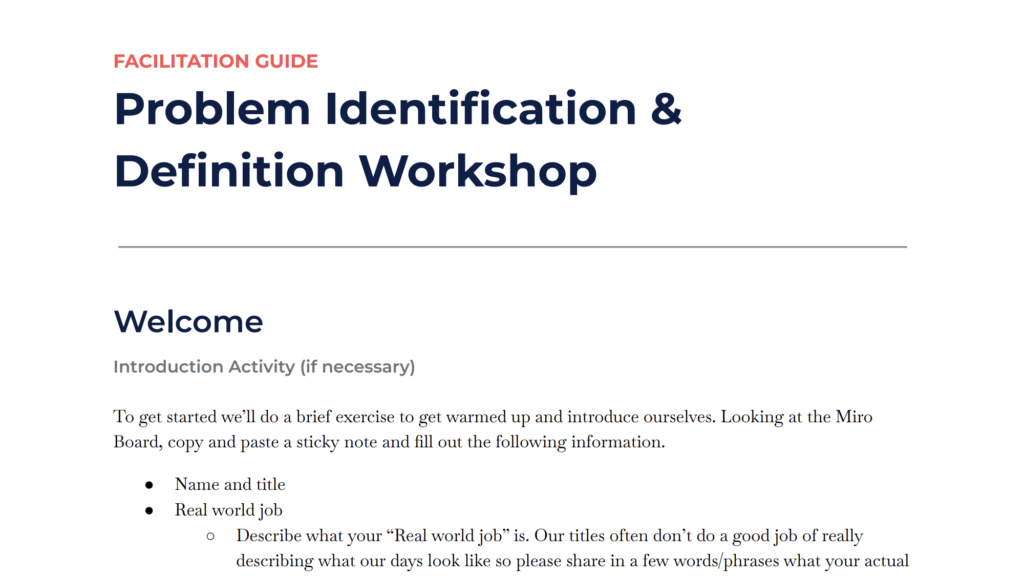
This workshop guide offers teams an opportunity to jointly work toward understanding core problems impacting digital delivery in their organization. The guide is structured in two parts: (1) a Miro template and (2) a Facilitation Guide.
The 2022 Dobbs v. Jackson decision overturned Roe v. Wade, leading 21 states to ban or heavily restrict abortion, exacerbating economic and health challenges for women denied care while these states also often lack supportive policies like paid leave, fair wages, and accessible public benefits for growing families.
In December 2024, the Digital Benefits Network released an updated open dataset on authentication and identity proofing requirements across various public benefits applications to highlight best practices and areas for improvement in identity management.
This publication seeks to answer one of the most common questions that CIOs ask: “What are other states doing with generative AI and what is the role of the state CIO?”
National Association of State Chief Information Officers (NASCIO)
This session from FormFest 2024 walked attendees through some of the major changes AI is bringing to form design. Learn about the National Head Start Association’s use of AI to reduce administrative burden and the Canadian Digital Service’s tips for protecting government applications systems from AI.
The article examines the impact of digital interfaces on welfare state administration, focusing on the UK's Universal Credit system and the design elements that shape user interactions and behavior in an "interface first" bureaucracy.
This report explores innovative solutions and insights from CMS Innovation Center's Hackathon series to address the unique healthcare challenges faced by rural, Tribal, and geographically isolated communities.
This report outlines the U.S. Department of Labor’s comprehensive action plan to strengthen the unemployment insurance (UI) system by addressing chronic underfunding and proposing legislative reforms to support long-term modernization and resilience.
This section of the Department of Labor’s Building Resilience plan focuses on improving customer experience across unemployment insurance (UI) systems by promoting timely, accessible, and equitable service delivery for all claimants.