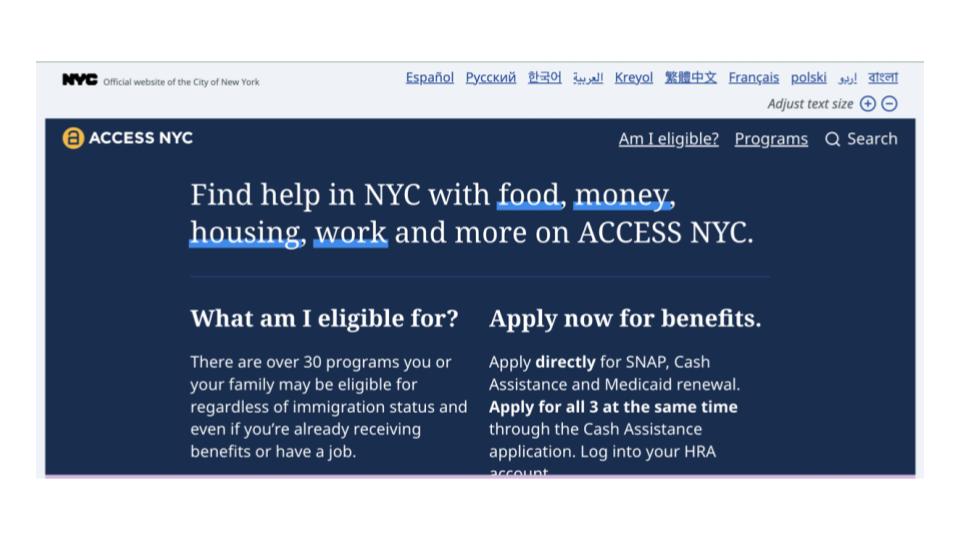
The NYC Mayor’s Office for Economic Opportunity (NYC Opportunity) developed the NYC Benefits Platform, including ACCESS NYC, to help residents easily discover and check eligibility for over 80 social programs.
In our research announcement on theories of change (ToC) for digital government, the Digital Service Network shared our belief that all Digital Service (DS) teams should work to develop a ToC.
The Temporary Assistance for Needy Families (TANF) Data Collaborative Pilot Initiative is a component of the TANF Data Innovation project. The 30-month pilot offered technical assistance and training to support cross-disciplinary teams of staff at eight state and county TANF programs in the routine use of TANF and other administrative data to inform policy and practice.
This webinar session discusses the importance of using CX metrics to guide agency-level decisions and how to gather, analyze, and apply customer feedback to optimize products and services.
This paper discusses the country’s chronic underinvestment in children and resulting outcomes, including new data on poverty rates among young children, is inextricable from the prospects of young children; and the remarkably comprehensive pandemic-era response policies, including which changes contributed most to reducing child poverty.
In this brief, they present a definition of HCD that is applicable to the context of human services delivery, differentiate HCD from similar design and problem-solving approaches, and describe how HCD is being used in human services.
U.S. Department of Health and Human Services (HHS)
The Digital Service Network worked closely with stakeholders from the Texas Education Academy (TEA) to develop resources for a structured approach in helping identify and better understand core challenges in government digital delivery.
This presentation explores the balance between security and user experience in digital benefit account creation and authentication, highlighting insights from a forthcoming playbook focused on SNAP and Medicaid portals.