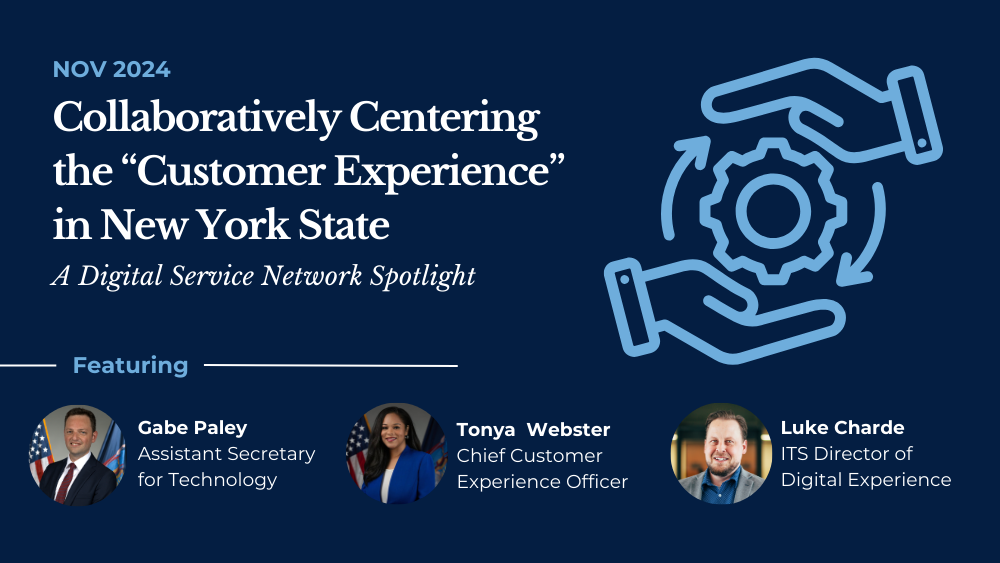
The Digital Service Network (DSN) spoke with three staff members from the New York State Executive Chamber—Gabe Paley, Tonya Webster, and, Luke Charde to learn more about the state's efforts to improve residents’ experiences accessing government programs.
This session from FormFest 2024 focused on improving service delivery by hearing about work in multiple cities to rapidly digitize service delivery and work by the Department of Veteran Affairs around implementing service design principles in form revisions.
The article highlights the growing issue of SNAP benefit theft through skimming and advocates for permanent security measures and benefit replacements to protect vulnerable households.
This video documents the Digital Benefits Network's Digital Identity Community of Practice launch, covering mission review, 2025 goals, California authentication innovations, and peer networking for equitable and effective digital identity in public benefits.
This brief synthesizes the manner in which the political and social service environments affect the intergenerational stability of non-citizen families, offering insights into programmatic supports.
American Public Human Services Association (APHSA)
These fact sheets provide detailed, state-specific data illustrating SNAP's role in reducing hunger and bolstering local economies across the United States
The Digital Identity Community of Practice kick-off event featured key resources, a new research publication on account creation and identity proofing, and insights from multiple speakers.
This Guide to Artificial Intelligence provides a strategic framework for the ethical and responsible implementation of GenA technologies in state operations.
Colorado Governor's Office of Information Technology (OIT)
This factsheet outlines the Administration for Children and Families’ (ACF) 2024 initiatives to promote health equity across its programs by embedding equity into funding, service delivery, and community engagement.
U.S. Department of Health and Human Services (HHS)
This brief outlines research recommendations to strengthen child welfare services for LGBT youth and adults, focusing on experiences of maltreatment, foster care, and adoption.
U.S. Department of Health and Human Services (HHS)
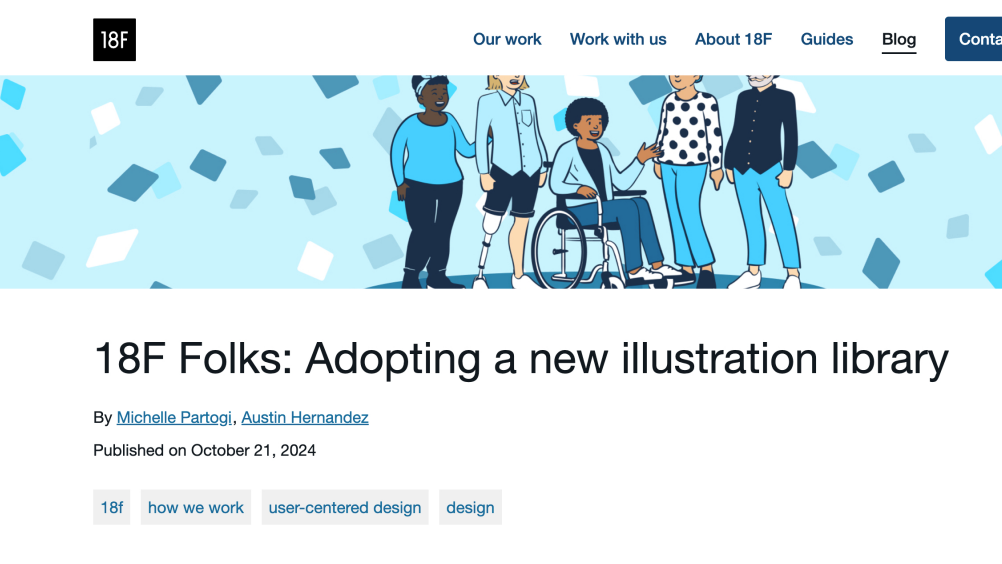
This blog describes how 18F adopted a new illustration library (“18F Folks”) based on Open Peeps, to better represent diversity, context, and human experiences in their visual communications.