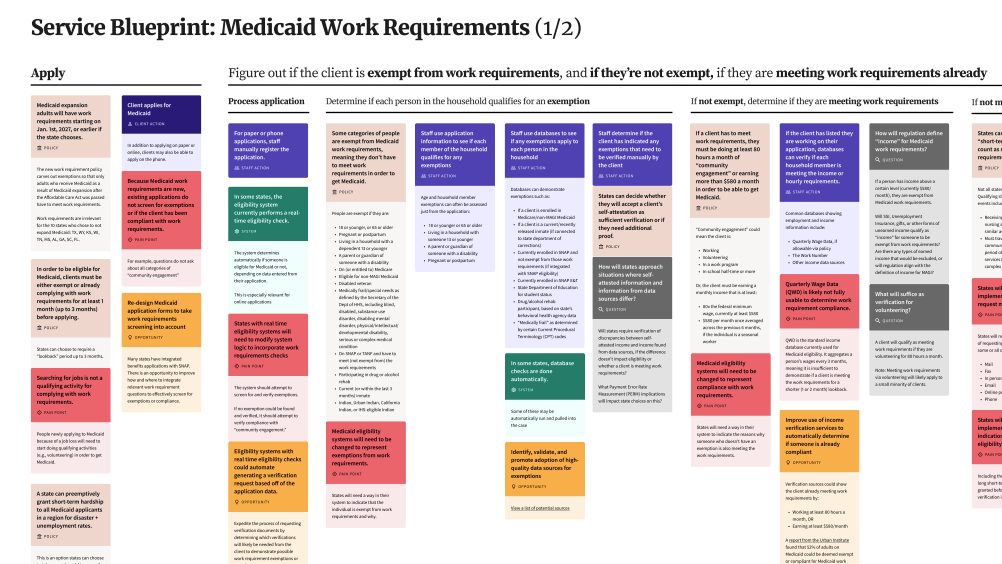
This 11x17 service blueprint visualizes every step, system, and policy decision involved in implementing Medicaid work requirements under H.R. 1—from application to renewal—identifying pain points, questions, and opportunities for states to streamline and humanize the process
A practical guide for advocates that explains how automated benefit notices are generated, where common notice failures originate, and how to push for effective fixes.
A virtual event showcasing how one city applied technology, including artificial intelligence, to streamline municipal code administration and reduce bureaucratic friction.
This webinar presentation outlines the essential communication requirements and outreach standards for states preparing for Medicaid work reporting mandates starting in 2027.
The report examines how states are using Medicaid Section 1115 demonstration projects to address health-related social needs, such as housing and nutrition, for pregnant and postpartum individuals and young children to improve health outcomes and reduce disparities.
An introduction to digital accessibility, emphasizing the importance of designing digital content to be usable by individuals with various disabilities, and guidelines and assistive technologies that support inclusive digital interactions.
In this webinar, a panel of experts discuss what states can do right now to improve EBT security, how to use data to analyze theft patterns, and how EBT payment technology needs to evolve to ensure efficiency, security, and dignity for beneficiaries.
This toolkit provides resources for training and technical assistance (T/TA) providers in the Child Care Technical Assistance Network (CCTAN) to help State, Territory, and Tribal CCDF Lead Agencies be prepared to conduct equity assessments.