This resource describes how different agencies have updated their systems to increase online and mobile access to benefits information and applications, including using text messages to share benefits information with residents.
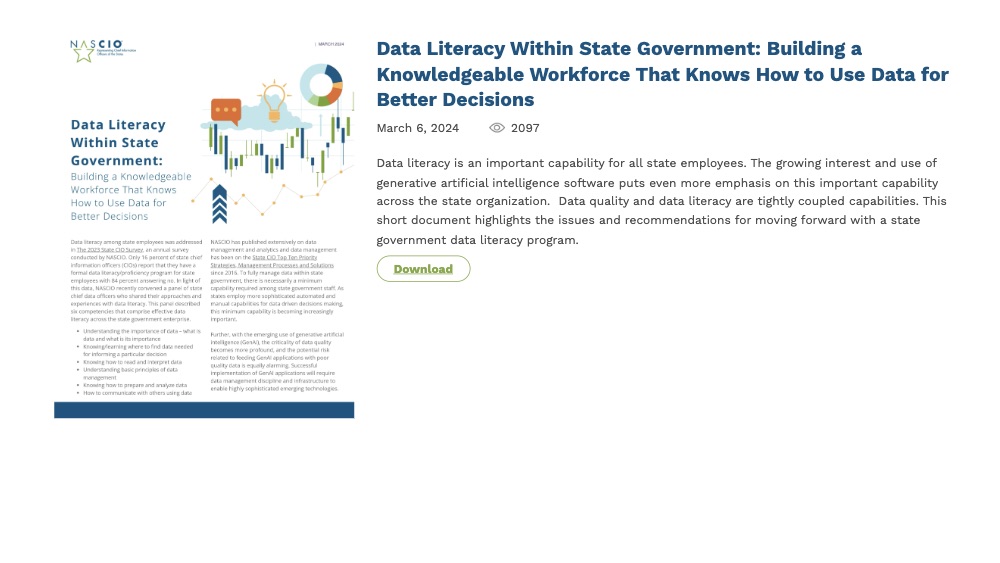
The National Association of State Chief Information Officers (NASCIO) convened a panel of state chief data officers who shared their approaches and experiences with data literacy. The panel provides recommendations for establishing a state-level data literacy program, ensuring that employees understand how to use data effectively for better decision-making.
National Association of State Chief Information Officers (NASCIO)
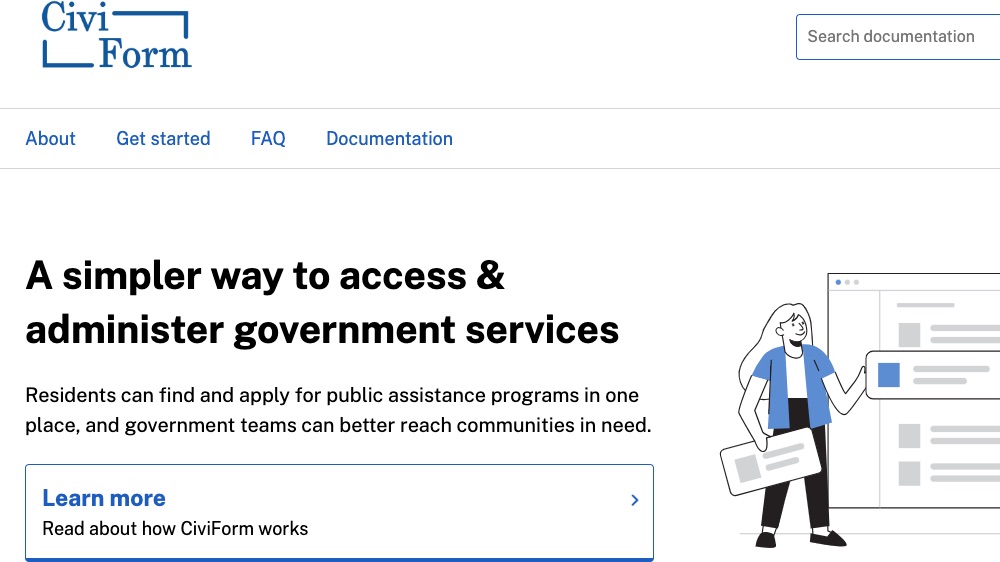
CiviForm is a free, open source software solution for governments that was built to simplify how residents find and apply for public assistance programs.
The Governor's Office of Administration is seeking a digital director 2 to join our growing and innovative Commonwealth Office of Digital Experience PA team! This is your chance to work with a wide range of technologies for an organization that works for the common good of Pennsylvanians. If you are detail-oriented, have excellent communication skills, and want a career serving the public, we want to talk to you!